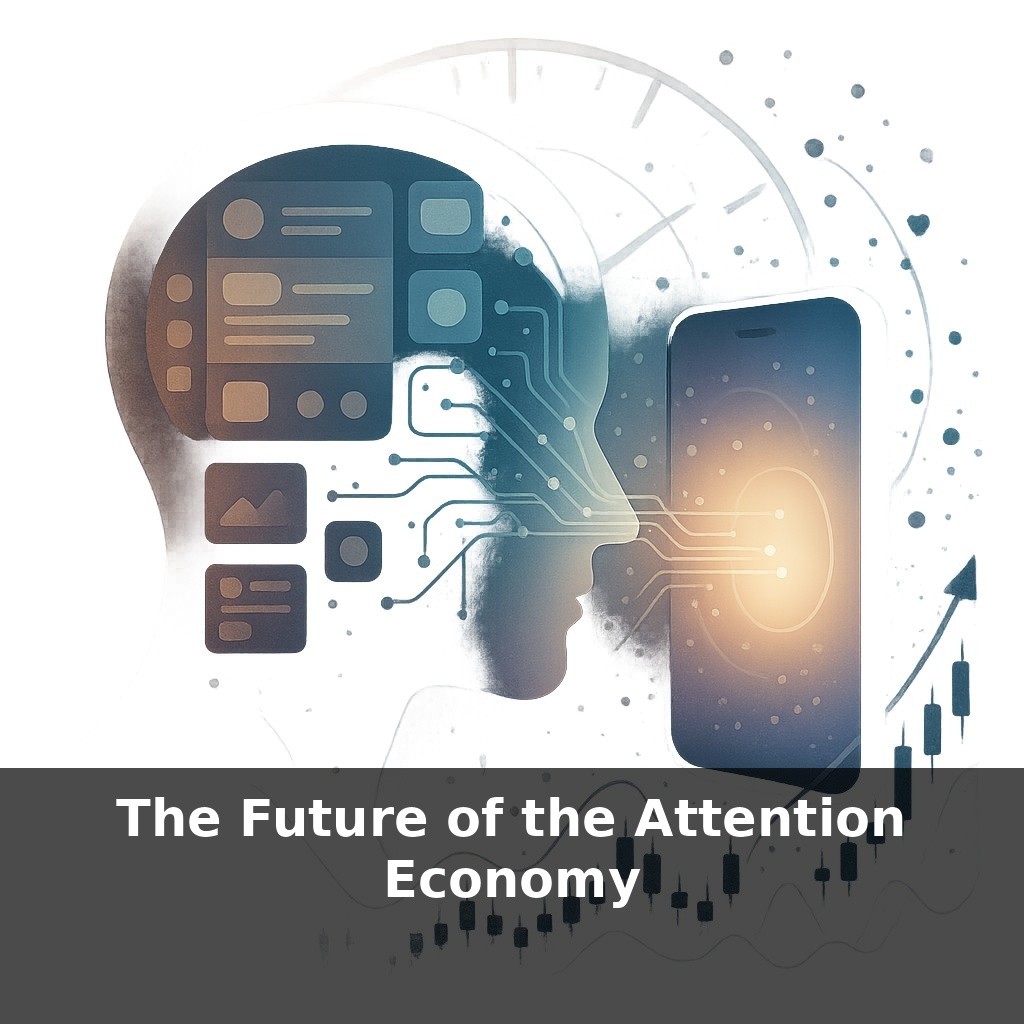
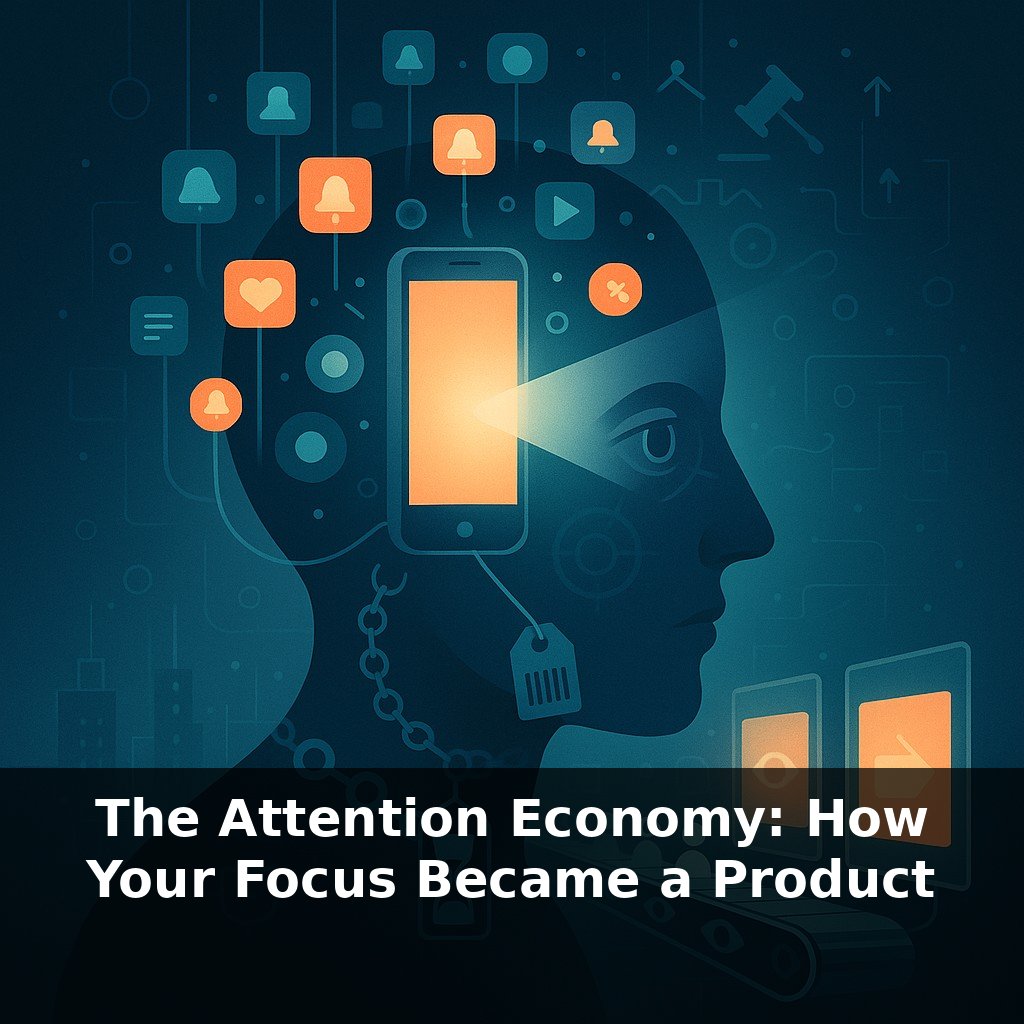
Right now, the average adult in the U.S. spends just over seven hours a day with digital media—more time than sleep for many people. Yet the real shift isn’t how long we’re online; it’s that every tap, scroll, and pause is quietly turning your attention into a live market price.
A single TikTok session now lasts, on average, more than twice as long as an Instagram one—and that gap isn’t an accident. Behind the screen, algorithms are learning not just what you like, but exactly how long you’ll linger on a clip before you even know it yourself. Over the next decade, this kind of measurement is set to explode in precision. Eye‑tracking in AR headsets, brain‑computer experiments, even subtle cursor movements will feed systems that can value each micro‑second of your focus in real time. At the same time, something else is emerging: markets where *you* decide what your attention is worth. From subscription bundles that mute the “noise” to decentralized tools that let you auction or shield your focus, the fight is shifting from grabbing attention to who gets to price and control it.
Soon, attention won’t just be *tracked*; it will be insured, hedged, and traded like a volatile asset. Brands already bid in milliseconds for your next glance, but they’re starting to care *which* glance: a bored doom‑scroll at midnight is worth less than a calm, focused moment at 10 a.m. Add AR overlays at work, mixed‑reality games on your commute, and tokens that pay you to “just try this app,” and you get overlapping claims on the same sliver of your day. The real question becomes: who owns the option on your next 10 seconds—you, or the highest bidder?
In the next phase of the attention economy, the biggest shift isn’t just that attention is tracked more finely; it’s that *context* becomes everything. The same 15 seconds of your focus could soon carry wildly different prices depending on what you’re doing, who you’re with, your emotional state, and even your likely future purchases.
Programmatic ad systems already distinguish between a click at noon and a scroll at midnight, but that’s crude compared to what’s coming. As AR, mixed reality, and wearables normalize, systems will know whether you’re walking, sitting, in a meeting, or relaxing at home—and whether you’re alert, tired, stressed, or bored. Instead of simply “buying an impression,” brands will try to buy *moods* and *moments*: the calm coffee before work, the distracted line at the grocery store, the decompression after putting kids to bed.
This opens the door to what looks less like old-school advertising and more like high-frequency trading in human time. If 90% of digital ad money already moves through auctions that clear in under 200 milliseconds, a future layer will trade on even more granular signals: not just that you saw an offer, but how sharply your eyes tracked it, how long your body stayed still, whether your past behavior predicts a purchase if nudged twice instead of once.
At the same time, not all players in this market are trying to *add* stimulation. The rise of tools like Calm shows there’s now a parallel business in helping people *opt out* of certain types of engagement. Think of it like a financial portfolio: some of your time is placed in “high-risk, high-reward” environments—games, social feeds, rapid-fire news—while another portion is allocated to “defensive assets”: focus apps, sleep tools, or simply hard boundaries that block access to entire categories of content.
New models are likely to formalize this portfolio mindset. Employers might pay premiums for guaranteed distraction-free blocks, effectively “reserving” employee attention in advance. Creators could sell limited, high-intensity engagement windows—live sessions, interactive drops—rather than chasing endless, low-quality clicks. Meanwhile, consumers will be pushed to choose between ecosystems: one that subsidizes everything with ever-more-invasive bids for your time, and another that charges more money upfront to leave your attention largely unauctioned.
The tension between these paths—subsidized but saturated, versus costly but calmer—is where the next decade’s real battles over attention will be fought.
Nike could, for instance, invite runners into a mixed‑reality “city race” where branded checkpoints appear only when your biometric data shows you’re in a flow state—turning peak focus into premium ad inventory. A grocery chain might offer discounts if you let its AR app prioritize shelf space in your field of view on Sunday afternoons, effectively renting exclusive rights to that errand window each week.
On the defensive side, a productivity startup could sell “attention vaults”: cryptographically sealed 90‑minute blocks your employer can’t penetrate, but your calendar can attest to—verifiable focus without surveillance. Creators might experiment with “bond offerings” for future attention: pay now for early access to three live drops next quarter, with resale allowed if your schedule changes.
In this world, managing your day could look oddly like managing investments. Instead of only budgeting money, you’d allocate high‑focus hours, speculative “explore” blocks, and guaranteed off‑grid time—and choose which platforms are allowed to bid for each.
Attention futures could shape everyday life: insurers might reward “low‑risk” digital habits, while campuses issue “focus credits” alongside meal plans. Neuro‑adaptive feeds could slide from helpful to manipulative, adjusting not just content but your baseline mood. Your challenge this week: treat your next three evenings like a limited‑edition pop‑up store and decide *in advance* which apps, people, or projects are allowed through the door.
As this matures, attention could gain a formal “exchange rate”: loyalty points, carbon credits, even civic rewards tied to how and where you direct it. Like reshaping a river with small dams and channels, each choice alters the downstream landscape. The open question is whether we’ll let a handful of platforms draw the map—or learn to redraw it ourselves.
Here’s your challenge this week: For the next 3 days, run a personal “attention audit” by installing (or turning on) screen-time/website trackers on your phone and laptop, then screenshot your daily report and circle the top 3 apps or sites that hijack your focus (e.g., TikTok, Instagram Reels, YouTube Shorts). Pick a 2-hour Deep Work block each day and use website blockers or Focus mode to completely shut those 3 off during that window—no exceptions. During that block, channel your freed-up attention into one “high-agency” task the episode talked about (like building a side project, writing, coding, or deep learning). At the end of day 3, compare your productivity and mood during those Deep Work blocks to your usual distracted time, and decide which one habit from this experiment you’ll keep for the rest of the month.