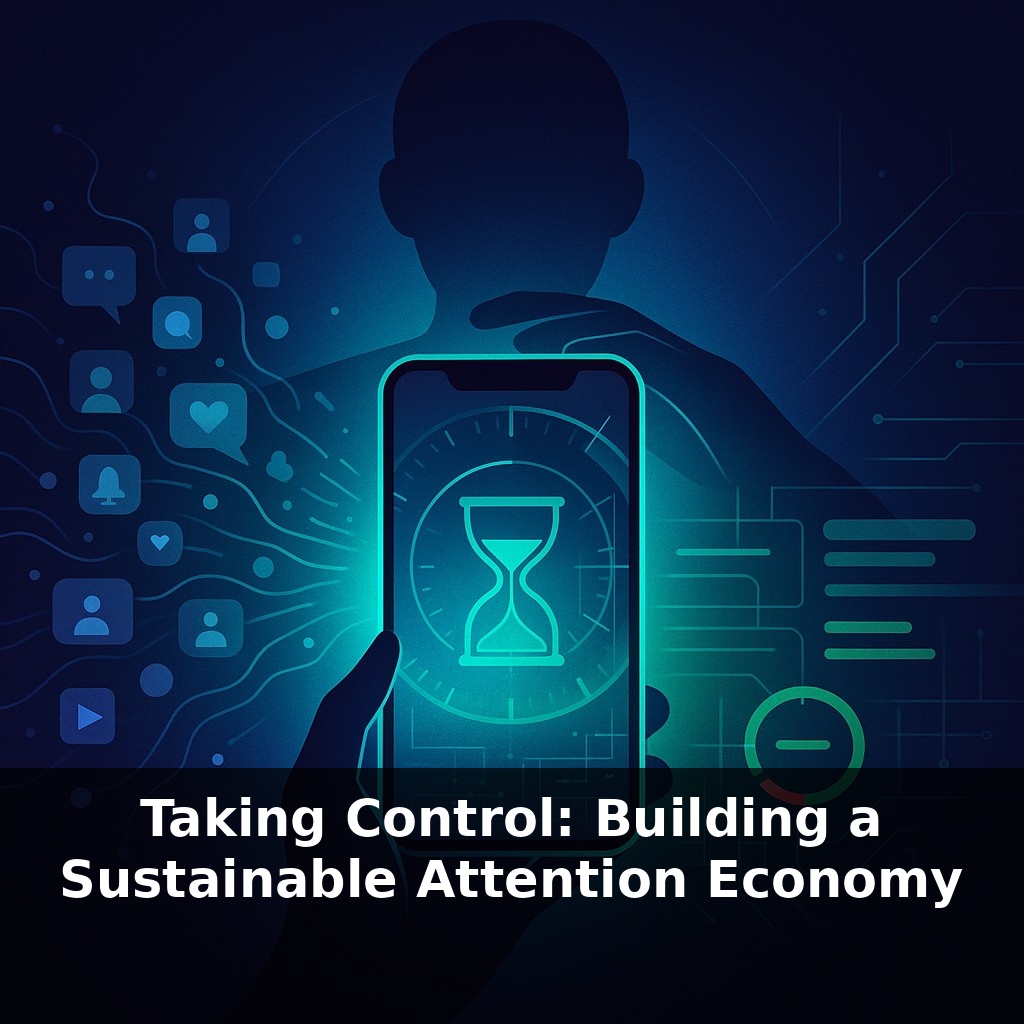
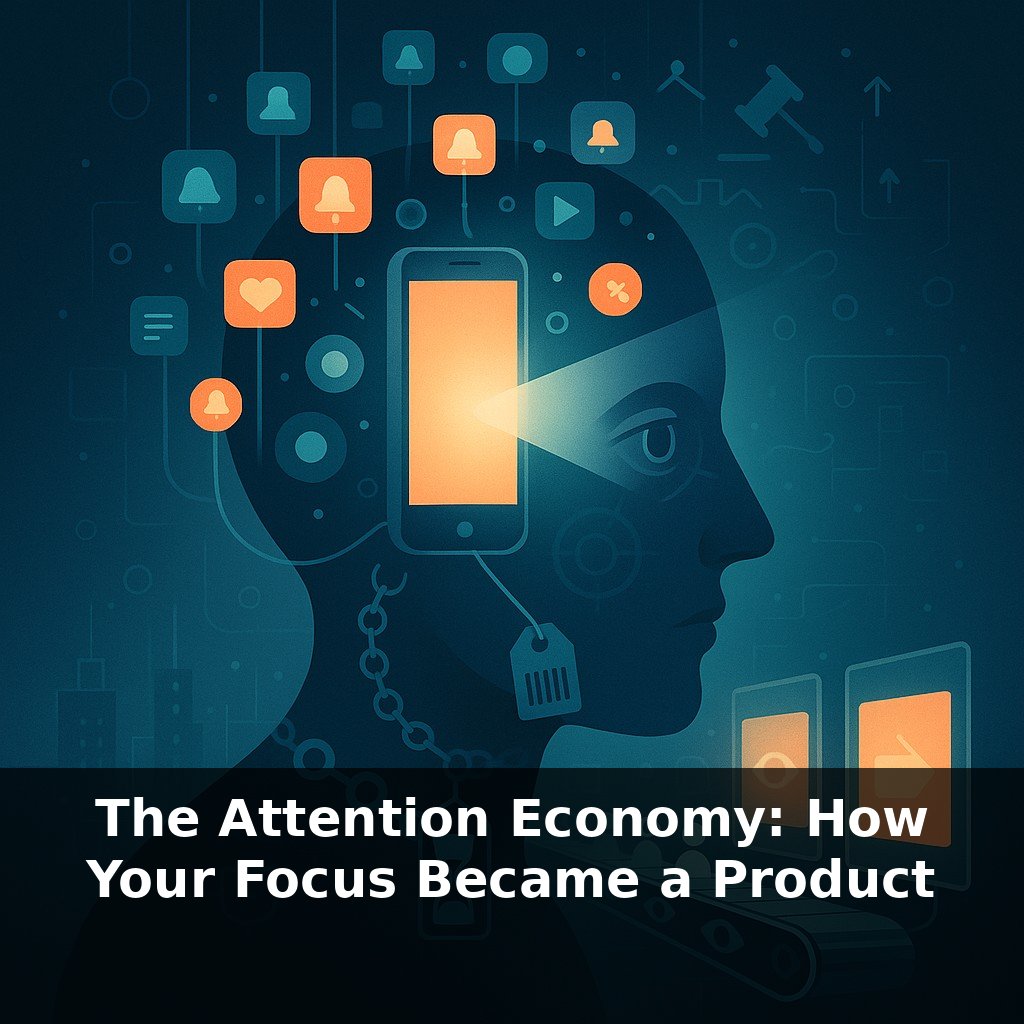
Right now, the average person spends almost five hours a day on their phone, but almost no one can explain where those hours went. You grab your screen for one quick check… and suddenly it’s dark outside. In this episode, we’ll turn that lost time into a system you actually control.
The current attention system isn’t broken by accident—it’s working exactly as designed. When 98% of Meta’s and 85% of Google’s revenue comes from advertising, the winning move is simple: keep you looking, scrolling, and tapping for as many minutes as possible. At a global average of 4.8 mobile hours a day, that’s an enormous pool of human focus being harvested, not just used.
In this episode, we’ll shift from coping within that system to reshaping it. You’ll see how three levers work together: products that respect cognitive limits, business models that don’t depend on hijacking your attention, and community norms that reward healthy use. We’ll look at real signals of change—from Mastodon’s surge to early laws targeting manipulative design—and translate them into specific steps you, your workplace, or your community can test this week.
In 2018, a University of Pennsylvania trial asked students to cap social media at 30 minutes a day. After three weeks, their loneliness and depression scores dropped by about 35%. That shift didn’t require quitting technology—just redesigning how it fit into daily life. Similar patterns appear at scale: when Apple launched Screen Time, users who set limits reduced pickups by 21%; when Twitter changed hands in 2022, Mastodon’s active users jumped from 300,000 to 2.5 million. These are early signs that when tools and norms change, people rapidly reallocate their attention toward what feels healthier.
Sustainable attention isn’t an abstract ideal; it shows up in very specific design choices, pricing models, and group habits.
Start with design. Some products already cap how much they “pull” you. Email tools like Superhuman and Hey batch notifications so your inbox updates a few times a day instead of every 3 seconds. Focused messengers such as Signal let you mute entire threads indefinitely, not just for 8 or 24 hours. Even small defaults matter: when YouTube in some regions turned off “autoplay next” by default for kids’ accounts, watch time per session fell measurably, but satisfaction scores stayed stable or rose, according to internal briefings regulators later cited. That’s a crucial pattern: less time, equal or greater value.
Business models push this further. Subscription-backed apps like Freedom or Focus@Will survive only if you feel better after using them, not if you stay inside for 4 extra hours. The note-taking app Obsidian runs on a “pay once, own your data” model; its success depends on power users recommending it, not on ad impressions. On a larger scale, Wikipedia serves over 15 billion pageviews a month with no display ads at all, funded mainly by roughly 7 million small donors. These models still face pressure, but the pressure is to deliver clarity, not compulsion.
Community-led platforms test different trade-offs. The open-source social network Mastodon is financed through a mix of volunteer labour, small hosting fees, and Patreon-style support for server admins. A typical mid-sized server with 10,000 users might run on a few hundred dollars a month in infrastructure costs, publicly posted, with members chipping in $3–$5. Governance happens out in the open: if a server changes rules in ways people dislike, users can migrate—sometimes in hours—to another node.
Policy can lock in better baselines. The UK’s Age Appropriate Design Code has already forced dozens of services to turn off “nudge” features for minors—like infinite streaks—backed by fines of up to 4% of global turnover. In the EU, the Digital Services Act now requires very large platforms (45 million+ users) to offer at least one feed not based on profiling, weakening the grip of engagement-only rankings.
None of these alone “fix” the attention economy. Together, though, they show a simple but powerful equation: when time-on-site stops being the master metric, healthier patterns emerge fast.
A practical test of sustainable attention is how a tool behaves at the edge. Consider a messaging app that, by default, delivers only **three notification batches per day**. If an average user currently checks messages **90 times daily**, cutting that to 3 intentional review windows reduces potential interruptions by **96.7%**, without blocking any actual communication. Or take a news platform that limits you to **15 articles per day** and then prompts: “You’ve hit today’s limit—want a summary instead?” If their typical reader consumes **45 short pieces**, that cap forces **2/3** of their input to be filtered or summarized—shifting value toward synthesis over volume.
Community practices scale this further. A workplace with **50 employees** that designates **two 2‑hour “no meeting, no chat” blocks** per day suddenly protects **200 collective focus-hours daily**. Over a standard **5‑day week**, that’s **1,000 hours** reclaimed—roughly **six full‑time roles** worth of deep work safeguarded without hiring a single extra person.
As stricter rules arrive, expect “attention audits” to spread. A mid‑size firm might report quarterly how many push alerts, nudges, and recommendation slots it triggers per user, alongside churn and wellbeing scores. Investors could start asking why one app needs 120 weekly notifications when a rival thrives on 25. Over time, procurement teams may treat high‑friction tools like safety risks, delisting them just as they would suppliers with poor cybersecurity practices.
Your challenge this week: conduct a personal “attention audit.” For 3 days, log every app you open, how long you stay, and whether you’d rate that time as +1 (valuable), 0 (neutral), or ‑1 (regretted). Aim to shift just 30 minutes a day from ‑1 to +1. Over a year, that’s about 182 extra hours invested in work, learning, or relationships you actually chose.