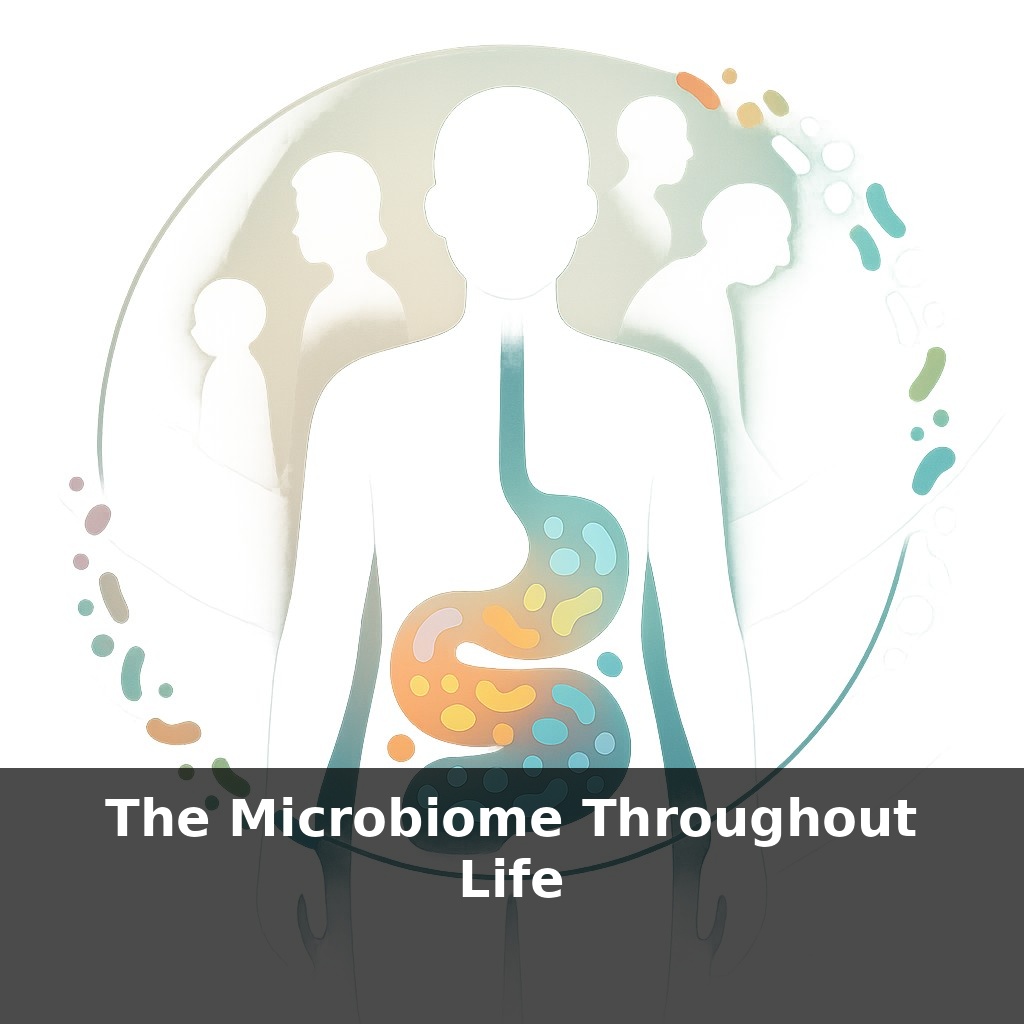
Right now, a hidden “population swap” is underway inside you. The microbes in your gut as a newborn, a teenager pulling an all‑nighter, and an eighty‑year‑old grandparent are radically different casts. One body, many microbiomes—each rewriting your health story in its own way.
By now, you’ve seen that your internal “cast” doesn’t just swap faces—it changes roles as you move through life. In this episode, we zoom out and follow that shifting community from the first breath to the final decade, and how the timing of each change matters as much as the change itself.
A newborn delivered by C‑section, an infant on formula, and a breastfed baby born vaginally can start life with dramatically different microbial line‑ups—and those early differences echo in allergy, obesity, and autoimmune risk years later. Puberty’s hormone surge reshapes the gut again, just as sleep shrinks and junk food climbs. Midlife often layers on stress, medications, and less movement, while old age brings shrinking diversity and rising inflammation.
Think of this as a lifelong “health portfolio”: what you add or lose at each stage compounds over decades.
As we track this shifting community across life, one pattern keeps showing up in the research: timing matters. The same disruption—a course of antibiotics, a week of ultra‑processed food, a month of poor sleep—doesn’t land the same way in a newborn, a teenager, or a 75‑year‑old. Some windows are unusually “soft,” when your internal ecosystem is easier to nudge for good or for harm. Scientists call these critical periods, and they’re now tying them to things like vaccine responses, how well we harvest energy from food, even how resilient our mood is under stress decades later.
In this episode, we’re going to zoom in on these windows, look at what typically helps or harms the microbiome at each stage, and then get practical. You’ll hear how researchers are trying to shield infants after C‑sections, why some pediatricians now time probiotics around antibiotics, and how lifestyle tweaks in your 40s and 60s can buffer the slow loss of diversity seen in frailty.
We’ll also explore why some centenarians buck that trend, carrying surprisingly rich microbial communities into very old age. The goal isn’t perfection at every decade—it’s understanding where small, well‑timed choices can quietly stack the odds in your favor.
From birth to about age three, the gut is in “startup mode.” Species counts are low, turnover is high, and the business model is simple: digest milk, train immune cells not to overreact, and block early infections. Breast milk doesn’t just feed the baby—it feeds specific microbes like Bifidobacterium, which can make up close to 90% of the community in breastfed infants but far less in formula‑fed peers. That skewed early dominance isn’t about popularity; it shapes how the gut barrier forms, how acidic the colon is, and which incoming microbes can even gain a foothold.
As solids arrive, the menu broadens and so does the community. Fiber from fruits, vegetables, and grains becomes the primary fuel, and bacteria that specialize in complex plant carbohydrates start to rise. By school age, most kids resemble a rough “adult pattern,” but with more volatility. Each new food, pet, dirt pile, and viral infection is like adding or removing a small shareholder from the company. Kids with more outdoor time, diverse diets, and fewer unnecessary antibiotics typically carry richer microbial “portfolios” by adolescence.
Teen years bring new twists: irregular sleep, stress, and ultra‑processed snacks can favor microbes that thrive on quick sugars and emulsifiers. Studies in adolescents link these shifts with higher inflammatory markers and, in some, more anxiety and metabolic strain. Yet the system is still plastic; improving diet quality and sleep in late teens and twenties can measurably shift microbial composition within weeks to months.
By mid‑adulthood, things stabilize—until modern life starts testing that stability. Repeated 7‑day courses of broad‑spectrum antibiotics, for instance, can leave about 30% of species undetectable even six months later. Not all of those species are essential, but some produce short‑chain fatty acids that calm inflammation and support insulin sensitivity. Long‑term proton pump inhibitors, frequent NSAIDs, and low‑fiber eating further chip away at this foundation.
In later decades, diversity tends to contract, especially with limited movement, social isolation, and monotonous diets. Yet this isn’t inevitable. Okinawan centenarians, for example, show higher diversity and more Akkermansia—linked to better glucose control and gut barrier integrity—than many younger adults in industrialized settings. Their pattern hints at a through‑line: plant‑rich, minimally processed diets, regular movement, and strong social ties may help preserve a flexible, resilient microbiome even as the body slows.
Think of life stages like different investment climates for your “internal market.” In the newborn phase, tiny changes—one extra day in the NICU, a single antibiotic course—can act like a market crash in a fragile emerging economy. Later on, the same hit might just dent your “microbial stocks” before they rebound.
Take two kids who both get frequent ear infections. One receives repeated broad‑spectrum antibiotics without any diet support; the other’s parents add fermented foods and fiber‑rich meals after each prescription. Ten years later, both look “healthy,” but research suggests their microbial balance—and maybe their risk of insulin resistance or asthma—could be drifting apart.
Or picture two 70‑year‑olds. One lives alone, eats toast and tea most days, and rarely goes outside. The other joins neighbors for daily walks, shares mixed‑bean stews and vegetables, and tends a small garden. Studies tracking older adults like these find that the second pattern often aligns with more diverse microbes and lower frailty scores, even when genetics are similar.
Your microbiome story may soon come with a “navigator.” Researchers are testing tools that estimate your “microbial age” and flag early drifts toward frailty years before symptoms. Instead of guessing, a clinician could adjust your food, drugs, or even prescribe targeted microbes like tuning a long‑term savings plan. The open question: how far can we push this without freezing natural change? Future care may be less about chasing youth and more about extending flexible, adaptable microbiome aging.
Across all these stages, one pattern keeps emerging: flexible, diverse communities seem to buffer shocks better than rigid ones. Instead of chasing a “perfect” profile, it may be wiser to keep yours adaptable—like maintaining multiple skills so one job loss doesn’t sink your career. The frontier ahead isn’t control, but learning how to partner with this shifting ally.
Before next week, ask yourself: “What’s one meal I already eat regularly that I could ‘microbiome‑upgrade’ today by adding at least three different plants (e.g., herbs, nuts, seeds, or colorful veggies)?” “Looking at my typical day, where could I replace one ultra‑processed snack with a fermented food like yogurt with live cultures, kefir, kimchi, or sauerkraut—and what would make that swap genuinely enjoyable for me?” “If my sleep, stress, or movement patterns are silently shaping my gut microbes, what is one small, specific change I’m willing to try this week (like a 10‑minute post‑meal walk or a consistent wind‑down time) and how will I remind myself to actually do it?”