Right now, as you’re listening, chances are your brain is quietly juggling more tasks than it can actually handle well. Yet the people who get the most done often do the opposite: they pick one thing, guard it fiercely, and let everything else wait. How do they dare to do that?
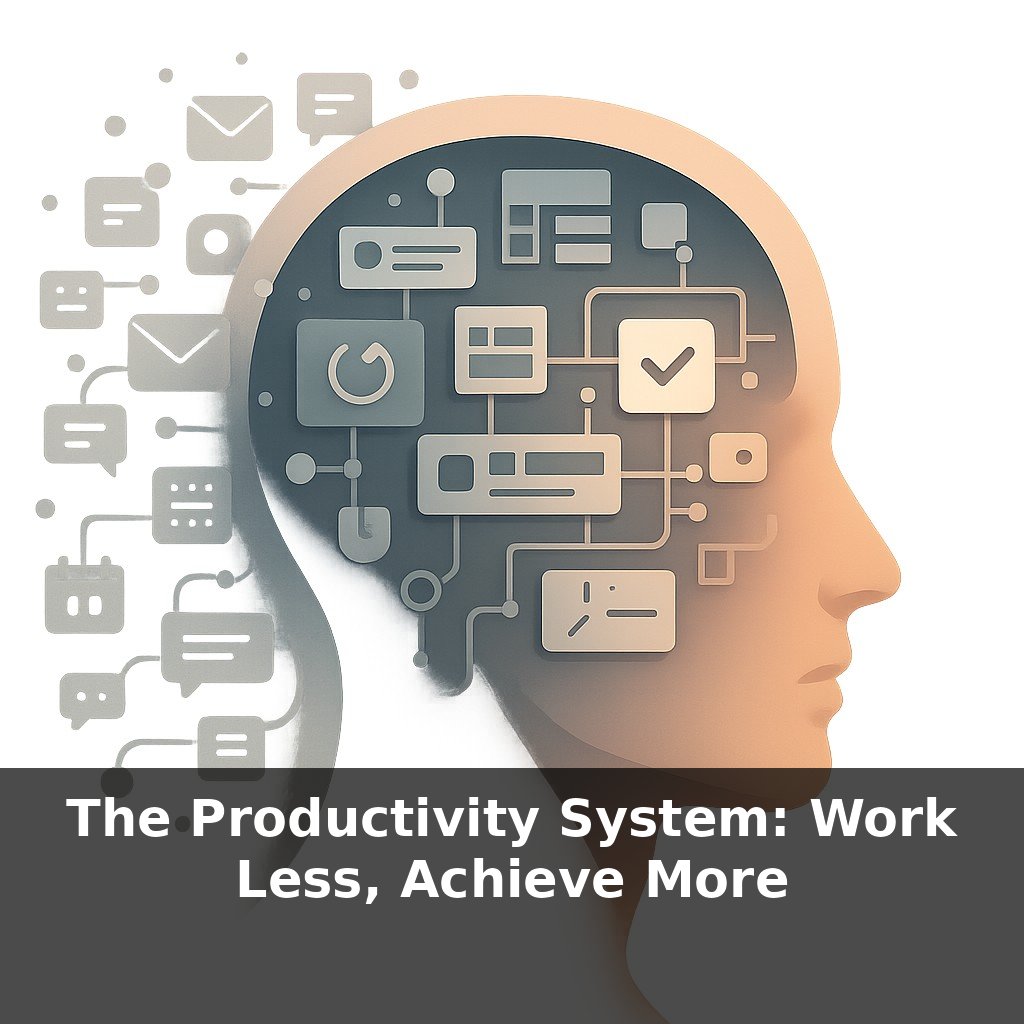
You’ve probably had days where you were “busy non-stop” yet ended wondering what actually moved forward. That gap between effort and progress is where ruthless prioritization lives. Today isn’t about doing more; it’s about deciding, with almost uncomfortable clarity, what *deserves* your best attention. Think of your workday like a playlist: you can let it shuffle randomly through every notification and request, or you can choose the one track that defines the whole mood. Research on attention, decision fatigue, and opportunity cost all point to the same conclusion: when everything feels equally important, your brain quietly defaults to the easiest or loudest task, not the most meaningful. Ruthless prioritization interrupts that autopilot, forcing you to ask, “If I only did one thing today and it went exceptionally well, what would actually matter?”
The tricky part is that your day rarely presents the “one thing” with a glowing border around it. It arrives disguised as a calendar invite, a vague idea you keep postponing, or a quiet project that doesn’t ping or buzz, but will matter deeply in three months. Research on knowledge workers shows our schedules are often built by whoever shouts first, not by what truly moves the needle. That’s how you end up polishing slides while the real strategic decision waits. The shift is to treat your time like limited venture capital: most bets get nothing, a few get a little, and one gets a bold, disproportionate investment.
Here’s where research stops being abstract and starts poking directly at your calendar.
Gloria Mark’s lab work at UC Irvine has repeatedly found that office workers switch screens or tasks every few minutes, and often not because something truly important happened. Many of those switches are self‑interruptions: the quick inbox check, the “let me just peek at chat,” the tiny detours that quietly dissolve the conditions required for serious progress. Once you’re pulled away, her 2008 study suggests it can take more than twenty minutes to get back to the depth you had before. That means a handful of “harmless” pings can effectively erase your best hour of thinking.
Layer on McKinsey’s finding that nearly a third of the week vanishes into email, and you start to see the shape of the real constraint. It’s not the number of hours you work; it’s the fraction of those hours that survive intact, unchopped by context switches. High performers aren’t better because they care more; they’re better because they defend a small portion of their day from being sliced into unusable fragments.
This is where “ruthless” enters. It isn’t an attitude toward people; it’s an attitude toward trade‑offs. Warren Buffett has famously advised focusing on a short list of crucial goals—then “avoiding at all costs” the merely important ones that compete with them. When Steve Jobs returned to Apple, he cut the product line down to a focused grid of a few machines, a move that looked risky in the moment but freed up talent and attention to make those few products exceptional.
A 2020 Harvard Business Review study of executives echoes this at the daily level: those who named a single priority objective for the day were substantially more likely to hit their quarterly targets. The daily choice cascaded upward. Their teams reported clearer direction, fewer conflicting requests, and more follow‑through on longer‑term initiatives.
Think of your task list less like a queue to be emptied and more like a playlist to be curated. The “one thing” isn’t just another track; it’s the headliner. Everything else, by definition, becomes an opening act or gets cut from tonight’s show.
Think of a software update that finally fixes one critical bug instead of shipping ten minor tweaks. That’s how a well‑chosen “one thing” behaves in your day: it quietly stabilizes everything around it.
For a product manager, the one thing might be a 90‑minute session rewriting a fuzzy product spec that’s causing weeks of confusion downstream. For a salesperson, it could be preparing a single, high‑stakes proposal that, if won, makes five smaller deals irrelevant. A team lead might spend their prime hour clarifying next quarter’s priorities so their team stops thrashing on competing requests.
Notice how these choices often feel uncomfortable in the moment. They don’t always come with immediate praise or visible progress. Yet they change the slope of your results, not just today’s checkbox count. Like a producer layering one perfect track that pulls an album together, you’re choosing the work that quietly upgrades every task that follows—even if nobody sees it happening in real time.
As AI quietly grabs low‑complexity work, your “one thing” shifts toward judgment calls that algorithms can’t safely own: ambiguous client decisions, messy team trade‑offs, creative leaps. Careers may start to resemble editing a live document—less typing, more deciding what stays, what’s cut, and what gets bolded. Teams that practice this now will adapt faster as tools evolve, because they’ll already know how to aim their best human effort where it compounds.
Your challenge this week: each morning, before opening any app, choose one concrete outcome that would make the day satisfying if everything else slipped. Then carve out the smallest block you can—maybe 30 minutes—where nothing else wins. Treat it like a non‑negotiable meeting with your future self, and stay curious about how your mood and progress shift by Friday.