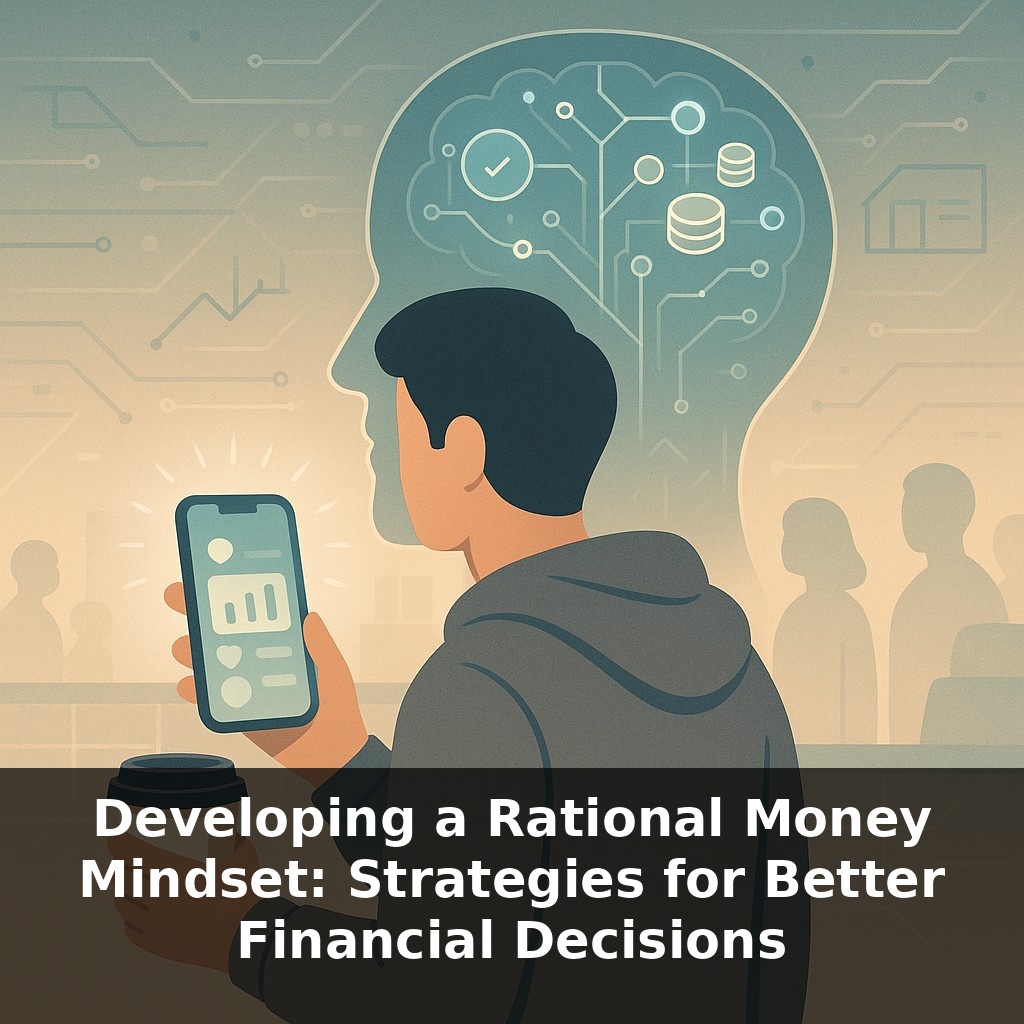
About half of Americans could only cover a couple months of bills if their income stopped—yet many still feel “bad with money” rather than “unprepared.” You’re checking your balance in line for coffee, debating a splurge, while invisible mental habits quietly steer the choice.
Most of us were never actually taught how to *think* about money—only how to use it. We picked up rules (“debt is bad,” “homeownership is good”) without learning when they apply or how our brains quietly bend them. So we default to vibes: “This feels affordable,” “I’ll make it back next month,” “I deserve this.” That’s not a character flaw; it’s an untrained decision process trying to navigate a noisy, emotional topic.
A rational money mindset doesn’t mean becoming a robot who never enjoys spending. It means building a way of thinking where your long‑term priorities quietly sit in the room every time you tap your card. Not louder than your emotions, but structured enough to keep them from taking over. In this episode, we’ll zoom in on that structure: how to design systems, nudges, and tiny checkpoints that steadily bend everyday choices toward what actually matters to you.
Today we’ll get concrete about *where* your money goes before you even notice it moving. Paychecks hit, bills pull cash out, subscriptions skim a little more, and whatever’s left dissolves into “miscellaneous.” Instead of relying on willpower in those blurry moments, we’ll explore how to pre‑arrange the path your dollars travel—like laying down train tracks so each deposit knows its stop. We’ll look at practical structures: automatic splits, purpose‑based accounts, and decision rules that live inside your calendar and apps, so calmer choices happen even on your most stressed days.
Most people try to “be better with money” by thinking harder *in the moment*—at the store, on the investment app, at 11:58 p.m. during an online sale. But the research is blunt: those are the worst times to rely on clear thinking. When you’re rushed, tired, or hyped, a few built‑in quirks dominate:
- **Present bias**: today’s comfort feels vivid; next year’s goals feel faint. That’s why the average U.S. emergency fund only covers about nine weeks—future‑you keeps getting bumped. - **Loss aversion**: the pain of cutting spending or seeing your balance dip for a transfer feels sharper than the quiet benefit of a bigger cushion later. - **Mental accounting errors**: tax refunds, bonuses, or “found money” get treated as play money instead of part of the same financial picture.
So instead of trusting in‑the‑moment willpower, a rational money mindset shifts the battle to *before* those moments. You decide once, calmly, and then let structures keep running.
A powerful place to start is with **default settings**. Auto‑enrollment in retirement plans is the classic example: just flipping the default from “opt in” to “opt out” nearly doubles participation. You can copy that logic everywhere: default part of each raise to savings, default refunds to debt pay‑down, default subscription trials to *not* renewing by setting a cancellation reminder the day you sign up.
Next, build **simple rules that trigger on events**, not moods. For instance: - When income hits above your “normal” paycheck (overtime, bonus), 50% goes straight to a specific goal. - When your checking account passes a comfort threshold, the excess sweeps into savings or investments. - When you feel the urge to “treat yourself” after a rough day, you cap it with a pre‑chosen dollar limit, not a vibe.
To keep this practical, layer in **reflection loops** that are small but regular. Weekly spending reviews correlate with much higher savings, partly because they surface patterns you’d otherwise miss: the subscription you don’t use, the restaurant that quietly became a twice‑a‑week habit, the surge in rideshares when you’re stressed.
Over time, these loops train your brain to see money less as random waves of bills and splurges, and more as a series of repeatable situations you can prepare for—most of the work happening long before you pull out your card.
Think of a simple three‑step ladder you climb every month. Step one: a calendar alert pops up the day after payday with one question: “What’s the most important bill you haven’t seen yet?” Maybe it’s a car repair that’s coming someday, or a friend’s wedding in three months. You move a small, fixed amount toward that. Step two: you open your spending app and tag just five transactions that made you *glad* you spent—coffee with a friend, a course, a train ticket to see family. Step three: you tag five you barely remember. Over a few cycles, those forgettable ones become candidates for trimming, without any guilt narrative about being “bad” with money.
A couple does this separately, then compares just their “glad I spent” lists. Patterns emerge: one values travel, the other home upgrades. Instead of arguing about random purchases, they negotiate shared “glad” categories and route more of next month’s flexible money there, shrinking the forgettable zone together.
Soon, your banking app may feel less like a ledger and more like a quiet co‑pilot. AI could flag patterns before you notice them—“your travel spending is climbing like a fastball this month; want to slow it down?”—and suggest tiny course‑corrections. Secure Act 2.0 will push more people into retirement saving by default, while student‑loan matching turns debt payments into a bridge toward investing, blurring the old divide between “digging out” and “building up.”
Over time, the goal isn’t perfection; it’s curiosity. Treat new tools—like apps that flag patterns, or banks that round up purchases into savings—as optional lenses, not commandments. Notice which ones quietly lower your stress. Your money mindset evolves less like flipping a switch and more like tuning an instrument until it sounds like your life.
Start with this tiny habit: When you open your banking app to check your balance, say out loud one sentence: “This number is neutral information, not a verdict about me.” Then quickly label just the *largest* expense you see as either “essential,” “joy,” or “impulse.” If it’s “impulse,” simply add, “Next time I’ll pause for 10 seconds before buying,” and move on—no judgment, no spreadsheet, just a 10‑second mindset reset.