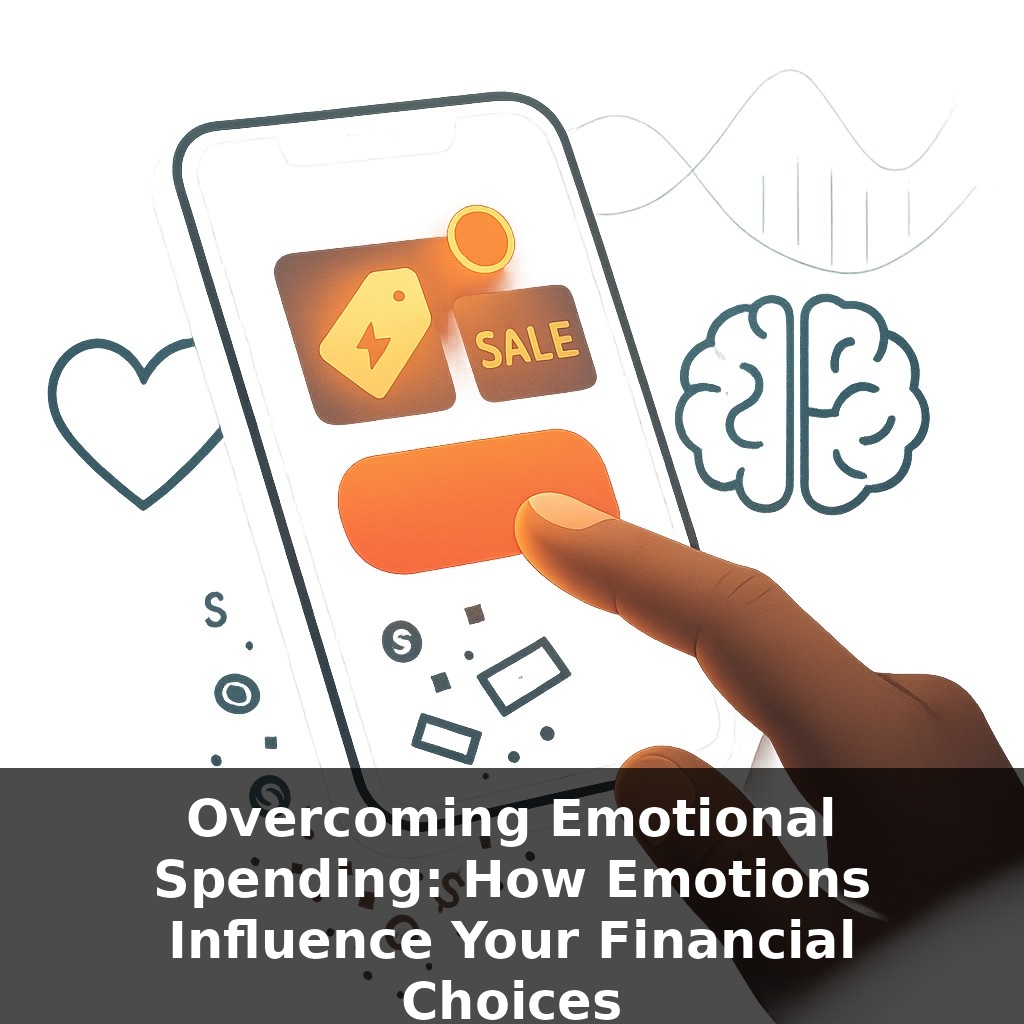
Natalie, an accountant with a meticulously planned budget, found herself clicking 'Buy Now' on a luxury scarf one uneventful Tuesday night, triggered by just a stressful day at the office and a flash sale notification. How do such moments sneak under our fiscal radar? In this episode, we’ll explore why those moments feel good, and cost so much.
You probably remember *how* those late-night buys felt—relief, excitement, a tiny rush—more vividly than what you actually bought. That’s not an accident; it’s your brain quietly running a script you didn’t write on purpose. Emotional spending isn’t just “lack of discipline”; it’s a pattern where moods and money get tangled, and certain feelings keep nudging your thumb toward “Buy Now.”
In this episode, we’ll zoom in on that pattern. We’ll look at why some days your cart stays empty and other days it fills itself, why evenings are riskier than mornings, and how your brain can light up *before* you even check out. Think of it like reading the playbook of a team you’ve been losing to for years. Once you see the moves—your personal emotional triggers—you can start calling different plays instead of replaying the same expensive ones.
So where does all that leave your actual bank balance? On paper, it’s just a few extra charges. In reality, it’s more like background noise that slowly drowns out the soundtrack of your real goals—debt you meant to clear, a trip you meant to fund, a buffer you meant to build. Research shows the timing matters: decision fatigue peaks in the evening, and that’s when most unplanned buys sneak in. Add algorithms that learn when you’re most likely to click, and you’re not just fighting habits—you’re facing a system quietly optimized to catch you on your weakest days.
Think about what’s actually happening in those spend-y moments: your brain isn’t asking, “Can I afford this?” It’s asking, “Can this change how I feel *right now*?” In lab studies, just *anticipating* a purchase lights up reward circuits. That dopamine spike is like a green highlighter over the “Buy” button, making short-term relief look bigger than long-term trade‑offs.
But emotions don’t all push you toward the same kind of purchase. Stress often drives “control” buys—organizers, planners, new apps that promise order. Loneliness leans toward social or status items: going out, group experiences, something you can post. Boredom pushes variety: random gadgets, new clothes, anything that breaks sameness. Excitement, especially after good news, fuels “I deserve this” upgrades—nicer versions of what you already own.
Marketers know this. Notice how many ads speak to a feeling instead of a feature: “You’ve earned it,” “Because you’re worth it,” “Treat yourself after a long day.” They’re not selling moisturizer or sneakers; they’re selling a micro‑story where Future You is calmer, cooler, more admired. When your mood is low, that story is extra persuasive.
There’s also a timing pattern inside you that has nothing to do with sales. Early in the day, your internal “referee” (the part that weighs consequences) is fresh. By night, after dozens of small choices, that referee is tired and more likely to let borderline calls slide. That’s one reason the same ad you scroll past at 9 a.m. can hook you at 9 p.m.
Personality shapes the script too. High sensation‑seekers chase novelty; discounts plus countdown timers are especially risky for them. People high in anxiety may over‑buy “just in case,” turning fear into stockpiles. If you tend to people‑please, spending to avoid awkwardness—splitting bills you can’t afford, chipping in for every group gift—can quietly drain you.
None of this means you’re doomed to repeat the pattern. It means the “why” behind your spending is often perfectly logical *for the emotion you’re in*, even if it clashes with your bigger plans. The real leverage isn’t in shaming yourself afterward; it’s in catching which emotion is driving the cart *before* your card ever comes out.
You might notice different “emotional fingerprints” on your receipts. After a conflict, one person might splurge on premium kitchen gear—less about cooking, more about restoring a sense of competence. Another, after a quiet weekend, may book an expensive workshop or retreat, chasing connection more than content. The same store can play multiple roles: a clothing site might be your “reward” after tough projects, but also your “shield” before social events, promising confidence via a new outfit.
Think of it like a basketball team running set plays: the emotion is the play call, the purchase is the shot. “Anxious” might cue stockpiling subscriptions; “inspired” might cue over‑investing in tools for a hobby you barely started. The pattern isn’t just *what* you buy, but *why this category shows up with this feeling*. Once you notice that stress leads you to, say, upgrade tech, while boredom leads you to single‑use gadgets, you can start designing alternatives that give the same emotional payoff without the same financial hit.
67% of impulse buys already strike in the evening; with AI sharpening its aim, those weak moments may become prime “shopping windows” targeted to your exact habits. Future tools might fight back on your side: apps that dim “buy” buttons when your patterns look risky, or nudge you toward a walk or call instead. Schools and therapists may treat money choices like sleep or nutrition—habits shaped in small, daily moments—blending financial skills with emotion‑regulation training.
Your challenge this week: before any non‑essential purchase, pause long enough to name *one* feeling and *one* future trade‑off (“If I tap buy, I’m choosing this over ___”). Treat it like sketching thumbnails before a painting—quick drafts instead of automatic strokes. By next week, you’ll start seeing patterns you can actually redesign.