A rap concert inside a video game once pulled in about twenty million dollars in a single weekend—more than many real-world arena shows. Now, zoom out: that’s not a gimmick. It’s an early clue to where music, performance, and even “being in a crowd” are heading next.
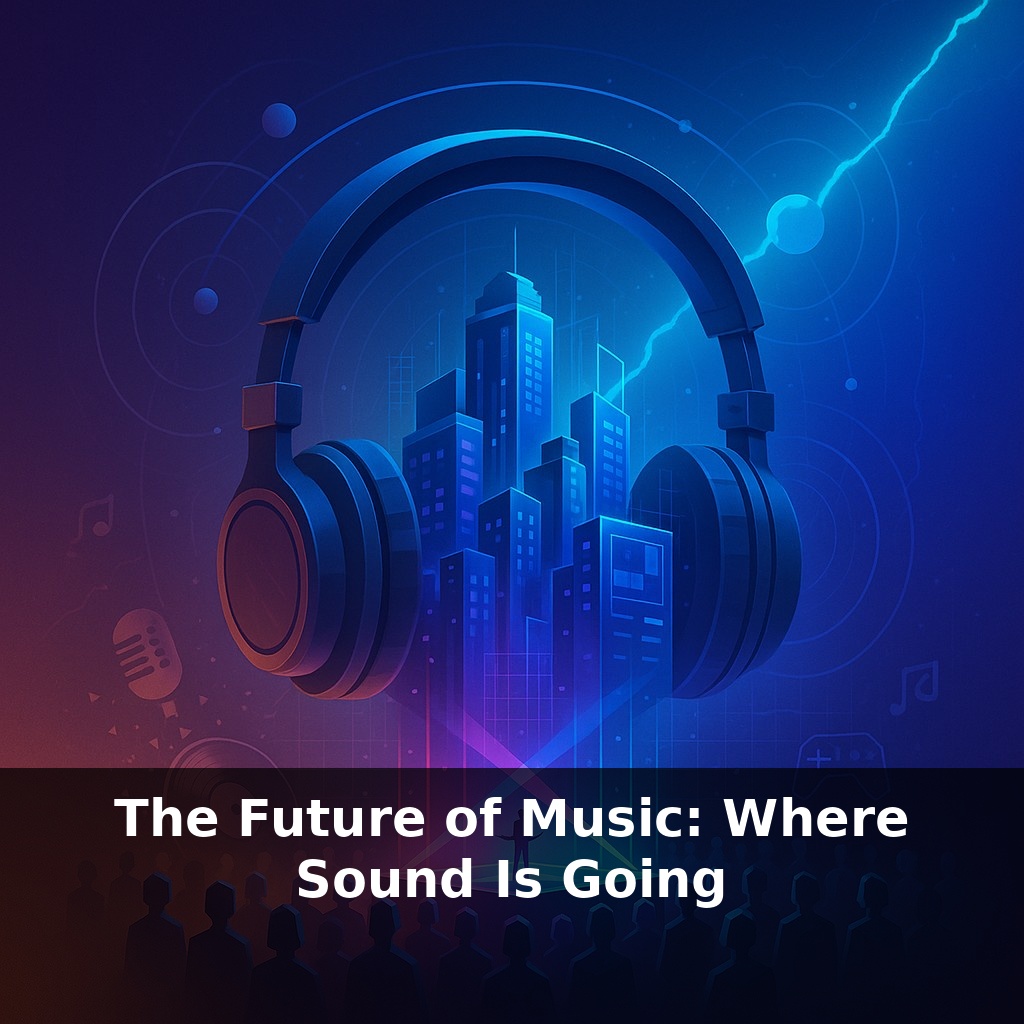
More than 100,000 songs now exist in spatial formats like Dolby Atmos—yet most of us still listen through tiny phone speakers. That gap between what’s possible and what we actually hear is the fault line where the next era of music is forming. In the last episode, we stepped inside digital crowds; now we zoom closer to the sound itself, and the tools that shape it. Three forces are converging: generative AI that can sketch ideas at the speed of thought, immersive hardware that can put a “stage” anywhere, and new ways of packaging and owning audio, from interactive stems to tokenized editions. Together, they don’t just upgrade our playlists—they quietly rewrite who gets to create, perform, and get paid from music, and what “a song” even is.
Studios used to be guarded rooms full of fragile, expensive gear; now the same kind of power sits in a browser tab, quietly waiting behind a login screen. The next shift isn’t just where the tools live, but how many hands they land in and what they can do together. A teenager with a laptop can join a cloud session with a producer across the world, drop in an AI draft, and route the result to formats that never existed when MP3s took over. It’s less like pressing “record” and more like logging into an evolving ecosystem where songs behave more like software updates than finished products.
The first big shift is invisible: how quickly ideas can move from someone’s head into sound. AI tools that used to spit out cheesy elevator music are now good enough that major labels quietly test them for demos, alternate versions, and even vocal “scratch tracks” in an artist’s own tone. Instead of spending a whole afternoon comping a chorus, a writer can audition ten melodic options in the time it takes to make coffee—then keep only the ones that spark emotion. That speed doesn’t guarantee better songs, but it does change the economics of experimentation: more weird drafts, more cross‑genre collisions, more chances for an unknown voice to nail something compelling before the session money runs out.
The second shift is where listening happens. VR headsets and AR glasses are still niche, yet the behavior they enable is spreading beyond “concerts.” Think pop albums that ship with built‑in, explorable “story rooms,” where you can walk through stems, lyrics and visuals like an interactive booklet; producer Q&As where fans stand virtually beside a mixing console as a hit is deconstructed in real time; or micro‑meetups where fifty people worldwide gather around an unreleased track and leave time‑stamped reactions that the artist can literally stand inside later. These aren’t replacements for sweaty clubs; they’re new “layers” around the core experience of a song.
Third, the soundstage itself is stretching. When over a hundred thousand tracks exist in advanced formats, the early advantage goes to creators who write with three‑dimensional space in mind. A minimalist piano piece can place the pedals, hammers, and room reverb in distinct positions; a drill track can swirl ad‑libs above your head while the kick stays glued to your chest. Some film and game composers already prototype music as moving objects in a 3‑D grid first, then flatten it down for stereo as a secondary step, flipping the traditional hierarchy.
Now link these three together. A producer could start with an AI‑assisted sketch, arrange it directly in a spatial field, and debut it inside a mixed‑reality environment where core fans react live—not just with comments, but by literally changing their vantage point. Rights can attach not only to the finished master, but to individual layers, live variants, or even time‑bounded “director’s cuts” of shows. For artists, this opens a spectrum between “broadcast to everyone” and “share this fragile idea with twenty superfans tonight,” each with its own creative and financial logic. The hardest part may not be the technology, but deciding which version of a song counts as the “real” one when every iteration can survive, circulate, and earn on its own.
A songwriter stuck on a verse might now treat AI like a smart sous‑chef: feed it a rough melodic idea and it returns a tasting menu of harmonic twists, rhythmic flips, even alternate toplines in minutes. The writer still chooses the dish, but the pantry of options gets much deeper, very quickly. Meanwhile, indie artists are already using game engines to “stage” albums as explorable worlds—one room per track, secret doors for B‑sides, hidden loops that only unlock if you linger. Some producers are selling access not just to finished tracks, but to private listening rituals: a monthly “works in progress” hang where twenty supporters hear a song morph through three or four live rearrangements, then vote on what survives. On the business side, rights experiments are creeping into fan apps: limited digital passes that grant priority feedback slots, credits in liner notes, or the right to request a custom mix tailored to your favorite frequencies—producers as on‑demand sound tailors rather than distant, one‑size‑fits‑all hitmakers.
Royalties may start to feel less like a paycheck and more like a streaming portfolio: tiny flows from live edits, fan‑specific cuts, and background use in apps you’ve never opened. Artists who learn to “budget” their catalog—deciding which ideas stay rare, which are free samples, which are premium—could navigate this like careful investors, balancing risk and reach while listeners drift between roles: audience, co‑curator, even occasional co‑author.
Your challenge this week: pick one everyday sound—a kettle boiling, subway brakes, rain on your window—and treat it as raw material. Record it, then run it through any free tool that can stretch, pitch‑shift, or spatialize audio. Notice how quickly it stops sounding like “life” and starts feeling like music’s next sketchpad.