 2min preview
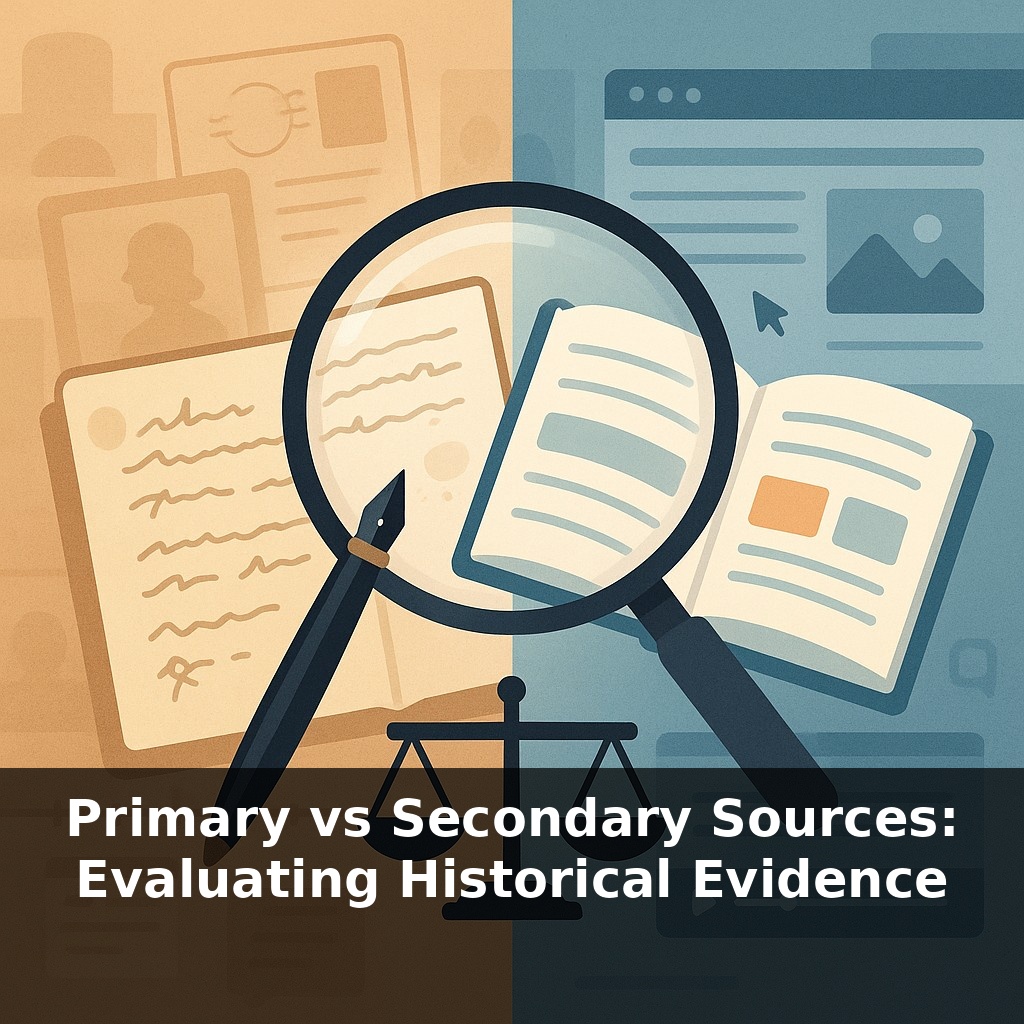
Primary vs Secondary Sources: Evaluating Historical Evidence
📝 Transcript
Only about one in six teenagers can reliably tell an online ad from a news story. Now zoom out: courts, textbooks, documentaries, family stories—all built on evidence. But which pieces are eyewitness voices, and which are someone else’s spin masquerading as fact?
Historians face this problem constantly, but with higher stakes. Label a shaky memoir as solid proof, and you can distort an entire era. Treat a careful archive-based study as if it’s just another opinion, and you throw away decades of work. The first step out of this tangle is learning to tell what kind of thing you’re holding in your hands.
In practice, that often means sorting between two broad categories of historical evidence. One comes straight from the time and people you’re studying; the other is produced later, by someone looking back. Both matter—but they answer different questions and carry different risks.
Subscribe to read the full transcript and listen to this episode
Subscribe to unlockSubscribe for $1.99/month to unlock the full episode.

Unlock all episodes
Full access to 7 episodes and everything on OwlUp.
Subscribe — $1.99/monthLess than a coffee ☕ · Cancel anytime