About half the choices we make each day are based more on habit than on clear thinking—yet a tiny shift in how you ask questions can quietly rewrite your health, your bank account, even your relationships. You’re already running experiments; today, we’ll make them deliberate.
Nine times out of ten, when people feel “stuck,” it isn’t because the problem is impossible—it’s because the question they’re asking is too fuzzy to test. “How do I get healthier?” is vague. “Does walking 15 minutes after dinner improve my sleep within a week?” is something you can probe, measure, and refine.
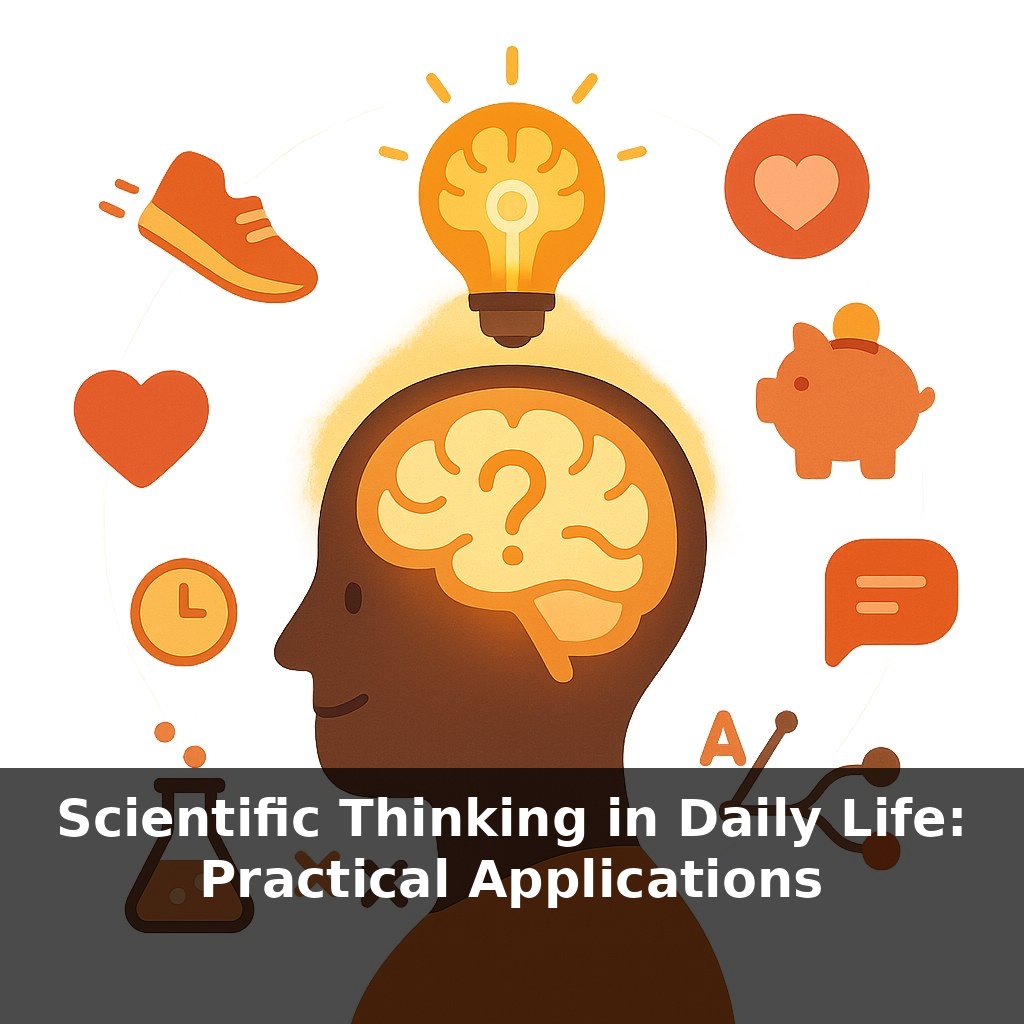
Scientific thinking in daily life starts with sharpening questions like this in the moments that actually matter: before you click “buy,” say “yes” to a project, accept medical advice, or react in an argument. It’s not about turning life into a spreadsheet; it’s about making uncertainty just clear enough that you can learn from it.
Across fields—from how surgeons revise checklists to how teams adjust workflows—the same pattern shows up: better questions, clearer feedback, faster progress. In this episode, you’ll learn how to bring that pattern into your own decisions, without needing a lab coat.
You don’t need a lab to do this—you need moments. Three, in particular, are perfect for “thinking like a scientist” in real life: when you’re about to spend money, when you’re about to say yes to a commitment, and when you’re about to react quickly to someone else. Each of these is a quiet decision point that can snowball into weeks of consequences. In this episode, we’ll turn those everyday crossroads into mini decision-labs: naming your hidden assumptions, sketching quick hypotheses, and using tiny bits of data—sleep logs, bank alerts, even message history—to guide your next move.
Start with money, because it leaves a paper trail. Before your next non-essential purchase, pause for 30 seconds and write a prediction you can later check: “If I buy this course, I’ll use it for at least 3 hours this week and feel less stressed about my career.” Now you’ve created something you can test: usage (3 hours), a time frame (this week), and a concrete outcome (stress). A week later, you’re not judging your character; you’re comparing what you thought would happen with what actually did. Over a few purchases, patterns appear: “Anything I buy after 10 p.m. gets ignored,” or “Subscriptions I can’t see on my calendar vanish from my life.”
The same move works with time. When you say yes to a project, make a quick forecast: “This will take 5 hours spread over 3 evenings, and I’ll be glad I did it.” Put that in your calendar note or task description. As you close the project, compare. If your estimates are always off by 50 %, that’s not a moral failing; it’s a calibration issue you can tune. Remember the Cornell finding: simple, explicit frameworks cut overruns dramatically. You’re building your own tiny version.
Health decisions are another ripe area because the signals are often noisy. Suppose you’re trying to improve sleep. Instead of overhauling everything, pick one specific lever for a week: “No screens after 10 p.m.” Track only two things: when you actually stopped screens, and how you felt on waking (give it a 1–5 rating). After 7 days, look across your notes. You’re not proving a universal law; you’re learning how *your* body responds in *your* context.
Relationships benefit from this mindset too, without turning people into lab subjects. In a recurring conflict, quietly test one change in your own behavior: “If I pause for 5 seconds before replying when I’m annoyed, does the conversation stay calmer?” Jot a few bullets after each tough exchange: what you did, how tense it felt, how fast things escalated. You’re not scoring the other person; you’re adjusting your own input and watching for movement.
In all of these cases, you’re doing what good teams do when they run A/B tests or refine safety checklists: making small, explicit bets, then letting reality nudge you toward better ones.
Open your calendar or notes app and scan ahead three days. Pick one upcoming moment where you’re likely to “wing it”: a work meeting, a gym session, or even choosing dinner after a long day. Treat that slot as a tiny field study. Before it happens, write a single, checkable expectation: “If I prep 3 bullet points, I’ll talk less in circles and finish this meeting 10 minutes early,” or “If I set my workout clothes on the chair, I’ll actually exercise for 20 minutes.”
Your challenge this week: each day, pick one such moment and record just *one* expectation plus how you’ll notice whether it happened (end time, steps logged, energy from 1–5). Afterward, jot a 10-second note: closer than expected, wildly off, or sideways outcome you didn’t foresee.
This isn’t about control; it’s about noticing where your mental “forecasts” are sharp, and where they’re blurry. Over several days, patterns surface—and you can start nudging reality in your favor.
Future implications stretch beyond personal tweaks. As citizen projects expand and AI quietly compares patterns in your sleep, spending, or mood, your “ordinary” notes could plug into larger maps of human behavior. You might get nudges like a weather report: “Today you’re 60 % likely to overspend after 9 p.m.—want to try a different plan?” Schools may treat these micro-forecasts as core skills, grading less on right answers and more on how well students refine their own thinking over time.
Over time, this way of noticing and adjusting turns into a quiet superpower: you start spotting leverage points others miss. A tense email becomes a draft to refine, not a trigger. A bad day becomes data, not destiny. Like checking the weather before heading out, you’ll glance at your own patterns—and step into the day better prepared.
Start with this tiny habit: When you catch yourself making a quick judgment (like “this always happens to me” or “that product must be better because it’s popular”), quietly ask yourself, “What else could explain this?” and name just one alternative explanation in your head. Then, as you grab your phone next, type a single question about it into your search bar (e.g., “Do expensive supplements actually work better?”) and read just the first credible result. Over time, you’re training your brain to pause, generate more than one hypothesis, and then do a micro “experiment” by checking one real-world data point before you move on.