Understanding the Importance of Vision in Leadership
📝 Transcript
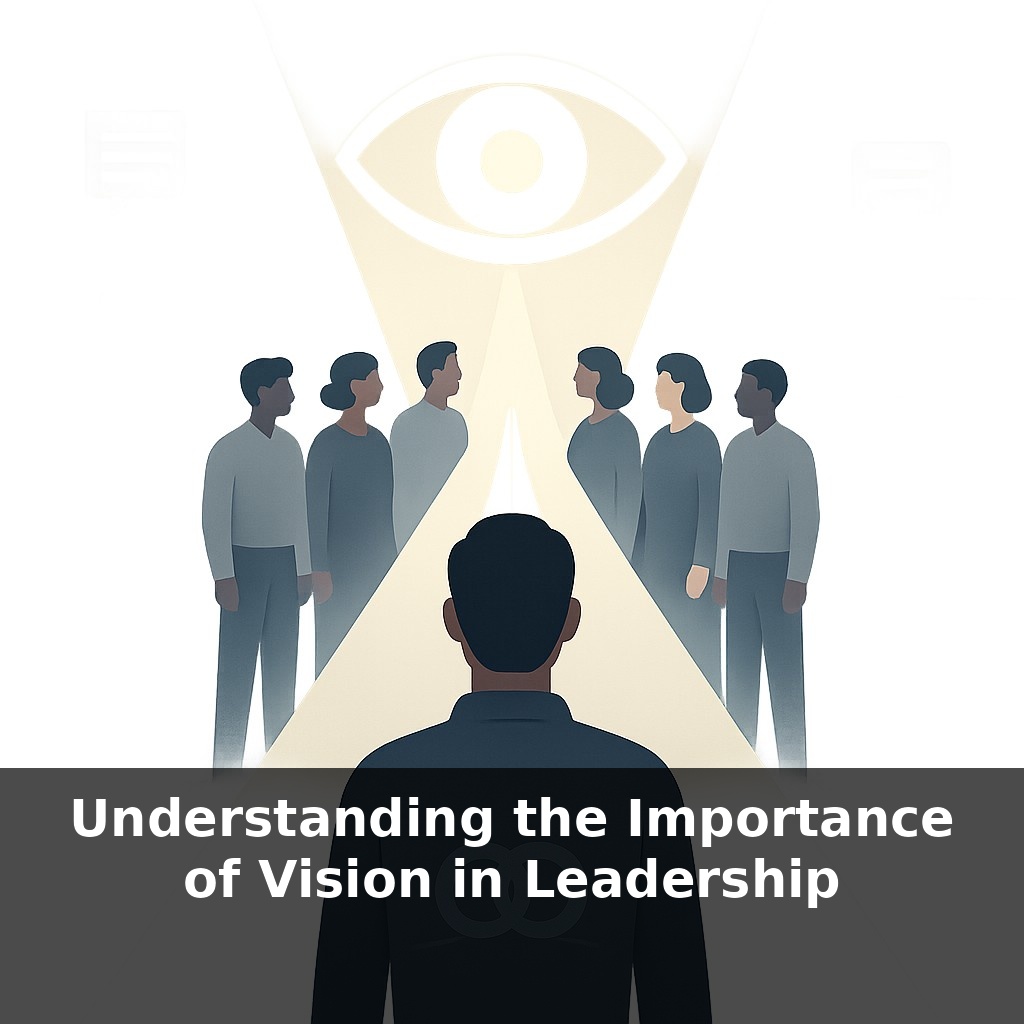
Only about one in five employees can clearly state their company’s vision—yet leaders keep pouring time into strategy decks and town halls. In this episode, we’ll step inside that gap between “we have a vision statement” and “people actually feel led.”
Most leaders assume their job is to “sell” the vision harder. But if people can’t recall it, the problem usually isn’t volume—it’s resonance. Employees remember what connects to their daily decisions, not what fills a slide. Vision only becomes energizing when someone in a real meeting, facing a real trade‑off, can say: “Given where we’re going, this is the move that makes sense.”
That’s why two leaders can use almost identical words, yet one team feels switched on while the other drifts. The difference is how specifically the future is sketched, and how often it’s tied to concrete choices—what we start doing, stop doing, and refuse to compromise.
In this episode, we’ll look at how effective leaders translate a distant future into near‑term meaning: hiring criteria, project priorities, and the way success is celebrated, so the vision stops being a slogan and starts becoming a filter.
So instead of asking, “Do we have a vision?” a better question is, “Where does our vision quietly win or lose inside the organization?” That usually shows up in small, unglamorous moments: how you justify a headcount request, which messy project you personally review, or what gets airtime in Monday stand‑ups. Think of each of these like API calls between the future you’ve described and the present you’re running; if the responses are inconsistent, people default to local logic, not shared direction. Our job is to trace those calls and see where the signal gets scrambled.
Most leaders underestimate how much ambiguity erodes the pull of a future direction. People don’t resist where you’re going as much as they resist not knowing how today’s effort ladders up. The brain quietly asks three questions before it will invest real energy: “Can I see it? Can I influence it? Can I win in it?” If any of those stay fuzzy, motivation bottoms out, no matter how often the vision is mentioned.
This is where specificity becomes a performance tool, not a branding exercise. High‑performing leaders turn abstractions into “decision pictures”: short, vivid snapshots of what a normal day looks like if you’re successful. Not a grand speech—just concrete scenes. For example, Nadella didn’t just talk about “cloud first”; he repeatedly highlighted stories of small teams shipping cross‑platform features and learning from failure. Those stories put edges around an otherwise broad direction, and people began to recognize themselves inside the future.
Research backs this up. When people mentally simulate a detailed future—who’s there, what’s happening, what they’re doing—the dopaminergic system responds more strongly than to generic goals. It’s not “hit 20 % growth”; it’s “you walk into a review, and instead of defending last quarter, you’re demoing three experiments that found new revenue.” The more sensory and situational the picture, the more the brain tags it as worth pursuing.
At the organizational level, this changes how alignment works. Instead of cascading a slogan, you cascade a small library of “future snapshots” tailored to different roles: what a successful quarter feels like for an engineer, a salesperson, a customer‑support rep. The words at the top stay stable, but the stories at the edges get translated.
Think of it like refactoring a large codebase: the overall architecture doesn’t change daily, but you keep updating individual modules so that everything compiles against the same future release. Leaders who do this well don’t just ask, “Do you know where we’re going?” They ask, “What will be different in your work when we’ve arrived?” and stay curious until the answer is concrete enough that someone could recognize it when it shows up.
Think about how this plays out at different levels. A frontline manager might say, “In our future, customers never have to repeat themselves.” That’s still abstract—until she adds: “So within six months, every support rep will see a full interaction history on one screen, and our callback rate will drop below 5%.” Now a rep can walk into a shift and know what “moving us forward” looks like today.
Or consider a product leader who tells her team, “If we’re serious about being the most trusted platform, a release only ships when any new user can complete their first task in under three minutes—no training, no guessing.” Suddenly, designers, engineers, and PMs share the same yardstick. Debates about features turn into experiments against that three‑minute test, rather than personal preferences.
These kinds of concrete scenes do something subtle: they invite people to locate themselves inside the story and ask, “Where could I move first?” That’s where energy starts to compound.
Regulators, investors, and even algorithms are quietly stress‑testing whether your direction actually shapes behavior. In the next decade, expect dashboards that contrast declared aims with hiring data, capital allocation, and product impact—flagging gaps automatically. Your direction becomes traceable, like version control for strategy: stakeholders will see not just what you ship, but how consistently each release reflects the future you’ve committed to building.
As you experiment, notice where your story still feels thin. Often, the missing pieces live in conflicts: trade‑offs you’ve dodged, audiences you’ve ignored, edge cases you haven’t named. Like debugging a stubborn error, the real insight appears when you trace where things break, not where they behave. That’s where the next version of your vision is hiding.
Start with this tiny habit: When you open your calendar each morning, whisper your leadership vision in one sentence, starting with “I’m building a team where…” and finish it with one concrete outcome you heard in the episode (like “people speak up even when it’s risky” or “we ship bold ideas, not just safe ones”). Then, pick just one meeting on today’s calendar and add a three-word note to its title that nudges that vision (for example: “+ bold question” or “+ listen first”). Over time, this tiny tweak keeps your vision in front of you and subtly reshapes how you show up, without adding another big task to your day.
From this course

Vision Crafting for Leaders
6 episodesUnlock all episodes
Full access to 6 episodes and everything on OwlUp.
Subscribe — $1.99/monthLess than a coffee ☕ · Cancel anytime