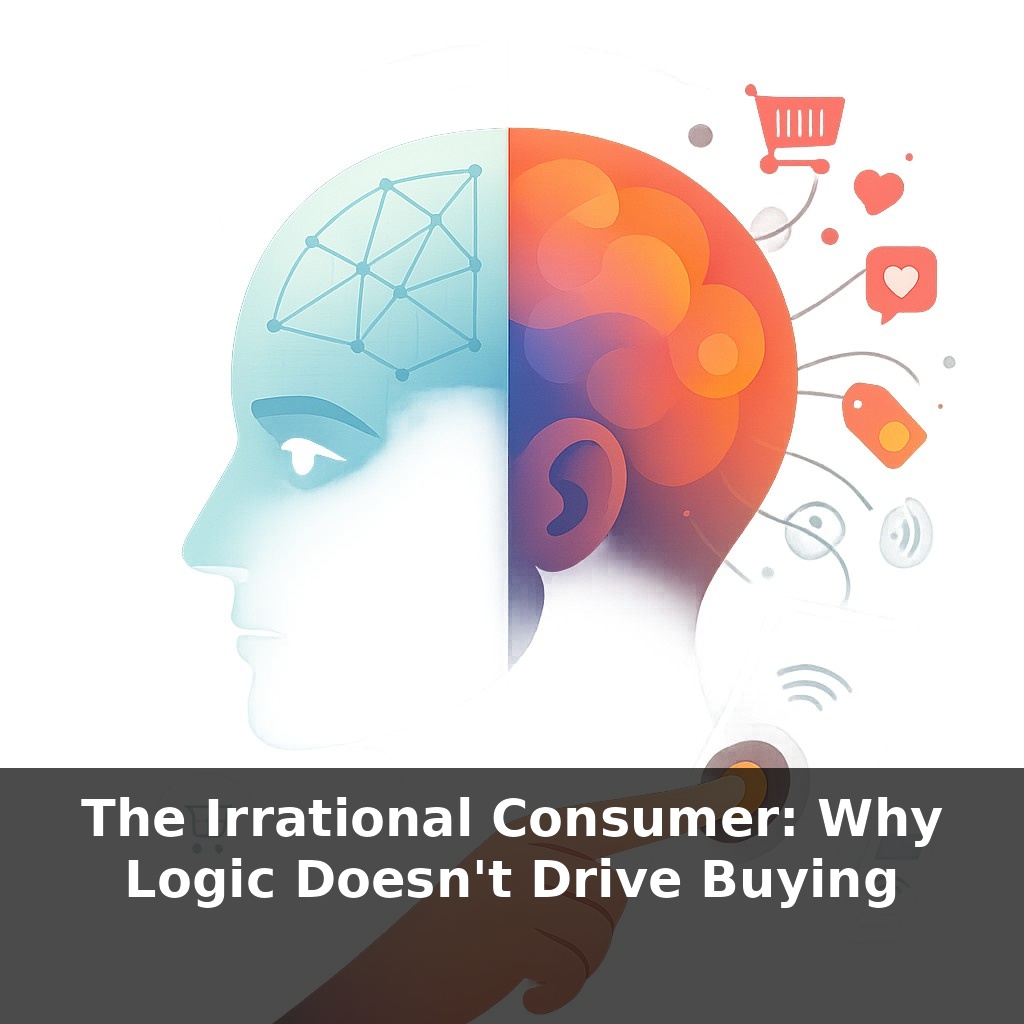
The Irrational Consumer: Why Logic Doesn't Drive Buying
📝 Transcript
About 95% of what you buy is decided before you “think” about it. You stand in line for the pricier phone, swear you’re being rational, and still tap “buy now.” So here’s the puzzle: if logic isn’t driving, why does it feel so much like we’re in control?
That 95% of your buying happens subconsciously isn’t just a brain quirk—it’s a system marketers actively design around. Brands don’t wait for you to sit down with a spreadsheet; they compete to be the first feeling that flashes in your mind when you see a product, a logo, or a single review star. A half‑point bump in ratings, a “only 3 left” label, a friend’s offhand comment—these tiny cues quietly tilt the scale long before you justify the choice to yourself. In practice, you’re less a calculating shopper and more a fast-moving editor, skimming emotional signals and approving whatever “feels right” in the moment. This is why a phone that costs noticeably more can still trigger queues around the block: people aren’t lining up for specs, they’re lining up for what owning it says about them. In this episode, we’ll unpack how those signals are crafted—and how to actually see them.
Marketers know your brain loves shortcuts, so they flood your path with them. A row of nearly identical products suddenly feels “obvious” when one has a slightly higher star rating, a friend’s quick recommendation, or that red “limited-time offer” tag screaming for attention. None of these change what the product actually does, but they change how safe, smart, or socially accepted the choice feels. That’s why small tweaks—like moving a review from “okay” to “pretty good” or hinting that stock is running out—can shift entire crowds without ever touching the product itself.
Marketers lean on three especially powerful levers: identity, urgency, and anticipated feeling.
Identity shows up when a choice quietly answers, “What kind of person am I?” That’s why a logo on a laptop, a sneaker brand, or even the coffee shop you post from can matter more than the functional difference between options. Apple’s launch lines aren’t just about owning hardware; they’re about joining a visible tribe. In B2B, this looks like buyers gravitating toward “safe” brands that protect their reputation inside the company, even when a cheaper, decent alternative exists.
Urgency works by compressing the time you allow yourself to question a choice. “Only 3 left,” countdown timers, “booking now, join 12 others viewing this room” — these push you out of comparison mode and into action mode. The Northwestern and Booking.com data points show how small tweaks in presentation nudge behavior without changing the underlying offer at all. The product is the same; the clock in your head isn’t.
Anticipated feeling is the quiet forecast your brain runs: “How will I feel after I buy this?” That projection often matters more than the object itself. We don’t just buy shoes; we buy the imagined confidence on stage, the compliments at work, the relief of not worrying about foot pain. Subscriptions trade on this too: we picture the “new me” who reads more, eats better, sleeps earlier, and we pay now to rent that possible future.
Layered on top of these levers are systematic quirks your mind brings to every choice. You anchor on the first price you see, so a “was $299, now $179” tag can feel like a win even if $179 was always the real target. You overweight recent experiences, so one bad delivery from a brand you’ve loved for years can loom larger than it statistically should. You seek confirmation, so after leaning toward a product, you notice five reasons you were “right” and skim past conflicting reviews.
None of this is random. The seeming chaos of taste changes and impulse buys follows patterns—patterns sophisticated teams test with A/B experiments and then scale. In practice, the “stew” of your choices gets seasoned long before you lift the spoon.
Think about a time you upgraded a streaming plan “for the kids” and ended up binging more than anyone. On paper, nothing forced that choice; in practice, a row of glossy thumbnails and a “most popular” badge probably did more work than your budget did. Or consider walking past a bakery: the smell hits first, then the warm light, then the little sign: “fan favorite since 1998.” You’re not comparing flour quality—you’re stepping into a tiny story where other people have already chosen for you.
The same thing happens online when a site highlights “best for families,” “creator favorite,” or “editor’s pick.” Each label invites you into a role: parent, expert, insider. Even “build your bundle” tools can quietly steer you, pre‑selecting options that feel like you designed them yourself. Loyalty programs go further, turning streaks, points, and tiers into mini-quests; suddenly you’re not buying coffee, you’re “protecting” your gold status. Brands aren’t just selling items; they’re scripting small, flattering parts for you to play.
As AI tailors offers like a perfectly fitted suit, your patterns become a kind of behavioral fingerprint. Interfaces may quietly bend toward your weak spots: late‑night scrolling, payday splurges, boredom clicks. Think of “recommended for you” turning into “irresistible to you.” Expect pressure for labels that flag emotional targeting the way nutrition panels flag sugar, and space for brands that treat restraint—not maximization—as a feature, like apps that cap nudges when you hit preset limits.
The real opportunity isn’t to erase your quirks, but to see them. Start treating your cart like a diary: which items feel like comfort food, which feel like costume changes? When a product tugs at you, ask whose story you’re stepping into. Over time, you’re not aiming for perfect logic—just a bit more light in the room you’re already shopping in.
Your action plan this week: Choose a product you often consider buying and research two different brands. Create a two-column chart. In Column A, list features, specs, and price of each product. In Column B, note any emotional appeals from their marketing—like personal stories or lifestyle images. Over the next 7 days, whenever you feel inclined to make a purchase, reflect on which column influenced you more. This reflection will highlight the emotional triggers at play in your consumer psyche.
From this course
Why We Buy: The Psychology of Consumer Behavior
7 episodesUnlock all episodes
Full access to 7 episodes and everything on OwlUp.
Subscribe — $1.99/monthLess than a coffee ☕ · Cancel anytime