A single word in an ad can quietly change your heartbeat faster than you can say your own name. You’re scrolling, half-distracted, and suddenly you feel a jolt of worry… or a rush of “I want that”… or a warm sense of “these are my people.” What just happened?
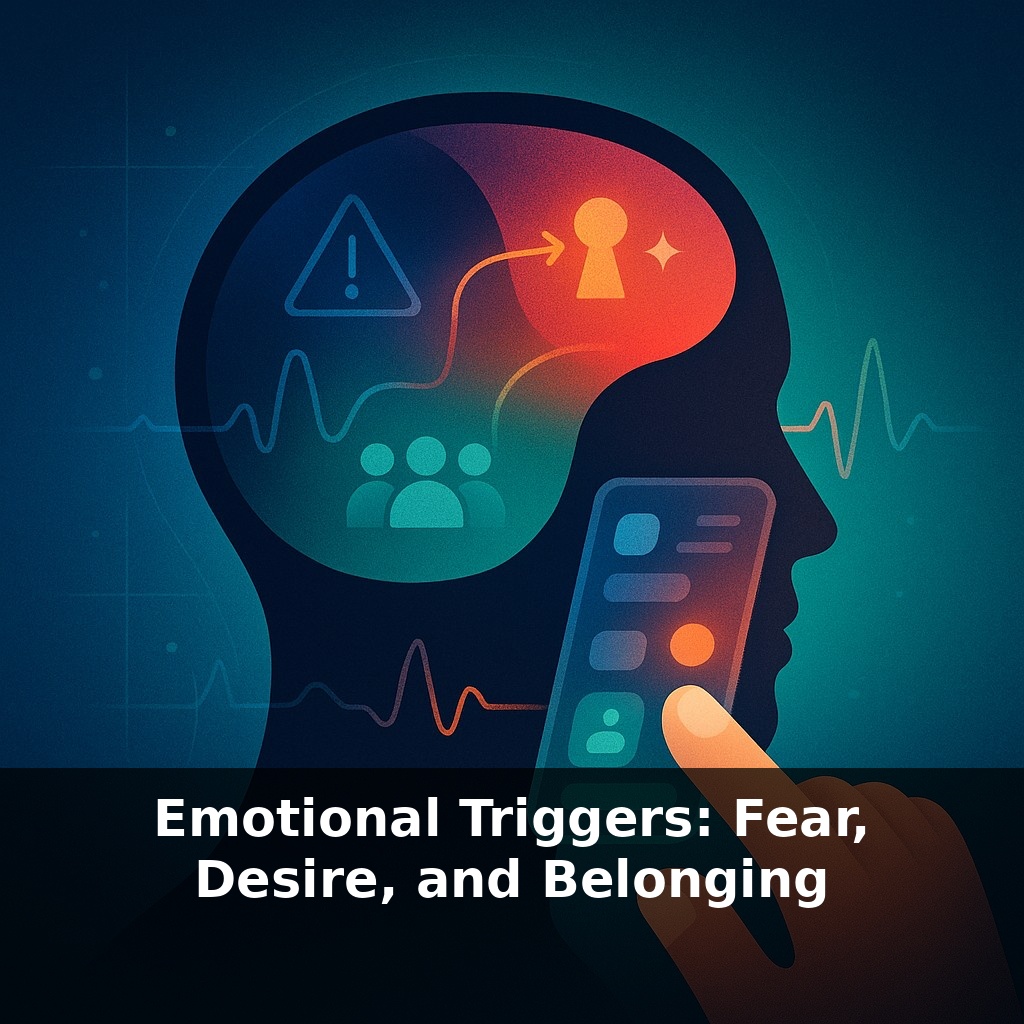
Here’s where things get more unsettling: those tiny shifts in feeling you’ve noticed aren’t random—they’re the result of deliberate choices about which emotional “button” to press first. Fear: “Only 3 spots left.” Desire: “Unlock your next-level self.” Belonging: “Loved by people just like you.” Behind each of these is a team testing headlines the way a chef tweaks seasoning—measure, taste, adjust, repeat—until the reaction is just right.
And it’s not guesswork anymore. Platforms track which posts make you pause, which offers you almost click, which communities you linger in. Over time, a pattern emerges: maybe you’re more moved by missing out than by fitting in, or the opposite. Then the messaging shifts around you—subtly, constantly—until it feels less like advertising and more like the world simply reflecting “who you are.”
Marketers now pair those emotional “buttons” with hard data about what actually moves you. Neuroscientists can see fear, desire, and belonging light up older brain regions that act faster than your “slow thinking,” nudging you toward action before a rational cost–benefit check kicks in. That’s one reason emotion-heavy ads are more memorable and social posts with charged language spread farther. Brands then slice audiences into micro-groups: those who flinch at loss, chase upgrades, or crave community. Each group sees a different “version” of the same product, tailored to how they’re most likely to decide.
Fear, desire, and belonging might sound abstract, but in practice they show up in very specific, testable patterns.
Fear first. The strongest fear-based campaigns rarely scream “disaster.” They hint at a plausible threat, then hand you a tool. Cybersecurity brands don’t just say “Hackers are everywhere”; they say “Here’s the 3-minute scan that shows if you’re exposed.” Public health campaigns that work don’t only warn about disease; they pair the risk with a concrete, doable next step and a sense that “people like you” are already taking it. When fear is dialed too high without that path forward, people mentally change the channel—denial is a self-defense mechanism.
Desire plays a different game. It’s not just “wanting stuff”; it’s about a better version of the self you already imagine. Luxury brands sell the feeling of having “made it,” productivity apps sell the calmer, more in-control you, fitness tech sells the story of future confidence. Story-driven formats are powerful here because they let you see that upgraded self in motion, with obstacles and little victories, not just glossy end results. The details—what the character notices, struggles with, celebrates—quietly signal who this fantasy is really for.
Belonging weaves itself through status symbols and inside jokes. Membership programs, limited drops, “invite-only” betas, niche communities on Slack or Discord: all of these say, in different ways, “there’s an in-group, and you could be in it.” This isn’t limited to teens or lifestyle brands. Enterprise software sites showcase customer logos and peer testimonials because a CIO doesn’t just ask “Does this work?” but also “Are my peers already on board?” Social proof and identity proof blur together.
Here’s where data changes the stakes. Instead of picking one dominant emotion for everyone, brands can rotate the spotlight: the same running shoe can be framed as avoiding injury (fear), hitting a new PR (desire), or joining a local run club (belonging). Algorithms watch which framing gets you to lean in, then quietly prioritize that lens next time.
Your challenge this week: when you notice an ad, post, or email that actually makes you pause, label which of the three it leans on most—fear, desire, or belonging—and then ask one extra question: “What action is this specific feeling nudging me toward right now?”
A skincare brand runs three short videos. In one, a woman zooms in on a new wrinkle before a big presentation; the line “Don’t let aging show up before you do” leans on fear without naming it. In another, a close-up of glowing skin with “Meet the future you, in 28 days” quietly invites desire. A third shows a group of friends sharing the product on a weekend trip, tagged “For our kind of people,” signaling belonging more than beauty.
A/B tests then reveal which version pulls which audience closer. Not just on clicks, but on micro-signals: who replays, who sends it to a friend, who saves it for later. Over time, one city might mostly see the friendship story, while a different region gets more of the “future you” arc.
Your challenge this week: notice not just *what* you’re being shown, but which version of a story keeps following you from platform to platform.
As these tools mature, emotional tactics may start to feel less like ads and more like weather—always there, quietly shaping your day. You could open a fitness app and find not just a generic offer, but a mood‑matched nudge tuned to your late‑night scrolling habits. Expect new literacy to emerge: people comparing “emotional tones” of brands like they compare ingredients in food, and creators learning to defend their own boundaries while still crafting work that moves audiences.
In the end, the question isn’t whether brands will keep stirring fear, desire, or belonging—they will. The real frontier is how *you* respond. Treat these cues like spices in a dish: notice when they enhance your choices and when they overpower your own taste. The more fluently you read the emotional “label,” the harder you are to quietly steer.
Here’s your challenge this week: Once per day, deliberately step into a tiny fear-triggering moment of visibility—post one honest, 3–5 sentence share on social media (or in a group chat) about something you’re currently afraid of failing at, and end it with one concrete desire you’re committed to pursuing anyway. Then, within 2 hours, send a direct message to one person you trust and explicitly ask for a specific form of support (“Can you check in on me Friday about X?”). Track how many responses you get and notice which messages make you feel more seen and connected, not just “liked.” By Sunday night, choose one of those supportive people and schedule a specific next step related to your desire (a call, a co-working session, or a practice run).