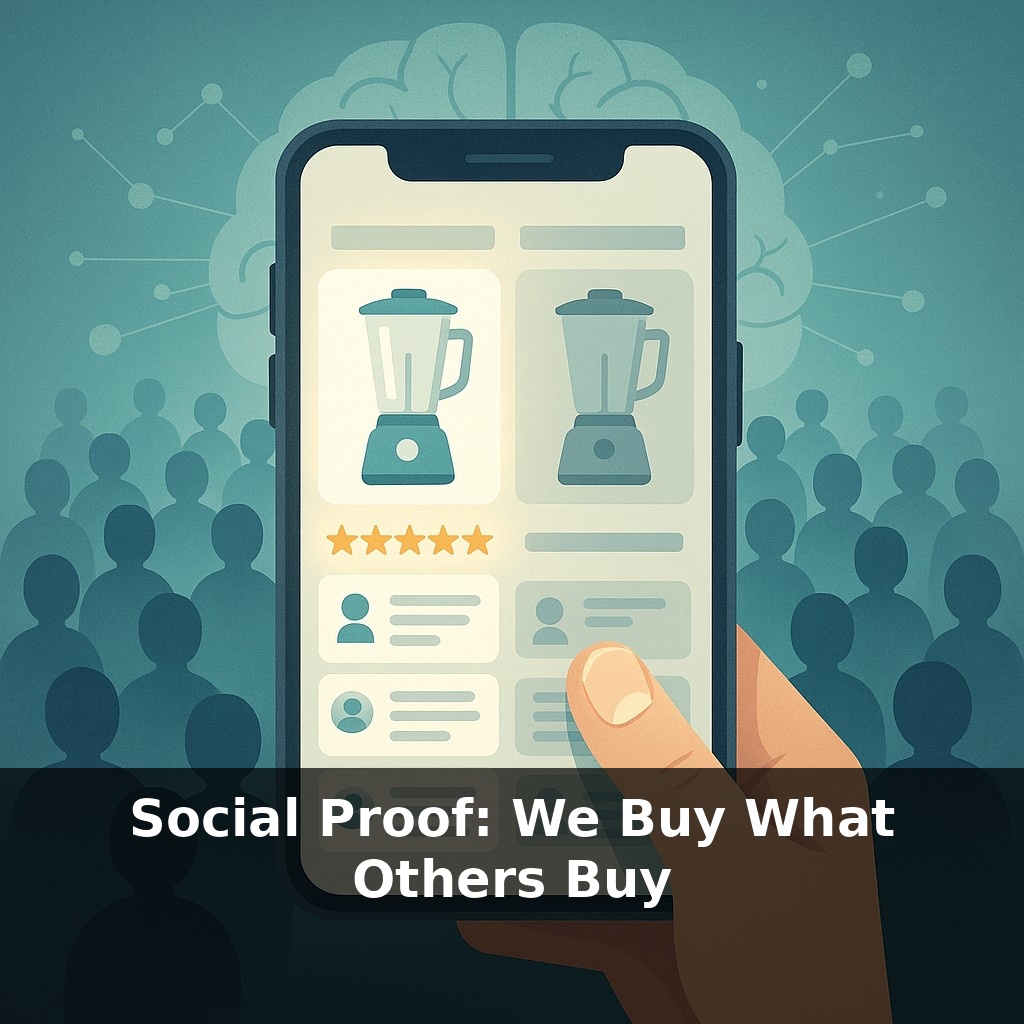
About nine out of ten people say they trust strangers’ reviews online as much as friends. You’re scrolling for a new blender, you see one with a wall of reviews and another with none. Your thumb pauses. Same price, similar features—yet one suddenly feels like the obvious, “safe” choice.
Eighty-eight percent of people say they trust what strangers post about products just as much as what their friends say offline. That’s not just a fun fact—it’s a window into how your brain offloads work. When you’re unsure, you scan for what “people like you” seem to be doing. Social proof is your mental shortcut for, “Someone else has already tested this for me.”
But here’s where it gets interesting: not all proof is equal. A single viral TikTok can sell out a product overnight, yet a quiet stream of solid reviews can outsell hype over the long run. “Best seller” badges, “2,314 people bought this in the last week,” and “trending near you” lists are all subtle ways of saying, “Relax, the crowd has vetted this.”
And social proof isn’t just about buying. It shapes which causes feel legitimate, which experts seem credible, and which trends you start calling “common sense.”
But social proof doesn’t just sit in star ratings and badges—it leaks into all the tiny signals around you. A “sold out” tag nudges you toward the remaining options. A livestream counter showing “12.4K watching now” makes a product demo feel more legitimate. Even the order of search results quietly hints at what “everyone else” prefers. In the background, algorithms constantly reshuffle these signals, boosting items that already show momentum. That’s why a single spike—an influencer mention, a news feature, a sudden cluster of reviews—can tip something from obscure to “must have” almost overnight.
“Most people are wrong, but they’re wrong together,” behavioral scientist Dan Ariely likes to joke. Marketers quietly bet on the flip side: most people feel safer when they’re wrong together too.
Once you notice it, you see layers of social proof stacked on top of each other.
At the surface is basic crowd count: “100K sold,” “top seller in your area,” “number 1 on Netflix today.” Those aren’t just flexes; they’re gentle pushes. If that many people chose it, it feels less risky to follow along.
A level deeper is *similarity* proof. It’s not just that “lots of people” bought this—it’s “people like you.” A skincare brand highlights reviews from your age group. A fitness app shows “10,423 runners in your city use this plan.” LinkedIn says “5 colleagues follow this creator.” The message shifts from “everyone” to “your tribe already decided.”
Then there’s *expert* proof. Blue checkmarks, “as seen in,” doctor quotes, industry awards—these add a different kind of safety. You might ignore a thousand anonymous comments but pause at “recommended by the American Heart Association” or “used by Olympic athletes.” Platforms know this, which is why they label “Top Reviewer,” “Local Guide,” or “Verified Buyer” to make some voices feel weightier.
We also get pulled by *momentum* proof: charts that are rising, items “on fire,” campaigns that are “trending up 340 % this week.” You’re not just told something is popular; you’re shown it’s growing. Growth implies you’re early enough to feel smart, but late enough that others have tested it.
The timing of these signals matters. Early in a product’s life, a brand might seed a few in-depth testimonials or showcase a recognizable client logo just to get past the “nobody’s tried this yet” barrier. Once there’s some traction, algorithms and design choices amplify what’s already working—highlighting certain reviews, surfacing specific images, nudging the story of “what most people do” into clearer focus.
And while we think we’re carefully weighing features and prices, much of this happens in the periphery—badges in the corner, tiny counters, subtle labels. Your rational brain feels in charge, but the social layer quietly narrows what even *feels* like a reasonable choice.
On a restaurant app, you might scroll past two new places with similar ratings—but one dish has hundreds of photos from diners and the other has none. You can almost *taste* the safer choice. On fashion sites, brands now show “real customer” photos first, then polished studio shots, so you subconsciously rank outfits by how many people were willing to be seen in them. Streaming platforms quietly cluster thumbnails of what “people who watched this also watched,” so entire micro‑cultures form around shows that never crack the global top 10 but dominate in a niche community.
This layering also shows up in cause marketing. A climate petition that displays names ticking up in real time, or a charity page with “recent donations” scrolling by, doesn’t just inform you—it stages a live “others are acting” scene. Even workplace tools lean on it: project software highlights “most used workflows” or “popular templates,” steering teams toward norms before anyone consciously debates options. Like a weather radar that colors risk on a map, these tiny counts and cues visually concentrate where attention, action, and money converge.
Influence will get weirder. As AI quietly fabricates “people like you,” we’ll lean harder on smaller, trusted circles—group chats, niche forums, private communities. Social signals will feel more like reading a room at a dinner party than scanning a public scoreboard. Expect tools that rate *who* is vouching for something, not just *how many*. Like checking a weather report from multiple cities, you’ll compare different crowd climates before you commit.
So as you scroll, notice *who* you’re really listening to: a noisy crowd, a tight circle, or one voice you’ve quietly crowned as expert. Your future choices may hinge less on stars and more on these micro‑audiences. Like seasoning a dish, a pinch of other people’s opinions can transform it—but too much, and you can’t taste what *you* actually like.
Start with this tiny habit: When you open Amazon (or any shopping site), pause for 3 seconds and read *one* 3-star review before you look at the star rating or “Best Seller” badge. While you read it, quietly ask yourself, “Is this person’s situation actually like mine?” and then decide if the social proof still feels relevant. Do this for just the first product you’re considering, then shop as normal.