About two-thirds of people in a classic Yale study kept pressing a shock button just because someone in a lab coat told them to. Now jump to a salary meeting: no coat, no title on the door—do you still get the raise? Today we’re peeking behind why “looking expert” quietly moves the numbers.
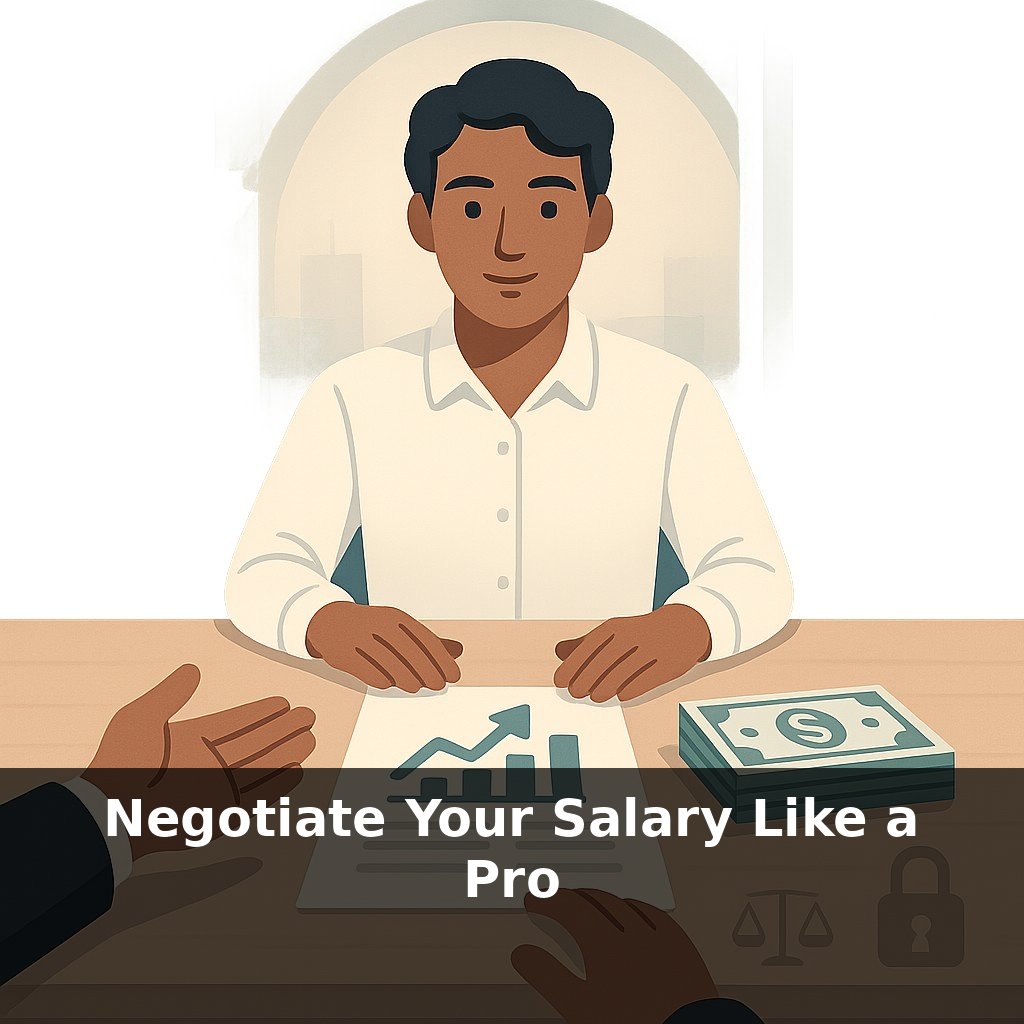
That same pull toward authority shows up far beyond labs and shock machines. In modern negotiations, expertise has become its own currency—sometimes more valuable than budget, title, or formal power. A 2021 meta‑analysis even found that expert power outperforms every other power base in predicting who gets better deals. Yet most professionals treat their expertise like a backstage pass: real, earned, but mostly hidden until someone explicitly asks.
In career conversations—salary reviews, project pitches, cross‑team conflicts—the person seen as “the expert in the room” quietly gets three advantages: they’re granted more benefit of the doubt, they’re assumed to be lower‑risk to agree with, and their proposals are judged against a softer standard. The twist: you don’t need to be *the* top authority in your field; you just need to be the clearest, most legible expert at the table.
Authority in careers isn’t just about titles; it’s about how clearly your expertise shows up *in the moment*. In a negotiation, people rarely have time to fully vet your track record—so they lean on quick, surface cues: how you frame data, which details you choose, even the order in which you speak. Think of it less as “am I truly the best?” and more as “does it feel safer to bet on me than on the alternative?” That shift matters. When your expertise is hard to see, others fill in the gaps with their own doubts. When it’s easy to see, they start editing reality *in your favor* before terms are even discussed.
Here’s the strange part: most people *have* enough credibility to shift a discussion, but they surface it in exactly the wrong order. They wait until someone pushes back on their proposal, then scramble to justify *why* they should be trusted. By that point, the other side has already anchored on doubt.
Behavioral researchers keep finding the same pattern: when markers of authority show up *upfront*, people widen what they’re willing to consider. Not because they’re suddenly generous, but because their brain quietly updates: “Lower risk here; I can explore more options.” That’s where your leverage lives.
Three levers matter most in career conversations:
1. **Context before opinion.** Non‑experts start with what they want (“I’d like a 10% increase”). Perceived authorities start with the landscape (“Team leads in our market with similar scope are in the X–Y range; here’s where I sit against that”). You’re not just asking; you’re curating the frame everyone else now has to react to.
2. **Receipts in the right format.** Long lists of achievements blur together. Specific, recent, and quantified wins function like shortcuts: “In the last two quarters, the release process I redesigned cut incidents by 37% and saved about N engineer‑hours per month.” You’re not appealing to rank; you’re reducing uncertainty with concrete trail markers.
3. **Borrowed authority.** Third‑party signals do work—certifications, Amazon‑style labels, respected sponsors who vouch for you. But they’re most potent when they show up as matter‑of‑fact background, not as bragging. “I pulled this approach from the framework we used in [well‑known team/project]; here’s how it maps to our case” piggybacks on that prior trust.
Think of yourself less as “arguing for what I deserve” and more as “making it easy to see that betting on me is the safest move.” You’re quietly shifting the mental math the other side runs: from “Can I justify saying yes?” to “Can I justify saying no to the person who clearly understands this best?”
In practice, this often looks smaller and more mundane than people expect. A product manager walks into roadmap talks not saying, “I think Feature A matters,” but calmly opening with two short case studies from adjacent companies, plus last quarter’s usage data. No theatrics—just enough visible mastery that pushback turns into, “Okay, if we do A, what can we still ship from B?”
Or take a mid‑level engineer leading an incident review. Instead of diving straight into solutions, they briefly situate this incident against three prior ones, note shared root causes, then lay out two options with trade‑offs quantified. Colleagues stop arguing *whether* there’s a problem and start debating *which* of this person’s paths to pick.
Authority here isn’t loud. It sounds like: “Here’s the pattern, here’s the evidence, here’s the safest bet.” It feels less like lobbying and more like guiding a group through a dense forest with a well‑worn map.
Authority will get stranger from here. As credentials move on‑chain and “expert avatars” negotiate on our behalf, the real edge shifts from *having* proof to *orchestrating* it. Those who can translate noisy data into clear, testable guidance will quietly dominate cross‑border projects and hybrid teams. Your future counterpart may be a composite: human lead, AI analyst, digital badge trail—like a relay team handing you the baton of trust mid‑race.
Treat this less like “proving yourself” and more like curating a gallery: you choose which pieces to spotlight, in what order, under what lighting. Over time, people stop asking whether you belong in the room and start orienting around your judgment by default. The quiet shift is this: your past work stops being a résumé and starts functioning as shared infrastructure.
Try this experiment: For the next 48 hours, turn one piece of your existing expertise into a tiny “Authority Asset” and test it in public. Take a specific question you’re always asked in your domain and record a 3-minute Loom video (or audio snippet) where you walk through your exact process, including 1 concrete example and 1 mistake to avoid. Post it where your ideal audience actually hangs out (e.g., LinkedIn, a niche Slack, or a relevant subreddit) with a clear, specific title like “How I [do X] in 3 steps (and the trap most people fall into).” Then track what happens for 2 days: replies, DMs, saves, shares, and any follow-up questions—those are your signals of where your authority is already landing and what to double down on next.