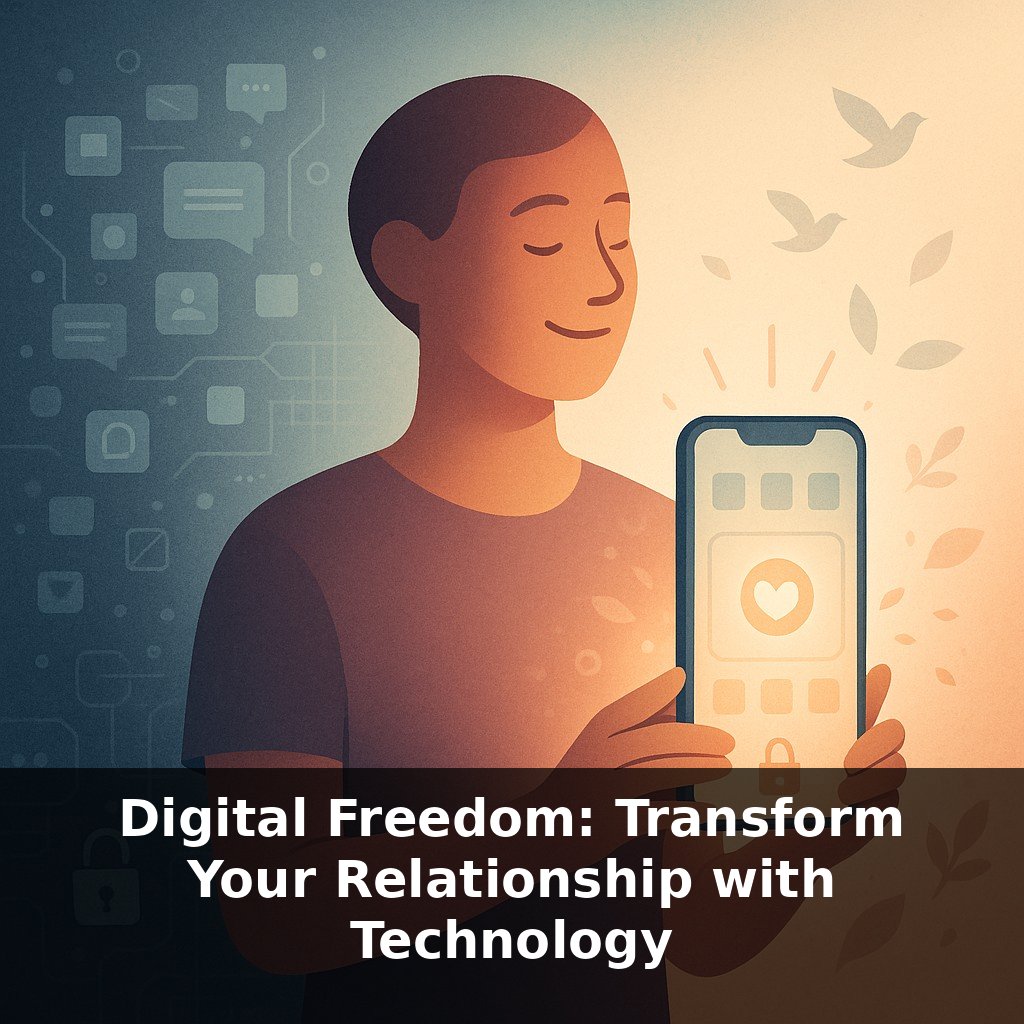
Most people tap their phone thousands of times a day—yet almost no one has a long‑term plan for how they want their digital life to feel. You’re not just using your devices; they’re quietly training you. In this episode, we’ll flip that script and design tech that serves your future self.
You tap your phone around 2,600 times a day, but your brain was never built for that many micro-decisions. Each tap is like a tiny bid for your attention, and the cost adds up quietly: fractured focus, shallow rest, and a constant sense that you’re “on call.” This isn’t about willpower; it’s about geometry. Your biology follows rhythms—ultradian cycles, sleep pressure, circadian clocks—while your apps follow engagement curves and notification schedules. Sustainable freedom comes from aligning those two systems on purpose, over months and years, not in a weekend reset. In this episode, we’ll look at how people redesign their environments—moving apps, using time-bounded sessions, choosing tools by values—to create guardrails that work even on tired days, so your default path leads back to what actually matters.
Think about how your days actually unfold: morning scrolls, mid‑meeting pings, late‑night “just one more” check. The problem isn’t any single moment; it’s the way they quietly chain together. Long‑term digital wellness means engineering those chains on purpose. Instead of heroic detox weekends, we focus on small, structural tweaks that compound—like shifting blue‑light heavy apps earlier in the day, or setting phones to charge outside the bedroom because you know the 11 p.m. version of you is weaker. We’ll explore how people, teams, and even companies build these guardrails so freedom becomes a default, not a daily fight.
Most people try to fix overload with a dramatic reset: delete everything, go “off grid” for a weekend, swear this time will be different. The research is blunt: those bursts feel good but rarely change the long-term pattern. Usage snaps back because the hooks are still there, and your tired, 11 p.m. brain will always lose to a team of full‑time designers.
Long-term wellness looks more like slow engineering than heroic willpower. Three levers matter most: time, environment, and values.
First, time. Your phone already tracks how often and when you use it; almost no one treats that as data to design around. Instead of a vague “less screen time,” people who succeed pick specific windows: 20-minute social blocks at set times, deep-work sessions with apps like Forest or Focusmate that make checking your phone slightly inconvenient. Forest users, for example, have collectively resisted over a billion checks because they turned “don’t touch your phone” into a visible, almost game-like ritual.
Second, environment. Small physical changes quietly outperform big promises. Charging your phone in another room, using a stand so it’s not in your hand, putting distracting apps behind folders or off the home screen—these don’t rely on you remembering anything. At the organizational level, policies like Volkswagen’s after-hours email cutoff shift the default too: not “answer whenever,” but “you’re done when work ends.” That doesn’t fix every problem, but internal reports of burnout dropped when the rule changed, not when individuals merely “tried harder.”
Third, values. Most people install apps reactively: someone recommends it, you tap download. Values-based selection flips that. You ask: does this tool respect my attention? Does its business model depend on keeping me here longer, or helping me leave sooner? That’s why right-to-disconnect laws and built‑in tools like Screen Time matter—they signal that attention is a shared responsibility, not just your private struggle.
Long-term freedom emerges when these three levers line up: clear time boundaries, a physical and digital setup that nudges you toward them, and tools chosen because they serve what you actually care about.
A chef doesn’t just hope dinner turns out healthy—they set up the kitchen so it’s hard to mess up: sharp knives, clear stations, ingredients portioned before the heat goes on. You can treat your tech the same way. One startup founder I worked with created three “modes” on her phone: Morning (only reading and note apps), Work (calendar, docs, messaging), and Off‑Duty (camera, music, maps). She switches modes twice a day, like changing cutting boards. Another client who struggled with late‑night scrolling didn’t start with a ban; he bought a $10 lamp and a paperback, then made a rule: if the lamp is on, Wi‑Fi is off. Within weeks, he was asleep 45 minutes earlier without tracking anything. Teams can do this too: a marketing squad set “green hours” where no internal Slack messages are allowed. They still collaborate—just batch questions for later. They reported fewer mistakes, not just fewer pings. None of these moves are dramatic; they’re quietly repeatable.
Soon, your devices may act more like attentive colleagues than needy toddlers—quietly reshuffling alerts when your stress spikes, or dimming feeds before bed without being asked. Workplaces could treat attention maps like they now treat floor plans, designing calm “focus zones” in both offices and apps. And as norms evolve, kids might grow up comparing “attention labels” on platforms the way we compare nutrition facts, asking not just “Is this fun?” but “Is this worth my mindspace today?”
Over time, this isn’t about being “good” with screens; it’s about noticing how different settings change the story you’re living. Track how you feel after nights with gentler light, quieter apps, or firmer work cutoffs—like tasting a recipe as you adjust the seasoning. Your challenge this week: treat each small tweak as a test, not a verdict, and stay curious about what actually makes life feel larger.