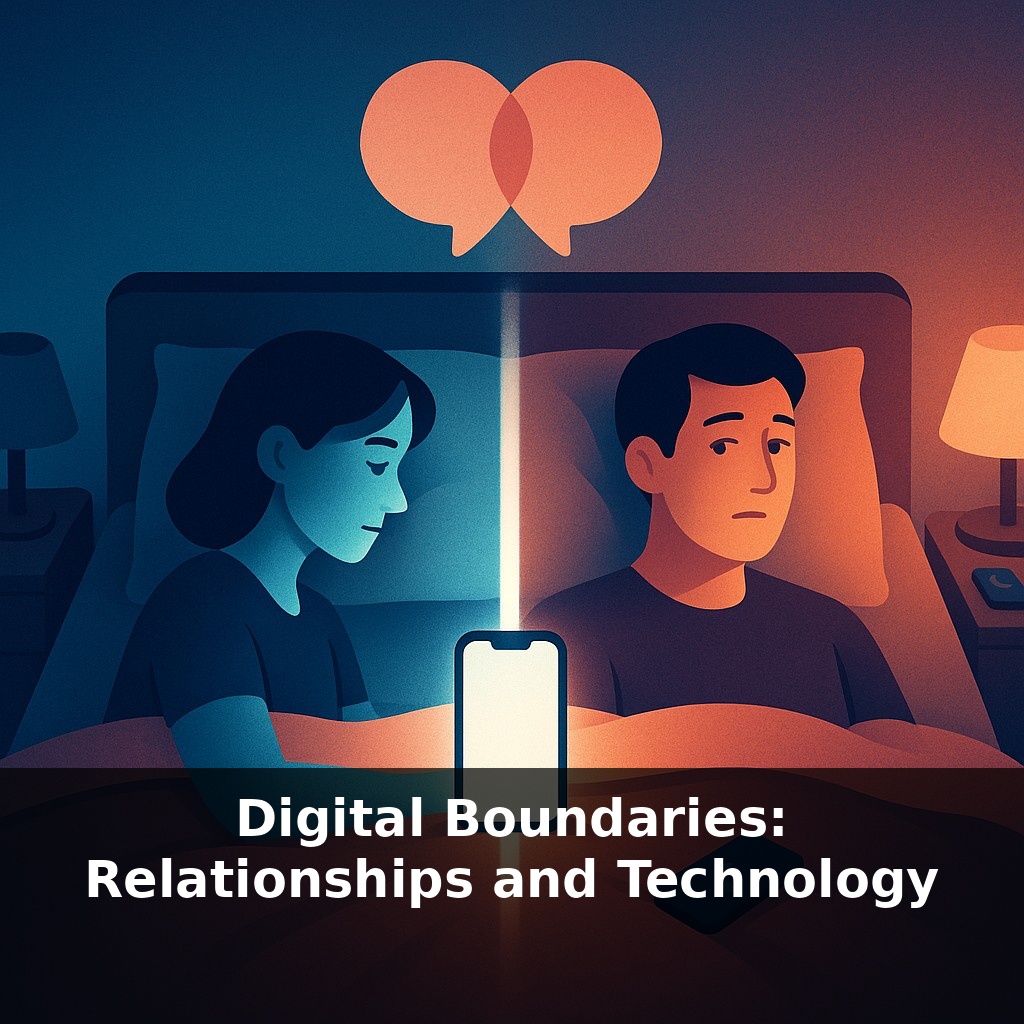
The average smartphone user taps their screen over two thousand times a day—yet many couples can’t remember the last time they had an uninterrupted conversation. In this episode, we’ll explore how tiny digital habits quietly reshape trust, intimacy, and conflict.
Nineteen percent. That’s how much relationship satisfaction jumped for couples who did just one thing for a week: kept phones out of the bedroom. Not therapy. Not a romantic getaway. Just a simple, shared rule about where their devices sleep.
In this episode, we’ll move from noticing digital patterns to actively reshaping them. Instead of blaming technology or relying on sheer willpower, we’ll look at how clear digital boundaries turn scattered attention into intentional connection.
Think of it like adjusting the seasoning while you cook: a pinch less notification here, a little more protected time there, and the whole “recipe” of your day starts to change. We’ll explore why unspoken expectations about texting, replying, and scrolling create friction—and how explicit agreements about when, where, and how you’re online can reduce stress, sharpen presence, and make your time together feel more deliberate, not more restricted.
A lot of this comes down to “default settings” we never chose. Apps are engineered to grab you first and most often; partners rarely sit down and decide what should get through by default—work, friends, news, late-night group chats. Over time, your shared life can start to feel like an open-plan office with no doors: anyone can walk in, anytime. In this episode, we’ll treat your tech use more like a calendar than a casino—something you design on purpose. We’ll look at how couples set arrival and departure times for their devices, so attention has a predictable rhythm instead of constant surprise.
When researchers study “technoference,” they aren’t just counting hours on screens; they’re tracking *when* interruptions land and *what* they collide with. The pattern is striking: the more random and unstructured the interruptions, the more tension and disconnection couples report—even when total screen time isn’t extreme. In other words, a focused hour online can be less damaging than five scattered minutes that keep shattering your attention.
That’s where structure matters. Not rigid rules for the sake of discipline, but predictable rhythms that tell both your nervous system and your partner, “This is contact time” and “This is quiet time.” Think less “no phones ever” and more “phones have clear on-ramps and off-ramps.”
Three levers show up again and again in the research:
First, *time-boxing*: deciding in advance which slices of the day are for messaging, news, or social feeds. Couples often experiment with things like a 15‑minute “catch up with the world” block after dinner, instead of letting alerts leak into every conversation. The benefit isn’t just fewer pings; it’s that both people know roughly when the digital world will get your eyes.
Second, *context rules*: tying tech use to places or situations. “No phones on the table,” “headphones off when one of us walks in the door,” “Slack stays closed during meals.” These micro-rules sound trivial until you notice how they turn recurring friction points into non-events. You’re not negotiating every time; the context quietly decides.
Third, *tech-assisted limits*: using the very tools that hijack attention to protect it. Screen-time dashboards, app limits, and Do Not Disturb modes can act like pre-commitments you set when you’re calm, so you don’t have to rely on in-the-moment willpower when you’re tired or stressed. The key is to design them together, so no one feels controlled *by* the other person’s preferences.
Misconceptions often derail this process. It’s not about declaring technology “bad” or assuming younger partners “don’t need guardrails.” Data shows Gen‑Z reports some of the highest levels of tech-related overwhelm, and heavy multitaskers tend to be *worse* at filtering distractions, not better. Treating one person as the “problem user” usually backfires; treating the *environment* as something you co-design works far better.
The couples who benefit most aren’t stricter; they’re more *explicit*. They assume their first draft of boundaries will be imperfect, and they commit to revisiting them—much like adjusting a medication dose based on how the patient actually responds, not just how it looks on paper.
A simple way to see this in action is to track one ordinary routine and redesign just that moment. Take weekday mornings. One couple realized they were both scrolling separate feeds while half-talking over coffee. They didn’t ban phones outright; they shifted the sequence: ten minutes of phones first, then both devices face‑down until they left the house. The content of their mornings didn’t change much—same coffee, same time window—but the interaction felt less jagged.
Another pair focused on work spillover. They agreed that after 8 p.m., only true emergencies could break through. They used Focus modes and separate ringtones so that family could still reach them, but auto‑filtered everything else until the next day. The surprising part wasn’t dramatic heart‑to‑hearts; it was how quickly their evenings started to feel quieter and more predictable, like walking into a room where the background hum has suddenly dropped and normal conversation is easier again.
Soon, your phone may mute itself when you sit down together, because it’s learned your patterns better than you have. Laws like France’s “right to disconnect” hint at a future where employers must respect off-hours, and couples might draft “digital prenups” alongside financial ones. Expect AR glasses and wearables to move the tug-of-war from the screen to your field of view—like conversations happening in a room where invisible guests occasionally tap you on the shoulder.
Your challenge this week: run a 7‑day “digital boundary beta test” with someone close to you.
Day 1–2: • Pick ONE hotspot (bedtime, meals, arrivals home). • Each of you answers separately: “What tech change here would make this time feel better?” Compare notes.
Day 3–5: • Agree on a tiny, specific rule just for that window (e.g., “Phones stay in the kitchen from 9:30 p.m.”). • Use tech to help: Screen Time limits, Focus mode, or a simple charging station in another room. • Notice what actually happens—tension points, slip‑ups, surprising ease.
Day 6–7: • Debrief together: keep, tweak, or scrap the rule? • If it helped, clone it to ONE more context. If not, shrink it until it’s almost effortless.
When you treat screens as guests instead of landlords, your days start to feel different: lighter, less twitchy, more yours. You may notice small side effects—deeper sleep, fewer “sorry, what did you say?” moments, more inside jokes that don’t live in a chat thread. The goal isn’t perfection; it’s learning how to keep editing the script together, scene by scene.
Here’s your challenge this week: Pick one relationship that matters to you and create a specific “tech window” for it: agree on one 30–60 minute block each day when both of you put phones on Do Not Disturb and screens face-down in another room. Tell the person exactly what you’re doing and invite them to join you, then stick to it for 5 days in a row. At the end of each day, send them one thoughtful, intentional message (not a meme or emoji-only text) about something you noticed or appreciated during that uninterrupted time.