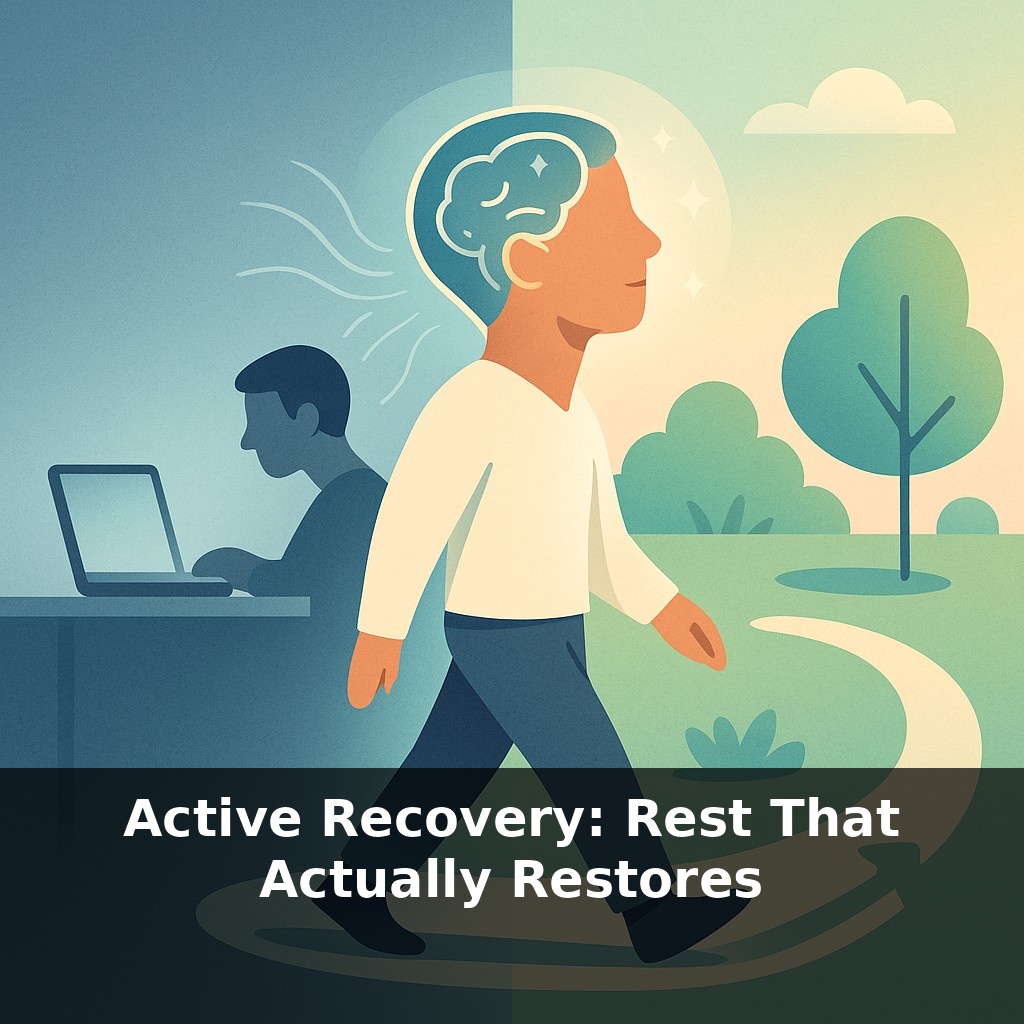
Most people think recovery means doing nothing—yet a brief walk can leave your brain sharper than a long collapse on the couch. You close your laptop, step outside for a slow loop around the block… and when you sit back down, the work that felt impossible suddenly feels doable.
That simple shift you felt after stepping away wasn’t random—it was physiology and psychology quietly teaming up in your favor. What looks like “just a break” from the outside is, on the inside, a whole cascade of repair processes spinning up: muscles flushing waste, your stress system downshifting, your attention system refueling.
Here’s the twist: your body and brain don’t refuel best when you slam on the brakes to zero; they recover best when you tap the brakes and keep rolling gently. High-performers in sport and in knowledge work lean on this all the time: light spin after a race, easy drills after an intense practice, micro-breaks between deep-focus sprints.
In a demanding career, this isn’t about being “healthier” in the abstract—it’s a performance decision. Set up the right kind of pause, at the right intensity and timing, and you don’t just feel better; you actually get more high-quality work out of the same day.
Active recovery is where we start turning that science into something you can actually schedule. Instead of treating breaks as accidental—scrolling your phone, raiding the snack drawer—we’ll treat them like a tool you can shape: different types, different lengths, matched to different kinds of effort. Think of your day more like a playlist than a marathon: heavy tracks (deep work, tough workouts), followed by lighter tracks (stretching, green walks, breathing resets) that keep the whole set flowing. We’ll look at how to place those “lighter tracks” so they prevent crashes instead of cleaning them up after the fact.
You can think of active recovery as “guided idling”: you’re not pushing, but you’re also not fully off. The key is matching the *intensity* and *mode* of recovery to what you’ve just asked of your body or brain.
After something physically demanding—heavy lifting, a fast run, even a frantic commute—your system benefits from gentle movement that keeps circulation up without adding strain. That’s why studies with cyclists show faster lactate clearance when they keep pedalling lightly instead of sitting still. For you, that might look like 10 minutes of easy walking after a strength session, slow yoga the day after a long hike, or a casual bike ride on weekends instead of back-to-back “max effort” classes.
Cognitively intense blocks—strategy meetings, coding, writing, negotiation—call for a different flavor. You’re not trying to “do more thinking”; you’re giving the brain alternate, low-demand tasks. Short green-walks, looking out a window at distant objects, or a couple of minutes of unhurried breathing help replenish the mental systems that keep you focused and accurate. Those 5-minute nature micro-breaks that boosted accuracy in the Sydney research are surprisingly easy to fit between calendar blocks if you treat them as part of the work, not a reward for finishing.
Timing matters more than duration. The Stanford work on tiny movement breaks hints at this: spreading small resets through the day often beats saving up for one big rest at the end. Instead of waiting until you’re exhausted, you insert low-effort “valves” right after spikes of effort—finish a tough call, stand and stretch; complete a 45-minute deep-work sprint, walk the hallway; end a training set, do a few minutes of light, rhythmic motion.
One helpful lens is to track “residue”: how much tension, irritability, or tightness is left in your system after a push. Active recovery aims to clear that residue before it hardens into chronic stress or injury. Over a week, that can mean one or two deliberately lighter days—lower weights, slower paces, less cognitively loaded tasks—so your physiology and attention can actually adapt upward instead of just hanging on.
Think of an elite chef between dinner rushes: they don’t leave the kitchen and disappear; they wipe down the station, sharpen one knife, prep a single ingredient. They’re still “at work,” but in a way that sets up the next push instead of draining them further.
For you, active recovery might look like swapping a doom-scroll between meetings for a slow lap around the floor while you refill your water, or ending a coding sprint with two minutes of box breathing before you even check your messages. After a tough workout, it could be a playful game of tag with your kids instead of collapsing into a chair and stiffening up.
Notice how these aren’t heroic routines; they’re tiny, deliberate shifts in *how* you pause. A manager I coached started doing one “transition task” between calendar blocks—tidying her desk, stretching, or stepping onto her balcony. Within two weeks, her afternoon headaches dropped and she stopped needing that 4 p.m. caffeine rescue.
Your career may soon come with “rest settings” built in. As wearables and calendars sync, you could see auto-scheduled micro-pauses nudged into your day the way meetings are now—short, status-boosting interludes, not guilty secrets. Teams might start comparing “recovery streaks” the way they once compared late nights, with leaders rated not by how hard they drive people, but by how well they pace them for the long game.
Treat this like tuning an instrument between songs: tiny adjustments, not a full overhaul. You might start noticing certain “hot spots” in your day—after presenting, before school pickup, post-gym—where a 3–5 minute reset changes the tone of everything that follows. Over time, your calendar becomes less like a brick wall and more like a rhythm you can actually play.
Here’s your challenge this week: For the next 7 days, schedule one 20–30 minute block of **active recovery** each day where you deliberately avoid screens and anything “productive.” Rotate through three specific options from the episode: one slow walk outside where you focus on sounds and breathing, one gentle mobility/stretch session (hips, shoulders, and back), and one “mental reset” session where you sit with a warm drink and do 10 slow breaths followed by quiet staring out a window. Put these blocks directly into your calendar like real appointments, and commit to protecting them as firmly as you would a work meeting. At the end of each day, quickly rate (0–10) how restored you feel afterward so you can notice which type of active recovery works best for you.