 2min preview
Hormones: The Chemical Messengers Running the Show
📝 Transcript
Right now, tiny chemical messages are deciding how alert you feel, how hungry you’ll be in an hour, and even how patient you are in traffic. You don’t feel them, you don’t see them, but they’re quietly voting on your mood, your energy, and your long‑term health—every single day.
Your body makes more than 50 different hormones, and they don’t just “turn things on or off”—they choreograph timing, intensity, and even priority. Growth, metabolism, reproduction, stress, sleep, appetite: all of these constantly compete for resources, and hormones decide who wins in any given moment. Think of a late‑night snack: insulin has to clear the sugar, cortisol may still be elevated from a stressful day, and melatonin is trying to nudge you toward sleep. Those same signals shift dramatically over a lifetime: women, for example, experience about a 90% drop in estrogen during menopause, reshaping bone density, temperature regulation, and even how certain drugs are processed. Small numerical changes can have huge consequences; in type 2 diabetes, which makes up roughly 90% of global diabetes cases, the system that normally keeps blood sugar in a narrow range starts to lose its fine-tuning.
Hormones don’t work in isolation; they form overlapping circuits that respond to timing, context, and history. Wake‑up alarms, late‑night scrolling, shift work, and even when you eat can nudge these circuits in different directions. A stress spike before bed doesn’t vanish once the email is closed; it can echo into your sleep quality, appetite the next day, and how your body handles breakfast. Over time, patterns matter more than one‑off events. That’s why two people with similar lab results can feel completely different—because their daily rhythms, and how often they’re disrupted, are not the same.
Subscribe to read the full transcript and listen to this episode
Subscribe to unlockSubscribe for $1.99/month to unlock the full episode.
From this course
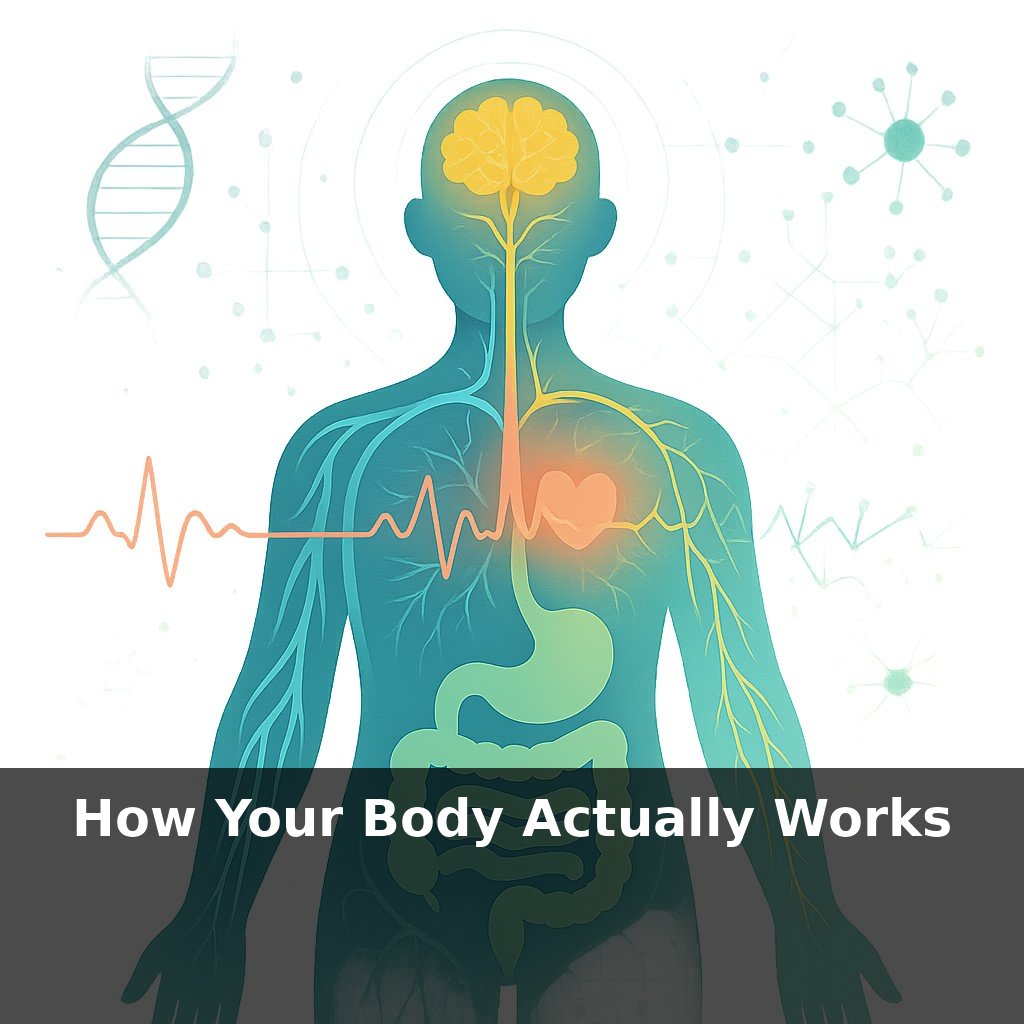
How Your Body Actually Works
7 episodesUnlock all episodes
Full access to 7 episodes and everything on OwlUp.
Subscribe — $1.99/monthLess than a coffee ☕ · Cancel anytime