Jeanne Calment ate chocolate, rode a bike into her 80s, and still lived to 122. Here’s the strange part: her cells were aging the whole time—and yet her body stretched its deadline. So the real question isn’t “Can we stop aging?” It’s “How far can we bend its rules?”
Here’s the twist: bending the rules of aging isn’t about finding a single magic lever—it’s about nudging dozens of tiny dials that your body is already adjusting every day. Some of those dials you feel directly: how winded you are on the stairs, how quickly a cut heals, whether your joints complain after sitting. Others are invisible: subtle shifts in how your DNA is read, how “noisy” your immune system is, how cleanly your cells take out their biochemical trash. The science is converging on a key idea: these dials are surprisingly responsive. Change how you move, eat, sleep, and handle stress, and you’re not just “being healthy”—you’re editing the pace at which those microscopic deadlines stack up.
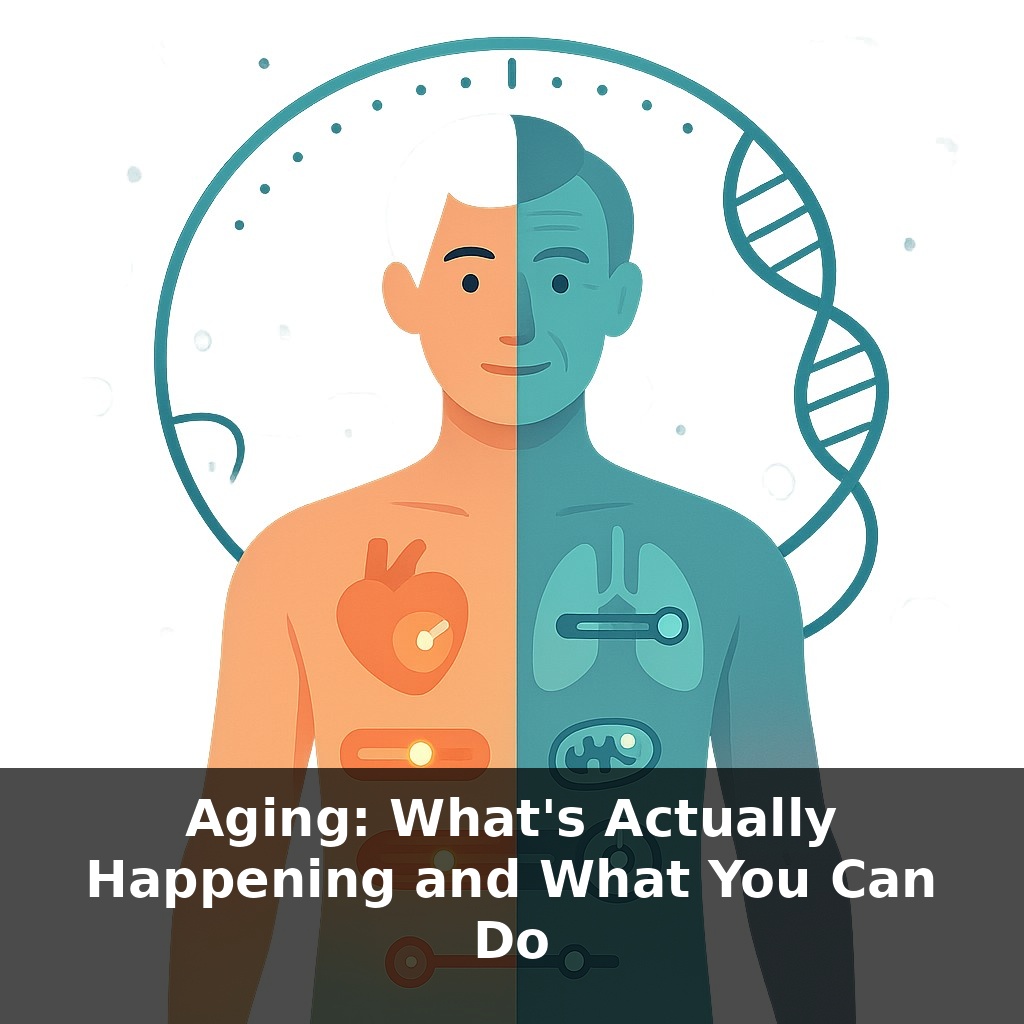
Here’s where it gets interesting: those microscopic deadlines don’t all move in lockstep. Your heart, brain, muscles, and immune cells each age on their own timeline, which is why a 70-year-old can run marathons while a 45-year-old struggles with blood pressure and brain fog. Researchers now track “biological age” using blood markers, DNA tags, and fitness measures that often disagree with the birthday on your ID. That gap—between calendar age and body age—is where modern aging science lives, and where your daily choices quietly negotiate extra time.
Here’s the strange tension at the heart of aging science: zoom in far enough, and it’s all damage and drift—DNA nicks, frayed chromosome ends, inflammatory sparks. Zoom out, and you see something else: an organism that keeps rebalancing, compensating, and rerouting around problems for decades. Aging isn’t just “things breaking”; it’s also your body constantly negotiating how to spend its limited repair budget.
A lot of that negotiation plays out in how your tissues prioritize urgent survival over long-term maintenance. When calories are scarce, sleep is short, or stress is chronic, your biology leans toward “get through today” chemistry: higher blood sugar, more wear on blood vessels, more background inflammation. When resources and cues are better—steady movement, decent food, regular light–dark cycles—the balance shifts toward upkeep: better protein quality control, more efficient mitochondrial turnover, cleaner immune responses.
Different organs make different trade-offs. Muscle is highly plastic: lift heavy things regularly and you signal that it’s worth allocating amino acids and repair machinery there, even into your 70s and 80s. Neglect it, and those same resources get shunted elsewhere. Brain tissue, by contrast, is energetically expensive but fiercely protected; sleep, learning new skills, and cardiovascular fitness all act as “votes” to keep neural maintenance high, which is one reason exercise consistently tracks with lower dementia risk.
At the cellular level, systems that once seemed separate now look intertwined. When damaged cells linger instead of retiring on schedule, they leak inflammatory signals that push nearby cells into their own stress modes. Over time, that can reshape whole tissues: stiffer arteries, slower skin turnover, less flexible immune responses to new infections or vaccines. This is one reason drugs that clear out these “senescent” cells (senolytics) are being studied—not to rewind the clock, but to quiet the loudest cellular troublemakers so remaining cells can function more youthfully.
And then there’s the control layer sitting above the genes themselves: reversible chemical tags on DNA and its packaging. Those tags shift with your environment—nutrients, toxins, sleep patterns, even social stress—gradually rewriting which repair programs are easy to turn on and which become sluggish. That’s part of how two people with similar genetics, living in different contexts, can end up biologically years apart despite sharing a birth year.
Think of three everyday situations where aging science quietly shows up: climbing a hill, fighting a cold, and skipping a late-night snack. On the hill, the “burn” in your legs isn’t just fitness—it’s a live negotiation between muscle fibers deciding whether to grow, maintain, or surrender some strength. People who keep sending that “we still need this” signal with regular hills or resistance work often test biologically younger in mobility and balance scores, even if their ID says otherwise.
When a virus hits, your immune system’s response time and precision reflect decades of accumulated choices. Vaccines, prior infections, sleep habits, and even loneliness shape how cleanly your body handles that invasion. That’s why two people the same age can have wildly different outcomes from the same bug.
Then there’s the quiet power of stopping eating a bit earlier. Night-time fasting windows—say 12–14 hours between dinner and breakfast—are being studied for how they nudge metabolism toward deeper cleanup modes, potentially trimming down risky blood sugar spikes and low-grade inflammation over time.
Some researchers now talk about “preventive geriatrics,” where you’d get an aging-risk checkup in your 40s the way you get a cavity check at the dentist. Instead of waiting for diabetes or heart disease, your care team might adjust exercise, sleep, or meds based on early shifts in repair systems. Your challenge this week: note one daily habit you could tweak as if you were maintaining a prized instrument, not just fixing it when it breaks.
You won’t see a finish line where aging “stops,” but you can feel checkpoints where the trajectory bends—an extra rep, faster recovery from a rough week, fewer days knocked out by a bug. Your challenge this week: treat one habit like a slow-cooking recipe. Adjust one ingredient—timing, intensity, or environment—and watch how the whole flavor of your days shifts.