The average adult taps a glowing screen within minutes of waking—before speaking, stretching, or even noticing a breath. Yet some people swap that reflex for ten quiet breaths… and report calmer mornings, clearer choices, and less snapping at the people they love.
Most mornings run on autopilot: alarm, scroll, rush, caffeine, go. By the time you “wake up” mentally, you’re already reacting to emails, headlines, and other people’s priorities. Morning mindfulness flips that sequence. Instead of your first attention going outward, you spend a few intentional minutes turning inward—before the noise ramps up and your habits lock in for the day.
Research shows this isn’t just “being zen”; your brain and nervous system are unusually malleable in the first 30–60 minutes after waking. Think of that window as fresh snow: whatever tracks you lay down early become the paths your mind is more likely to follow. A brief practice can nudge your default setting away from tension and reactivity toward steadiness.
In this episode, we’ll explore simple, science-backed ways to use those first minutes as a quiet control room for the rest of your day.
Instead of overhauling your entire routine, think of this as tweaking the “launch sequence” of your day. Right now, your morning might be run by habit loops you didn’t consciously design: alarm sound, muscle tension, mental to‑do list loading in the background. Cortisol is naturally rising, your prefrontal cortex is just coming online, and whatever you feed your attention first helps determine what gets amplified. That means even small shifts—ten breaths before notifications, a slow stretch before coffee, a 60‑second gratitude note—can quietly redirect how your stress system, focus, and mood unfold hours later.
If the first minutes after waking are the “control room,” what are you actually controlling? Three systems quietly spin up in the background: your attention, your emotional tone, and your body’s stress‑recovery rhythm. Morning mindfulness leans on all three, but in very down‑to‑earth ways.
First, attention. When you wake, your mind often jumps straight to unfinished tasks and micro‑worries: that meeting, that bill, that text you still haven’t answered. Notice that this jump is usually automatic, not deliberate. A short, structured focus—like counting ten slow breaths or feeling your feet on the floor as you stand—gives your mind a neutral “home base.” You’re not stopping thoughts; you’re giving them a reference point so they don’t drag you around by the collar.
Second, emotional tone. Many people assume their morning mood is random: “I’m just not a morning person.” In practice, it’s shaped by tiny, repeatable cues. A harsh alarm, fluorescent bathroom lights, instantly reading polarizing news—each one tilts your internal setting. A mindful check‑in (“What’s actually here right now—in my body, in my chest, in my jaw?”) lets you catch that tilt. From there, you can choose one regulation tool: softer lighting for a minute, a shoulder roll to release tension, or naming a single emotion out loud. Research suggests this kind of quick labeling (“anxious,” “flat,” “restless”) is enough to dial down intensity.
Third, your stress‑recovery rhythm. Overnight, your body has been recalibrating. Morning is when the system decides: sprint all day, or cycle between effort and recharge? Practices like mindful stretching or a brief body scan give your nervous system early feedback: “We can mobilize without going into overdrive.” Over weeks, that tends to show up as steadier energy rather than the classic mid‑morning crash.
Think of a software update that runs quietly when you restart your laptop: a small script alters what the machine prioritizes and how efficiently it runs, even though the desktop looks the same. Your outer routine might still include coffee, commute, and work; the difference is that you’ve inserted a tiny, conscious script that teaches your mind‑body system how to meet all of it with a bit more stability.
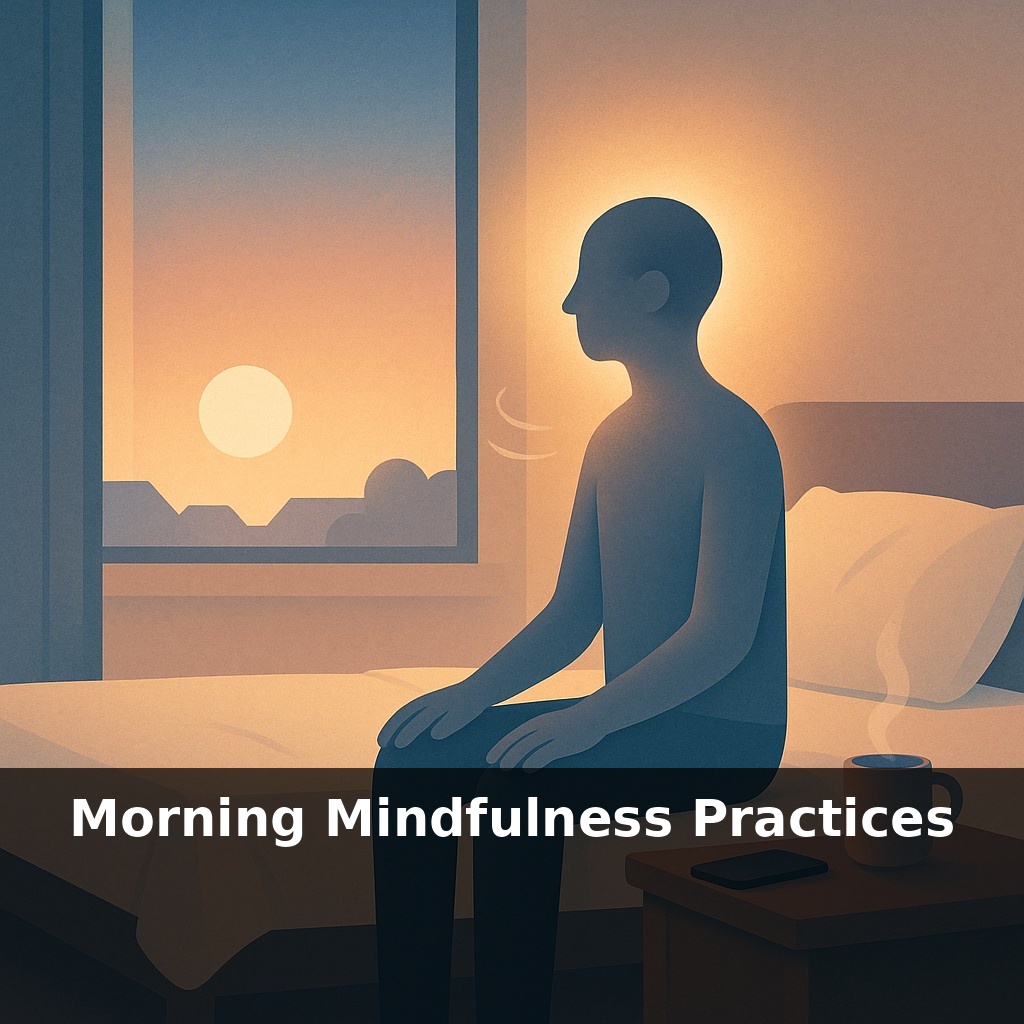
Think of three “entry ramps” you can actually step onto tomorrow. One is breath‑based: while you’re still in bed, place a hand on your belly and let ten slow breaths rise and fall underneath it, noticing how the body shifts from groggy to slightly more organized. Another is movement‑based: when your feet hit the floor, spend one minute circling ankles, rolling shoulders, and gently turning your neck, like you’re testing the range of a camera tripod before filming. The third is reflection‑based: beside your mug, keep a small notebook and jot one thing you’re looking forward to and one value you want to lean on today (for example, “patience” or “curiosity”). Over weeks, these tiny repetitions start to act less like isolated tricks and more like a configurable dashboard—you can dial up stillness, movement, or reflection depending on how you wake up, without needing a perfect routine. Your mornings become something you actively shape, not just survive.
Smart watches already nudge people to stand; next, they’ll likely suggest a 90‑second tune‑in after your alarm, adjusted by how you slept and how fast your heart is climbing. Think of it as a dynamic “status check” rather than a fixed routine. Over time, these micro‑pauses could spread beyond home: quiet corners on trains, pre‑meeting resets in offices, even “start‑of‑shift” breath breaks built into scheduling software and rewarded like hitting daily step counts.
You don’t have to redesign your entire dawn routine; you’re just slipping one new tile into the mosaic. Over time, those small tiles form a pattern you can actually steer. As you test these practices, notice which ones feel like a well‑fitting jacket and which feel like shoes a size too small—and let that fit, not perfection, guide your next tiny tweak.
Here’s your challenge this week: For the next 5 mornings, commit to a 10-minute “wake-up ritual” that includes 2 minutes of eyes-closed belly breathing in bed, 3 minutes of silent tea or coffee sipping without your phone, and 5 minutes of mindful movement (like the simple neck rolls, shoulder circles, and forward folds described in the episode). Set your alarm 15 minutes earlier than usual, place your phone in another room overnight, and keep your mug and yoga mat ready by the kitchen or bedside so there’s zero friction. Each day, rate your stress and focus from 1–10 right after the ritual, and compare your scores by the end of the week to notice what’s shifting.