Right now, more people meditate than go to the movies each week—yet stress levels keep climbing. You’re racing to meet a deadline, phone buzzing, thoughts scattered. Then, with one small mental shift, your heart rate slows… but nothing in your calendar has changed.
You might expect that feeling less overwhelmed requires fewer emails, shorter to‑do lists, or a quieter life. Instead, research keeps pointing to something strangely simple: *how* you pay attention may matter more than *what* you’re facing. In dozens of clinical trials, people who routinely practice mindfulness report not just “feeling a bit calmer,” but sleeping better, snapping less at loved ones, and bouncing back faster after bad news or workplace conflict. This isn’t about zoning out or escaping responsibilities; it’s about training your mind to stay with one thing at a time, even when everything around you is clamoring for a response. Think of a seasoned quarterback calmly scanning the field while the stadium roars—same noise, different inner stance. In this series, we’ll unpack what that stance is, how to build it in minutes a day, and what the science actually shows.
That “inner stance” isn’t just a poetic idea; it shows up in brain scans and blood tests. Eight‑week clinical programs consistently lower perceived stress scores, and even brief daily practice has been linked to drops in salivary cortisol—the body’s stress hormone. In workplaces, people who adopt these habits often report fewer conflicts and clearer decisions, even when their workload doesn’t shrink. It’s less about carving out an hour on a cushion and more about weaving tiny shifts into things you already do: walking to a meeting, waiting for a file to load, or pausing before you fire off that late‑night email.
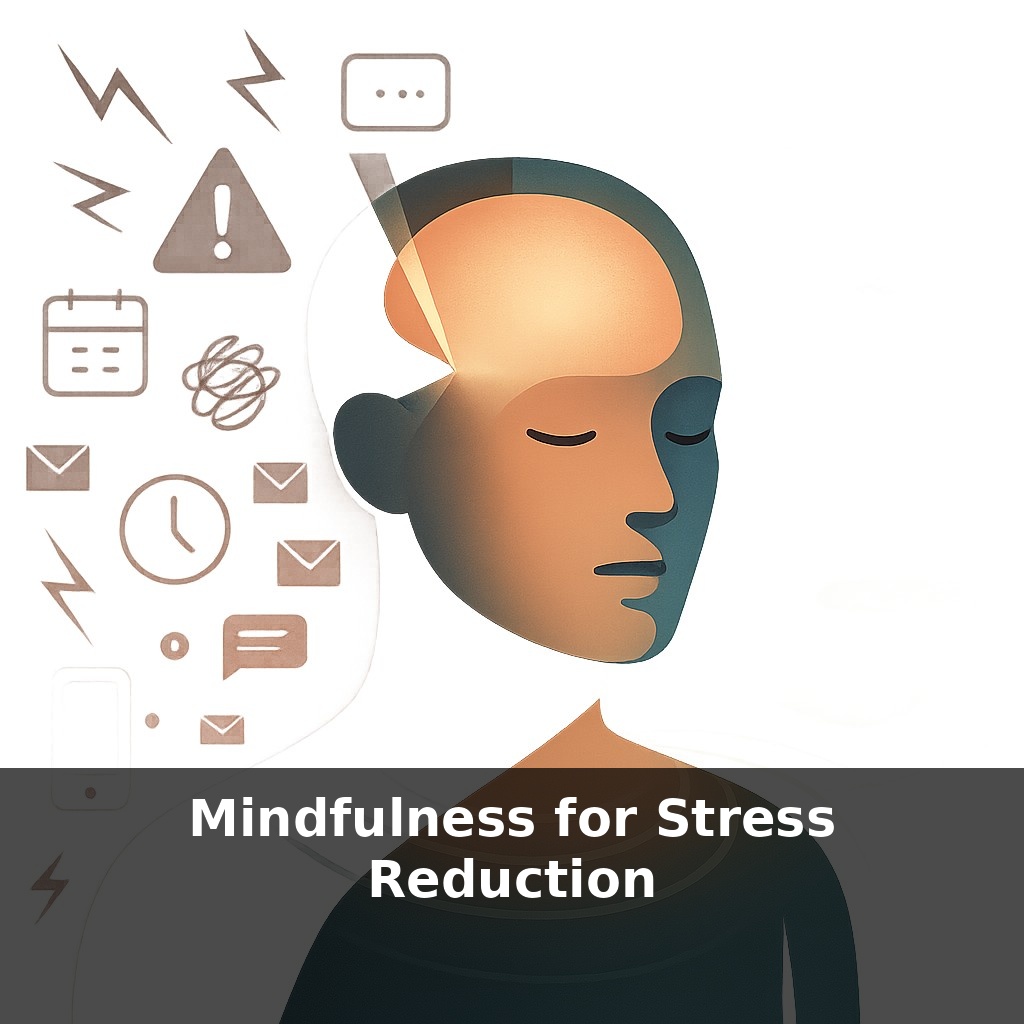
If you zoom in on what happens during a stressful day, there are usually three layers: the raw event (an email, a comment, a bill), the body’s reaction (tight chest, shallow breath, clenched jaw), and the mental story (“I’m failing,” “This always happens,” “I can’t handle this”). The event is often non‑negotiable. The other two layers are where you have surprising leverage.
Research teams have started to map this leverage point. When people systematically practice paying attention with less automatic judgment, their brains show stronger connectivity between regions that detect threat and regions that regulate response. In plain terms, the system that hits the “panic” button becomes more coordinated with the system that can say, “Not every alert is a fire.” This doesn’t erase strong emotions; it changes how quickly you get swept away by them.
That shift shows up in behavior long before you’d notice it on a scan. In corporate programs, participants report catching themselves mid‑spiral—before sending the sharp email, before eating an entire bag of snacks, before staying up past midnight doom‑scrolling. Veterans in clinical trials describe a slightly longer “gap” between a flash of anger and what they actually do next. That extra half‑second is where choice lives.
A common worry is, “Won’t this make me passive? If I’m just calmly observing everything, won’t I stop caring?” The data suggest the opposite. People who develop this skill often become more aligned with their values, not less engaged. Nurses in hospital trials, for instance, show reduced burnout *and* higher ratings of compassionate care. They’re still in the same high‑pressure environment, but less consumed by internal turbulence.
Another misconception is that this is about becoming serene in a quiet room. The more interesting territory is messy, real‑time life: your commute, a tense meeting, a hard conversation with your partner. Programs that teach brief, on‑the‑spot techniques—like feeling your feet on the ground while you listen in a conflict—find that people not only feel steadier, they also make clearer decisions and recover faster after setbacks.
You don’t have to believe any of this for it to work. Treat it the way you’d treat a physical training plan: you show up, follow simple drills, and let the results accumulate. The aim isn’t to become someone different; it’s to be less yanked around by every surge of pressure, so you can bring your actual priorities to the forefront, even on the days that feel like too much.
Think about the last time your plans blew up—flight canceled, child sick, key file corrupted. One person in that airport line is furious, another quietly rebooks and starts reading. Same disruption, different use of attention. In workplace studies, the “quiet rebookers” aren’t naturally chill; many trained a simple habit: notice the first surge of tension, then anchor briefly to one neutral sensation—often the feeling of their feet or the weight of their hands. They still argue, push back, negotiate; they’re just not running on fumes.
You’ll also see this on teams. A manager who once filled silences by talking now uses those pauses to check in with their own body—jaw unclench, shoulders drop—and then asks one clarifying question instead of three defensive ones. Meetings shorten, decisions land more cleanly. Parents describe catching the micro‑moment between their kid’s eye‑roll and their own lecture; a single breath there doesn’t fix the argument, but it often changes its tone from combat to problem‑solving.
More of life will start nudging you to notice these skills. Smartwatches already buzz when tension climbs, like a friend quietly tapping your shoulder in a noisy room. VR labs are testing “mental gyms” where teens rehearse tough moments the way pilots use simulators. Insurers are watching, too: when short courses cut clinic visits, they listen. If this trend keeps going, updating your inner habits may become as routine as updating your phone’s operating system.
As you experiment, notice smaller, quieter wins: emails answered without rushing, conflicts that cool faster, evenings that don’t feel like aftermath. Over time, these micro‑shifts stack like steady deposits in a savings account, quietly building buffer. You’re not chasing perfection; you’re learning how to meet each day with just a bit more room inside.
Here’s your challenge this week: Every day for the next 7 days, set a 5‑minute timer and practice the “3-breath reset” from the episode whenever you notice your stress spike—once in the morning, once mid-day, and once before bed. During each reset, do one full body scan from head to toe on the inhale, then deliberately relax your shoulders, jaw, and belly on the exhale, just like they described. Keep a simple tally in your phone of how many times you caught yourself and used the reset instead of pushing through on autopilot, and compare your stress level (0–10) before and after each mini-practice.