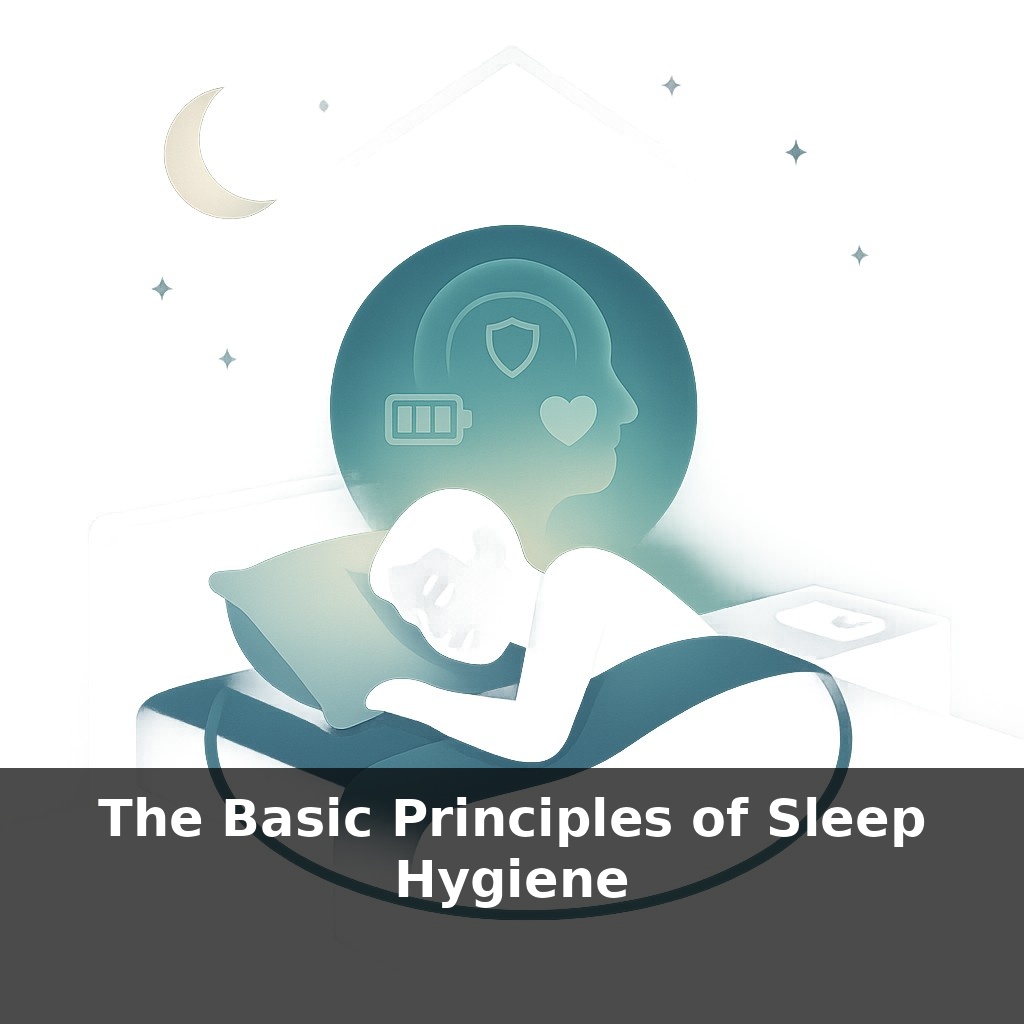
The Basic Principles of Sleep Hygiene
📝 Transcript
Right now, as you’re listening, your brain is quietly deciding how well you’ll think, feel, and even fight off infections tomorrow—based almost entirely on how you sleep tonight. Yet most of us protect our phones’ battery life more carefully than our own sleep.
Most of us “work on” sleep only when it’s already broken—lying awake at 2 a.m., scrolling, bargaining with the alarm clock. But by that point, you’re trying to fix a leaking roof in the middle of a storm. The real leverage comes hours earlier, in the quiet, boring decisions that barely feel related to sleep at all: when you sip your last coffee, how bright your screen is after dinner, whether your bedroom feels like a cave or a conference room.
Sleep hygiene is simply the name for that invisible scaffolding you build around your nights. It’s less about perfection and more about consistency: small, repeatable cues that tell your body, “We’re done for the day.” In this episode, we’ll unpack the core habits that shape how quickly you drift off, how often you wake up, and how restored you feel in the morning—long before your head ever hits the pillow.
Think of today’s decisions as quiet votes for how your night will go: each one tiny, all of them adding up. The research is clear that two systems are constantly shaping those nights—the circadian clock that expects regular light and darkness, and the mounting sleep pressure that builds the longer you’ve been awake. When your habits line up with both, falling asleep stops feeling like a fight. When they don’t, you get that wired‑but‑tired state: heavy eyes, racing mind. Our job now is to map which everyday choices push you toward one side or the other, long before bedtime.
If those “tiny votes” throughout the day shape your night, what actually counts as a vote? Start with timing. Your body loves rhythm far more than it loves freedom. Going to bed and waking up within roughly the same 60‑minute window—yes, even on weekends—anchors your internal timing to something predictable. When that anchor keeps drifting by two or three hours every Friday and Saturday, you create a kind of self‑inflicted jet lag that Monday coffee can’t fully mask.
Light is the next big lever. In the morning, bright light tells your system, “Day has started, you’re on the clock.” Getting outside for even 10–20 minutes within an hour of waking is far more powerful than overhead office lighting. At night, the same system is watching for darkness as a “permission slip” to wind down. Overhead LEDs, glaring TVs, and phones inches from your face send the opposite signal. Even brief tablet use at full brightness late in the evening can nudge your internal timing later than you intend, so think “dim and distant” for screens after dinner: lower brightness, warmer tones, and a bit more distance from your eyes.
Temperature quietly shapes the story too. Your core temperature needs to drop a little to fall asleep efficiently. That’s one reason a room in the mid‑60s °F often beats a cozy‑warm bedroom. A hot shower 60–90 minutes before bed can sound contradictory here, but it actually helps you cool down afterward, because your body dumps heat as your skin warms and then releases it.
What you consume is another set of votes. Caffeine early in the day is usually manageable; the later it creeps, the more it collides with your night. Alcohol, especially in the last few hours before bed, tends to fragment what would otherwise be solid sleep. Heavy, late dinners can keep your system “busy” when it should be idling, while a light, balanced evening meal—plus a small snack if you’re genuinely hungry—supports a smoother transition.
Finally, movement. Regular daytime exercise makes it easier for your body to consolidate sleep at night, but the payoff isn’t usually instant. Think in weeks and months, not nights. Consistency here trains your system to expect real rest as part of the recovery plan, not as an optional bonus when everything else is done.
Consider how an elite athlete treats “game day.” They don’t wait until kickoff to prepare; their whole week is structured around performing well in that narrow window. You can treat your nights the same way, designing simple “plays” you run at predictable points. For example, two hours before bed, you might switch from high‑stakes tasks to low‑stakes ones: folding laundry, prepping tomorrow’s lunch, reviewing a gentle to‑do list instead of starting a complex project. One hour before, you could shift into a repeatable wind‑down stack: stretch for five minutes, read a few pages of a paper book, dim a specific lamp. Even your environment can join the routine—one blanket that only comes out at night, one playlist you never use during the day. Over time, these cues become shortcuts for your body: the more consistently you pair them with going to bed, the less negotiating you have to do when it’s actually time to sleep.
Your nightly choices may soon plug into a bigger ecosystem. As wearables learn your patterns, they could nudge you before you drift off track—like a navigation app quietly rerouting you around traffic. Offices might shift lighting, meeting times, and break schedules based on aggregated sleep data, while schools test later start times tied to student chronotypes. The open question: how do we harness this personalization without turning rest into yet another metric to optimize and obsess over?
Treat this week like a beta test, not a final launch. Small tweaks—a slightly earlier wind‑down, a cooler room, one less late scroll—are like tiny software updates; you only notice their power once they stack. Your challenge this week: change just one variable, then pay attention to how your mornings feel, not just how your nights look.
From this course
Mastering Sleep Hygiene for a Better Life
5 episodesUnlock all episodes
Full access to 5 episodes and everything on OwlUp.
Subscribe — $1.99/monthLess than a coffee ☕ · Cancel anytime