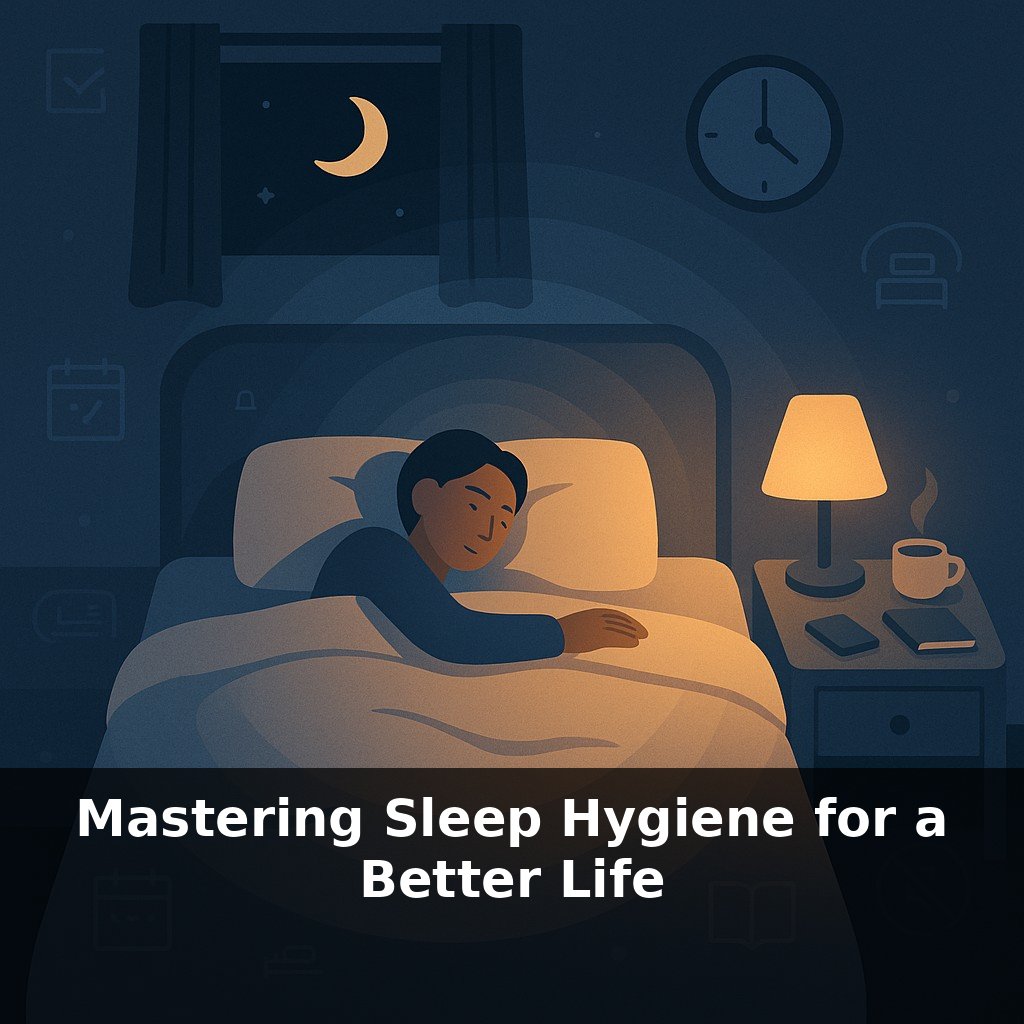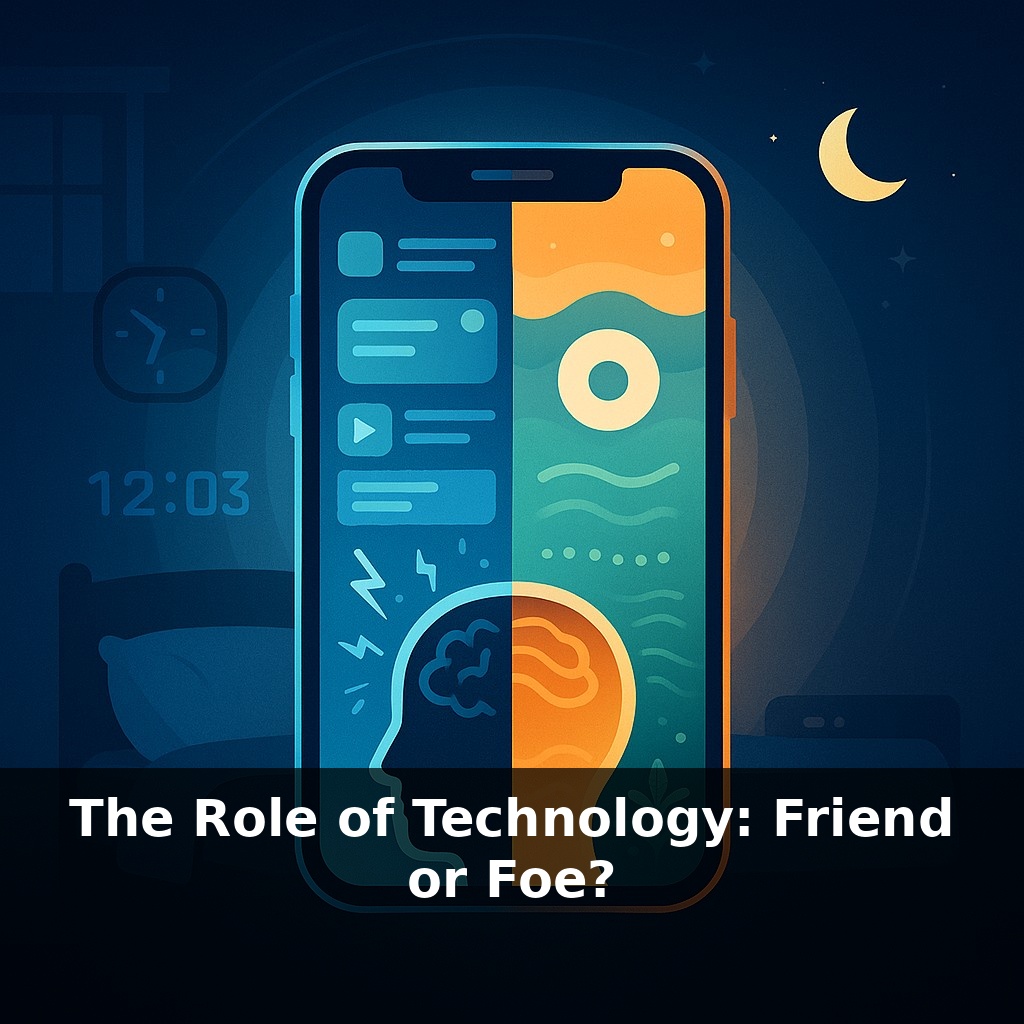
Your phone can steal nearly twenty minutes of sleep tonight—or help you fall asleep faster than any pill in your cabinet. In one bedroom, TikTok scrolls keep a brain buzzing. In another, a quiet app dims lights, slows breathing, and tracks deep sleep with eerie precision.
Your phone can also reshuffle your internal clock without you noticing. That late-night “just one more episode” or email check isn’t only stealing minutes; it’s quietly nudging your brain to believe midnight is the new evening. Blue-heavy light, fast-paced content, and emotional notifications keep the mind in “daytime mode” long after sunset, stretching out the gap between lying down and actually drifting off. But the same devices can be turned into allies: softer displays, calmer feeds, darker themes, and smarter lighting cues can guide your brain toward shutdown instead of standby. Think less slot machine, more autopilot—settings, apps, and habits that default to protecting your wind-down instead of hijacking it. This isn’t about going “off‑grid”; it’s about learning how to let your tech work like a well-trained assistant rather than a hyperactive coworker who never leaves your bedside.
Some technologies push this “daytime mode” even harder by design. Infinite scroll, autoplay, and streaks aren’t bugs; they’re features built to keep you tapping. Late at night, that design meets a brain that’s tired, less disciplined, and more reward‑seeking. On the other side are tools that quietly reduce stimulation: ultra‑warm displays, devices that go dark on a schedule, and apps that cap your feeds or mute noisy group chats. The tension isn’t just between screen and pillow; it’s between products built for your attention and those built for your recovery. Learning to tell them apart is the first real power move.
Some of the damage starts long before your head hits the pillow. That 460‑nm “cool” glow bathing your face on the commute home or during late meetings doesn’t just feel bright; it’s quietly dialing down melatonin, even if you don’t feel more awake in the moment. Over hours, that small chemical nudge adds up, shifting the window when your brain is willing to let go.
Timing is what turns the same device into either a brake or an accelerator. Morning light from a screen or lamp rich in blue wavelengths can actually help lock in an earlier rhythm, especially if you don’t get much outdoor sun. At night, the equation flips: the focus is no longer productivity, but reducing three things in parallel—light intensity, mental effort, and emotional charge. Miss any one of those, and your nervous system stays half‑open for business.
Content is the second lever. An email from your boss at 10:45 p.m. is not equivalent to a low‑stakes puzzle game or a mellow podcast. Fast cuts, cliffhangers, notifications, and anything tied to social status (likes, comments, streaks) spike dopamine and cortisol right when you’re trying to lower them. The meta‑analysis showing an extra ~17 minutes to fall asleep with screens in the last hour of the day reflects this cocktail, not just photons hitting your eyes.
Then there’s the “helper” side of tech—which is far patchier than the app stores suggest. Most sleep apps are closer to untested prototypes than treatments. A small minority, like regulated CBT‑I programs, are different: they walk you through structured changes in schedule, thoughts, and habits, and their impact on sleep efficiency rivals in‑person therapy for many people. But even the best software can’t compensate if your environment is working against you.
Habits tie it all together. A pair of orange glasses or a warmer display won’t fix doomscrolling in bed. Conversely, a consistent rule—no work apps after 9 p.m., phone parked across the room, only calm audio allowed—can neutralize a lot of the biological hit from light because you’re also protecting your mindset. The friend‑or‑foe question isn’t about owning less technology; it’s about training each device to “clock out” when your body needs to.
Your devices are already running tiny experiments on your sleep; the trick is to start running your own. Try setting up two contrasting evenings this week. One night, let your usual habits run: same apps, same notifications, same “accidental” late messages. Another night, pre‑program your tech like a quiet evening crew: schedule Do Not Disturb, move work apps off the first screen, and allow only one calming tool—maybe a breathing timer or an audiobook with a sleep timer.
Notice how different “tech climates” feel. A buzzing group chat at 10:30 p.m. is like opening all the windows in winter; a single-purpose audiobook app is more like closing drafts and turning down the lights in one room. Pay attention to how your body responds: not just how fast you fall asleep, but whether your mind feels scattered or settled.
Your challenge this week: design one evening where every device in reach has only two jobs after 9 p.m.—reduce friction and reduce stimulation. Everything else gets bumped to tomorrow.
If tech keeps trending this way, your bedroom could feel less like a gadget zoo and more like a well‑rehearsed stage set. Wearables may quietly flag early insomnia risk, while your home adjusts sound, temperature, and light in response—subtle, like a hotel staff you never see. The real frontier won’t be more data, but better filters: systems that learn which signals truly matter for *your* sleep, then fade everything else into the background so rest becomes the default, not a nightly project.
Treat this as an ongoing tech beta: you’re both the user and the developer. Each night, tiny tweaks—earlier cutoffs, gentler inputs, fewer pings—are like code pushes to your nervous system. Some will glitch, others will smooth everything out. Keep what quietly works, discard what doesn’t, and let your sleep stack evolve instead of locking it in place.
Start with this tiny habit: When you pick up your phone to mindlessly scroll, pause and say out loud, “What do I actually want from this right now—escape, info, or connection?” and then set a 2-minute timer before you open any app. When the timer ends, quickly switch one scroll to something intentional: watch one saved educational video, send one kind text to a friend, or delete one app notification that doesn’t serve you. Do this just once a day to start—you're simply training yourself to move from autopilot tech use to tech on purpose.