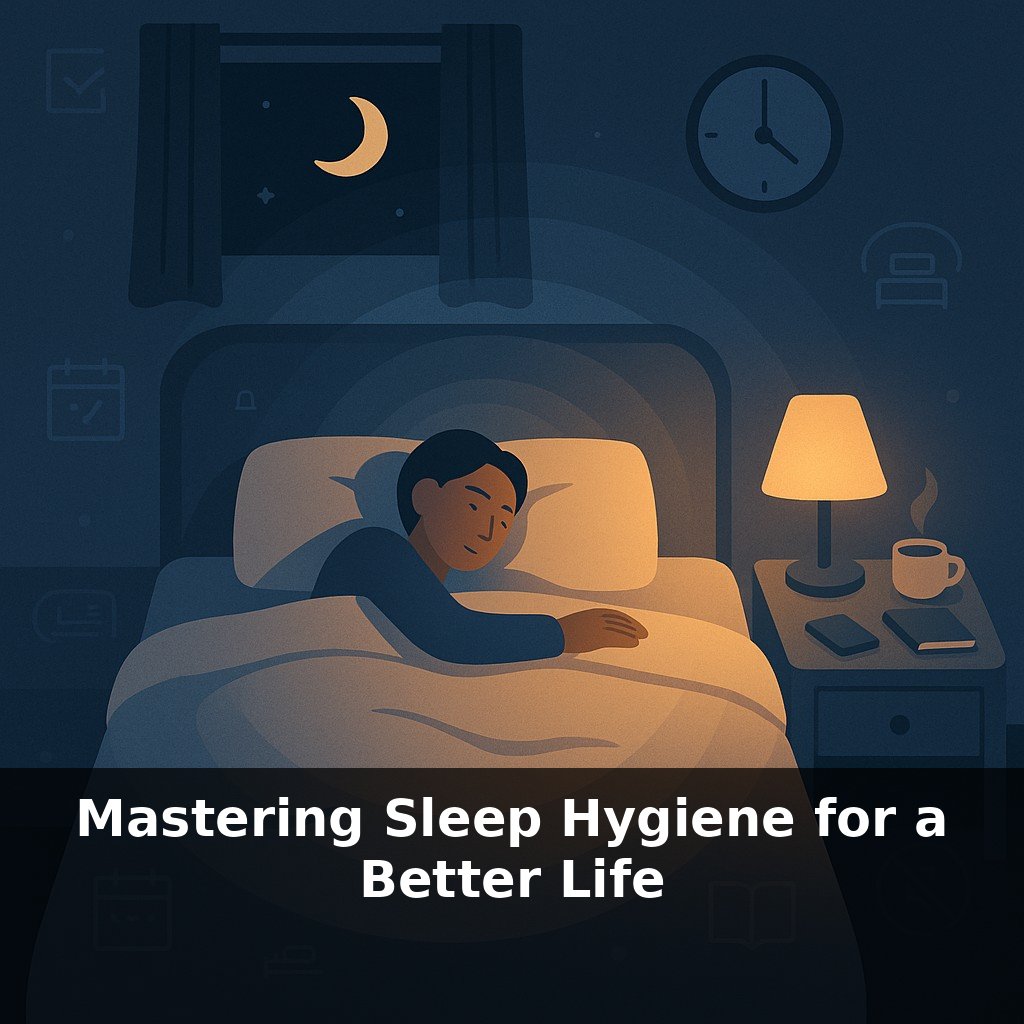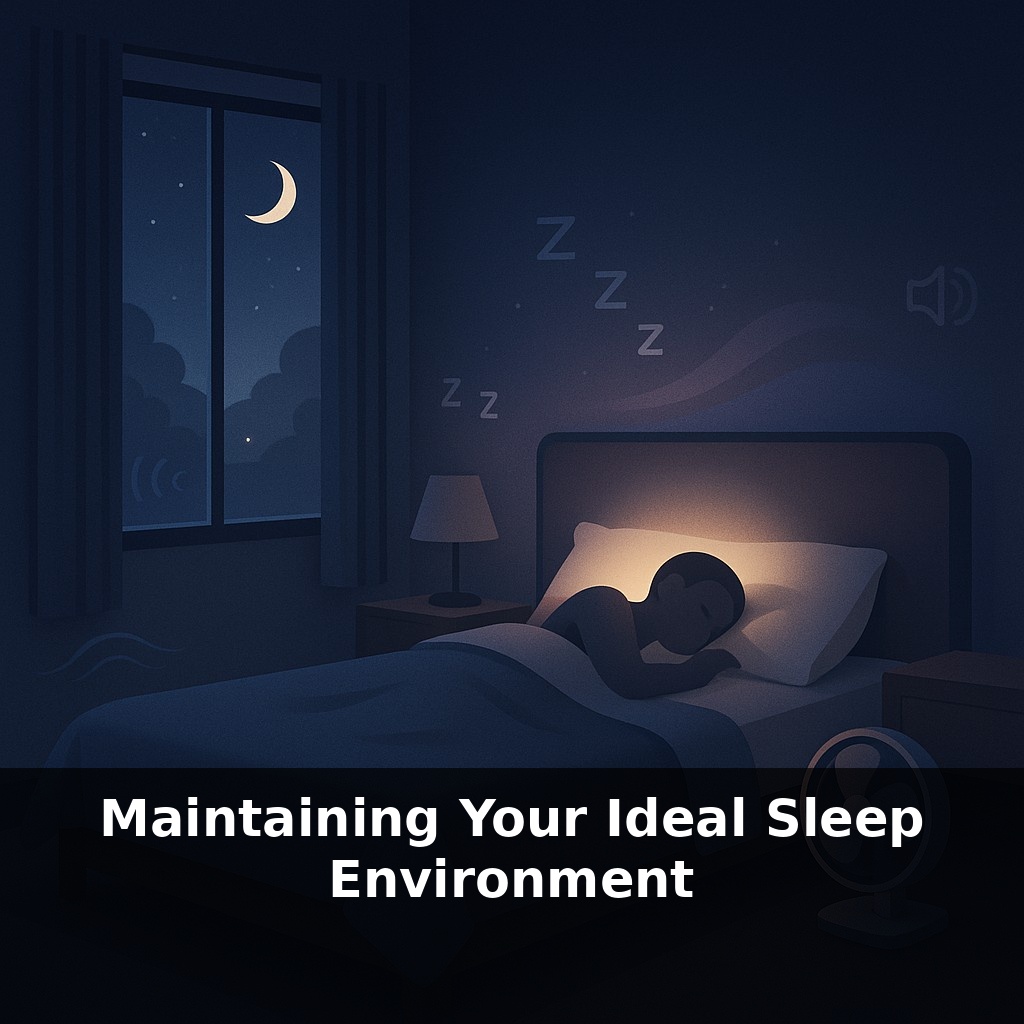
You can sleep eight hours and still wake up exhausted—simply because your bedroom is a little too bright, a bit too warm, or just loud enough to keep your brain on guard. Tonight, we’re going to explore how tiny tweaks in those details can unlock deep, restorative rest.
That “just one more episode” habit, the glowing streetlamp outside your window, the fan you swear you need for “fresh air”—none of these feel dramatic enough to sabotage your night. Yet your brain interprets each stray beam of light, degree of warmth, and extra bit of noise as a signal: stay ready. Over a single night, that might mean a little tossing and turning. Over months and years, it trains your body to treat bedtime as a negotiation, not a cue for reliable shutdown.
In this episode, we’ll zoom in on the practical side: how to turn your bedroom into a predictable signal of safety and consistency. Think of it less as “optimizing” and more as standardizing—like setting the default settings on a device so it behaves the same way every time. You’ll learn simple ways to control light, temperature, and sound so your brain doesn’t have to guess when it’s finally allowed to rest.
Most bedrooms drift away from “ideal” conditions slowly—like a software update you never approved. A brighter bulb here, a louder appliance there, a thermostat nudge for daytime comfort that never gets reset at night. None of these changes feel dramatic, but together they push your sleep further from its default settings. The good news: you don’t need a remodel or expensive gadgets to course-correct. You need awareness and a few deliberate choices. In this episode, we’ll zoom in on specifics: how to measure what you’re actually sleeping in, then nudge each variable back into your biological comfort zone.
Start with light, because your brain treats it as a command, not a suggestion. In practice, that means two separate goals: calming the light in the 1–2 hours before bed, and stripping it down even further once you’re actually asleep.
Pre‑bed, you’re not aiming for mood lighting so much as “signal dimming.” Swap harsh overheads for a single low‑watt lamp, ideally placed at or below eye level, and use warmer bulbs (labeled 2200–2700 K). Screens are the sneaky part: not just phones, but TVs across the room and tablets charging on the nightstand. If you won’t ditch them entirely, at least cap “bright screen time” and use night modes aggressively—lower brightness to the edge of comfort and keep the device farther from your face than you think you need.
Once you’re in bed, shift focus from brightness to direction. Even small light leaks from above or eye level are more disruptive than a faint glow low to the ground. That’s why blackout curtains, draft stoppers under the door, and turning off standby LEDs help more than people expect. If you need navigation light, choose a dim red nightlight positioned low; it’s enough to move safely without jarring your internal clock.
Temperature is trickier because comfort and ideal physiology don’t always match. Instead of chasing a single “magic number,” use layers to create a narrow band you can fine‑tune. A cooler room with a slightly warmer bed—think breathable top layer and heavier blanket you can peel back—gives you options when your body temperature naturally changes across the night. Pay attention to your extremities: cold hands and feet often mean you’ll struggle to fall asleep even if the room is cool enough. Light socks or a small throw at the foot of the bed can solve what feels like “I just can’t wind down.”
Sound is less about total silence and more about predictability. A perfectly quiet house that’s interrupted by one slammed door can be worse than a steady, soft hum all night. This is where simple tools—earplugs that still allow alarms, or a low‑volume fan or noise app—can smooth out sharp edges. The key is consistency: same volume, same source, same timing, so your brain files it under “normal background” rather than “possible threat.”
Think of your bedroom like a training ground where your brain learns patterns, not a shrine you “get right” once and forget. The goal isn’t perfection; it’s repeatability. For instance, maybe your weekday routine becomes: lamps dimmed at nine, thermostat nudged down at nine‑thirty, noise source switched on at lights‑out. Those tiny checkpoints tell your nervous system, “Same script as last night.”
You can also create “micro‑zones” instead of treating the room as one uniform box. A darker, cooler corner for sleep; a slightly brighter, warmer chair for reading; a specific spot where devices always live (and never cross an invisible boundary near the bed). Over time, your body starts associating each spot with a different level of alertness.
Where people get stuck is treating disruptions as failures instead of data. If you wake sweaty at three a.m., that’s feedback about bedding or airflow. If a single car horn jolts you awake, that’s a cue to adjust sound masking, not proof you’re a “light sleeper.” Your environment becomes something you iterate—more like updating an app than redecorating a room.
As cities grow brighter and louder, defending your nights may become as important as locking your front door. Some apartments already advertise “low-light, low-noise design” the way others sell rooftop gyms. You might soon choose neighborhoods by nighttime satellite images or noise maps, the way runners check air‑quality apps. Expect apps and wearables to suggest “sleep routes” through your home—close this shade, mute that notification—like GPS for protecting tomorrow’s energy.
Your nights won’t transform in one grand renovation; they’ll shift through small, repeatable tweaks that stack. Treat each week like a software update: patch one bug at a time—leaky curtains, stuffy air, sudden noises—then watch how your “system” responds. Over months, you’re not just sleeping in a room; you’re living inside a custom-built recovery tool.
Try this experiment: Tonight, set your bedroom to 65–68°F, turn off overhead lights 60 minutes before bed, and only use warm, low lamps while you’re winding down. Before you get into bed, remove or cover every small light source you can find (alarm clock glow, power strips, chargers) and close your curtains as tightly as possible. For the next 3 nights, keep everything else about your routine the same, then each morning quickly rate your sleep from 1–10 on how rested you feel when you first wake up. After 3 days, compare those numbers to last week and decide whether this cooler, darker setup is worth making your new normal.