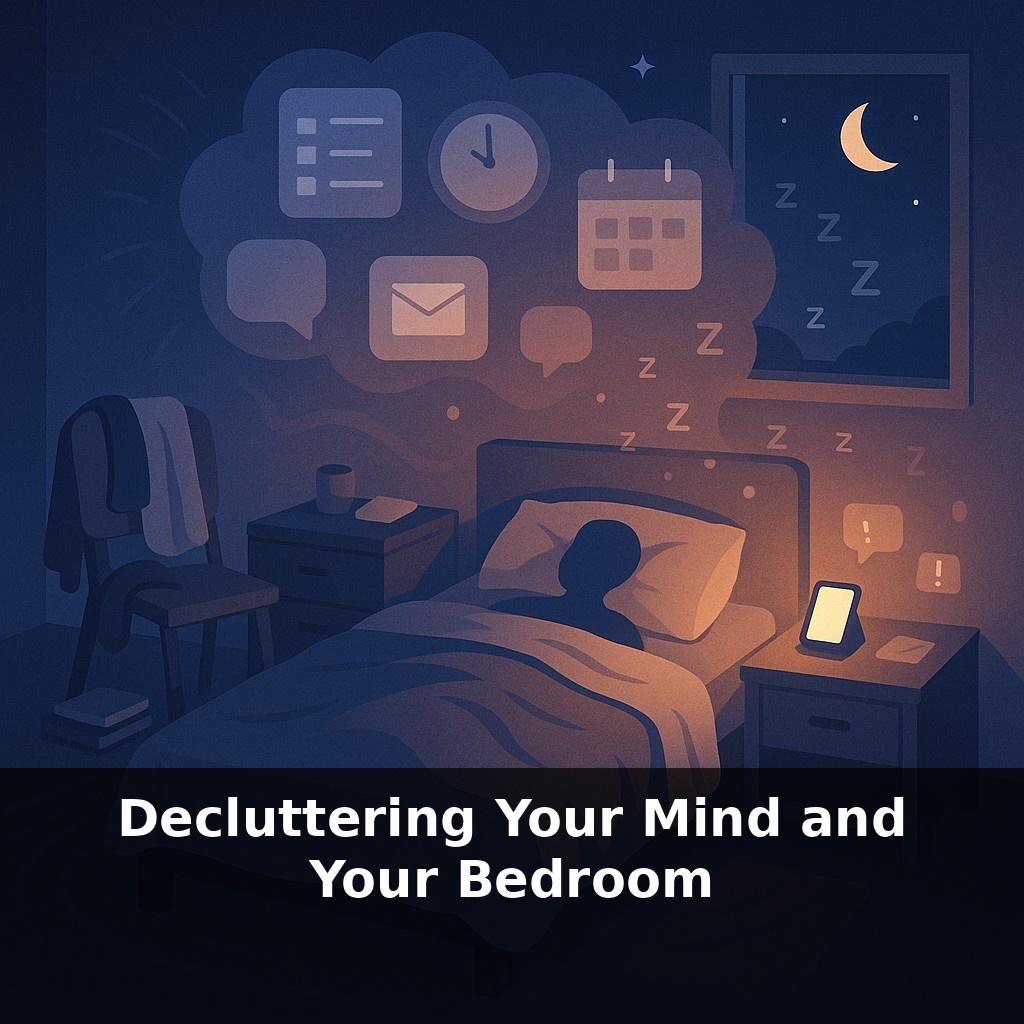
Tonight, your bedroom might be secretly keeping you awake—without making a sound. A single glowing screen, a messy chair, and a racing to‑do list can nudge your stress hormones up and your deep sleep down. Stay with me as we trace how your space shapes your thoughts—and your rest.
Think about the last time you tried to fall asleep with a hundred mental tabs open: replaying a conversation, planning tomorrow, remembering that thing you forgot to do. Now add a bedroom where every surface is a reminder—laundry you “should” fold, unread books, glowing chargers on the floor. It’s not just annoying; research shows this combo of mental and visual noise is one of the most overlooked sleep disruptors in everyday life.
We tend to fixate on the big culprits—caffeine, late-night scrolling, deadlines—but the quieter leaks in your system often come from a cluttered mind paired with a cluttered room. The twist is that both are surprisingly modifiable. With a few targeted changes before bed, you can off-load what’s in your head and strip your environment down to the essentials your brain reads as “safe to power down.”
Here’s where it gets interesting: your brain reacts to “too much” the way your inbox reacts to nonstop emails—everything feels urgent, nothing gets filed. Studies show that when people label their homes as chaotic or overwhelming, their daytime fatigue climbs, even if they’re technically in bed long enough. Add in the quiet glow from chargers, TVs, or tablets, and your brain keeps scanning as if there’s unfinished business. That’s why a room that looks “fine” by day can still be too busy at night. The goal isn’t perfection; it’s reducing the number of things your half-asleep brain has to keep half-tracking.
Here’s where the science zooms in. When researchers put people in messy versus streamlined bedrooms and track their brain waves, they see a subtle but consistent pattern: the “attentional” parts of the brain stay more active in cluttered spaces, especially in the minutes before sleep. It’s as if your mind keeps quietly tagging items in the room: “deal with this later… and this… and this.” That low-level monitoring is enough to push back the moment you slide into the first real stages of sleep.
Now layer in what’s happening internally. Unfinished thoughts—emails you didn’t send, errands you might forget, conversations you’re replaying—behave a lot like those objects on the floor. Each one is a tiny open loop your brain doesn’t like to drop. That’s where pre‑sleep “cognitive off‑loading” comes in. In lab settings, something as simple as a 5–10 minute writing session, focused only on what needs to be done tomorrow, reliably cuts the time people spend lying awake. The detail matters: lists of concrete next steps work better than vague reflections, because they convince your brain there’s a plan attached to each loop.
Your physical setup can either support that off‑loading or fight against it. Cool the room just a few degrees and your body finds it easier to shift its internal thermostat into night mode. Darken it more thoroughly—cover LEDs, park devices outside, or put them face‑down—and you’re no longer asking your biology to override light cues it evolved to treat as “stay awake” signals. For many people, even a dim power indicator is enough to keep the space from feeling fully off.
Minimal doesn’t have to mean bare or sterile, though. It means intentional: the objects in view either calm you or disappear into the background. A single book by the bed, not a leaning tower. One soft light source, not six competing glows. Think of it as designing a simple user interface for your half‑asleep self, where every visible element has a clear, quiet purpose and nothing is asking you a question at 11:30 p.m.
Think of your night in three zones: your head, your bed, and everything in view from your pillow. Each can either nudge you toward sleep or tug you back toward wakefulness.
In the “head” zone, off‑loading isn’t only about tomorrow’s to‑dos. Some people jot down “done” lists—three things they completed that day—so their brain closes the book instead of flipping to the next chapter. Others write a single line about what can wait until next week, not just tomorrow, to shrink the sense of urgency.
In the “bed” zone, micro‑adjustments matter: swapping one extra pillow that forces your neck up, or reserving the bed strictly for sleep and intimacy so your brain stops pairing it with email, arguments, or late‑night multitasking.
For the “view” zone, test one surface at a time. Clear just the nightstand and the patch of floor you see first when you wake. Many people notice that when those two areas stay simple for a week, the rest of the room quietly starts to follow.
Soon, “cleaning up” before bed may involve more software than elbow grease. As homes link lighting, temperature, and notifications, you might tap one button and watch your room shift into a kind of private “night mode.” Over time, those tiny automations could work like a quiet coach, nudging you into steadier rhythms. A calmer bedroom could then become less of a luxury and more of a basic health tool—something employers and clinics track and fine‑tune the way they now watch step counts and heart rates.
Treat this as an ongoing experiment, not a renovation project. Tiny shifts—one drawer, one note, one light dimmer—work like nudging a compass, not flipping a switch. Your challenge this week: edit just what you see from your pillow and what you park on the page before sleep, then observe how your evenings feel three nights, then seven nights from now.