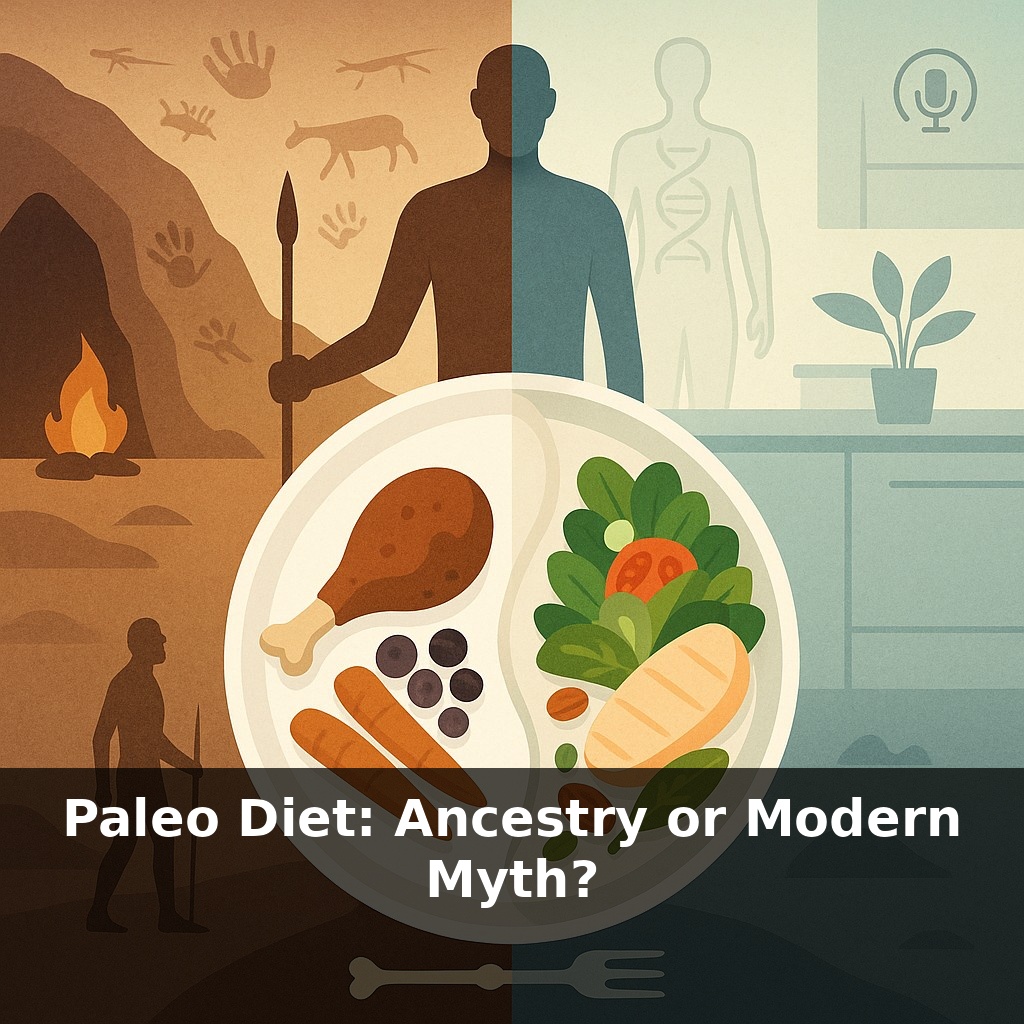
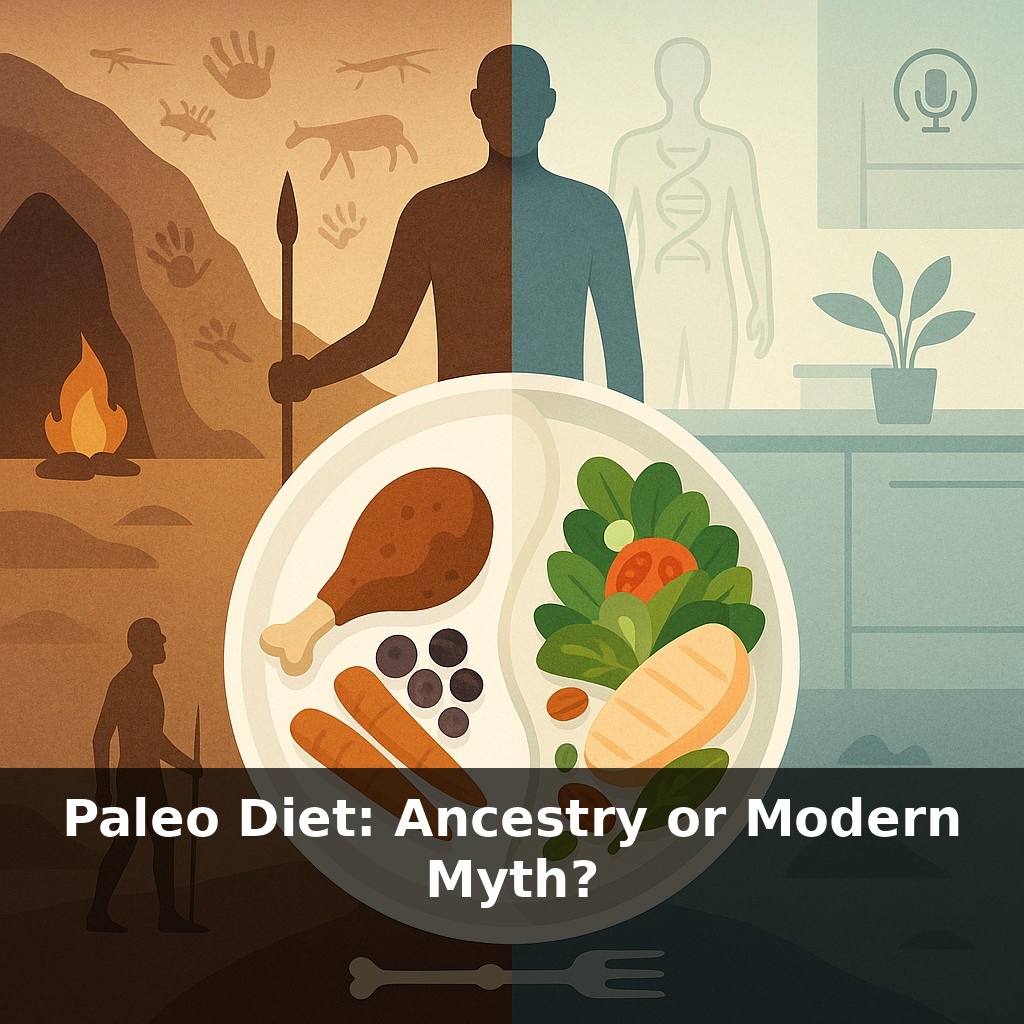
Paleo Diet: Ancestry or Modern Myth?
📝 Transcript
A diet named after people who never shared a single menu. In one cave, roasted mammoth; on another coast, mostly shellfish and wild greens. Today, “Paleo” promises to revive that past. But here’s the twist: which past, and whose body, are we actually eating for?
So instead of chasing a single “correct” ancestral menu, it might be smarter to ask a different question: which parts of that story actually help a 21st‑century body in a 21st‑century world? Our lives are shaped less by hunting and foraging, and more by commutes, screens, late‑night emails, and food that’s engineered to be overeaten. A plate of grass‑fed steak doesn’t erase six hours in a desk chair or a chronic sleep debt. And while the label “Paleo” feels simple and decisive, the research behind it is anything but. Some studies show better blood sugar control and weight loss; others flag gaps in nutrients like calcium or fiber. Meanwhile, real hunter‑gatherer groups alive today are teaching scientists that health is less about copying ancient recipes and more about understanding patterns: movement, variety, and how rarely they encounter ultra‑processed anything.
And there’s another wrinkle: the “rules” you see online were largely assembled in the 2000s, not dug out of a cave. Loren Cordain and others stitched together ideas from anthropology, nutrition, and a fair bit of guesswork, then the food industry rushed in with Paleo bars, bread, and brownie mixes wearing Stone Age branding. Meanwhile, actual research trials often use versions of Paleo that look more like a Mediterranean diet with a stricter ingredient list. So when someone says “Paleo worked for me,” they might be talking about three very different things: a book, a brand, or a carefully controlled study.
Here’s where things get interesting: when researchers put “Paleo” under the microscope, what consistently shows up isn’t magic genetics, it’s basic food quality. In randomized trials, people assigned to Paleo-style menus often end up eating fewer refined carbs, more fiber-rich plants, and more protein. That combination tends to lower appetite, stabilize energy, and nudge blood sugar in a better direction—like tightening up sloppy code in a program so it runs smoother, even if the original design wasn’t perfect.
But then the trade‑offs appear. In strict versions that cut out all dairy and most fortified foods, calcium intake routinely lands in the 400–600 mg/day range. That’s fine for a few weeks in a study, but over years it could matter for bone health, especially if you’re small‑framed, post‑menopausal, or have a family history of osteoporosis. You can compensate with bones‑in fish, leafy greens, and mineral waters, yet that requires deliberate planning—something most glossy “Paleo challenge” plans barely mention.
There’s also the heart question. Depending on how you “do” Paleo, your plate could be heavy on fatty red meat and coconut products, or it could center lean proteins, olive oil, and a heap of vegetables. The American Heart Association’s hesitation isn’t about the label, it’s about the common pattern where people swap cereal and yogurt for bacon, burgers, and butter, then assume the word Paleo makes it protective. In studies where saturated fat is kept reasonable and unsaturated fats are emphasized, markers like triglycerides and blood pressure usually move in a better direction.
Another layer: real-world adherence. Google search trends show that the cultural wave of Paleo has crested, but it hasn’t vanished. That suggests a pattern familiar in nutrition—early hype fades, but a smaller group keeps the parts that felt practical. For some, that’s “no grains, ever.” For others, it’s “cook more whole foods, avoid the boxed stuff.” The health impact hinges less on whether your muffin is technically Paleo and more on whether your everyday meals keep you nourished, satisfied, and metabolically steady over months and years.
So the more useful question isn’t “Is Paleo right or wrong?” It’s “Which version are we talking about, for which person, and for how long?”
Think of three people all saying they’re “doing Paleo,” but watch what actually lands on their plates. Sam uses it as a cooking project: sheet‑pan salmon, big salads, roasted root vegetables, nuts instead of chips. Dana leans on convenience: Paleo‑labeled cookies, bars, and frozen dinners. Chris treats it as a strict elimination phase, then gradually reintroduces oats, yogurt, and beans while keeping the habit of planning meals and reading labels closely.
Same label, very different biology downstream. In small trials, patterns like Sam’s and Chris’s—lots of home‑cooked meals, fewer sweetened drinks, protein at most meals—tend to show better energy and easier appetite control, regardless of whether the diet is called Paleo, Mediterranean, or “what I can cook after work.” Dana’s path often looks healthier on Instagram than in a food log.
Your own context matters, too. Endurance athletes may struggle with very low‑grain versions; people with celiac disease might welcome the built‑in gluten avoidance; someone with a history of disordered eating might find rigid “allowed/forbidden” lists risky rather than freeing.
Here’s the twist: the next wave of “Paleo” may look less like a rulebook and more like a lab report. As nutrigenomics and microbiome testing mature, you could see plans that cross‑check your DNA, gut bugs, and even location—then suggest an eating pattern that nods to your ancestry without copying it. Think less costume party, more tailored suit: shaped by the past, fitted to your current body, climate, and medical risk, then updated as new long‑term data arrive.
Instead of asking “Is Paleo authentic?” you might ask, “What does my body actually respond to?” Use it as a testing ground: try more whole foods, then notice sleep, mood, digestion, and labs, not just the scale. Like rearranging furniture, small shifts in what you repeat most days can quietly reshape how your whole health “room” feels over time.
To go deeper, here are 3 next steps: (1) Pull up Cronometer or MyFitnessPal and log a full day of your current eating, then compare it to the “Paleo Template” chapters in *The Paleo Cure* by Chris Kresser to see exactly where you’re closer to, or far from, what was discussed in the episode. (2) Read the section on hunter-gatherer diets in *Paleofantasy* by Marlene Zuk, then watch Dr. Stephan Guyenet’s YouTube talk “The American Diet: A Historical Perspective” to contrast the romanticized Paleo story with actual evolutionary and anthropological data. (3) Open the website of PubMed or Google Scholar and search “Paleo diet randomized controlled trial,” pick one paper (for example, the 2009 Lindeberg Paleo diet trial on type 2 diabetes), and skim the methods and results so you can see how the claims made in the episode line up with real study designs and outcomes.
From this course
Myths and Marvels of Popular Diets
5 episodesUnlock all episodes
Full access to 5 episodes and everything on OwlUp.
Subscribe — $1.99/monthLess than a coffee ☕ · Cancel anytime