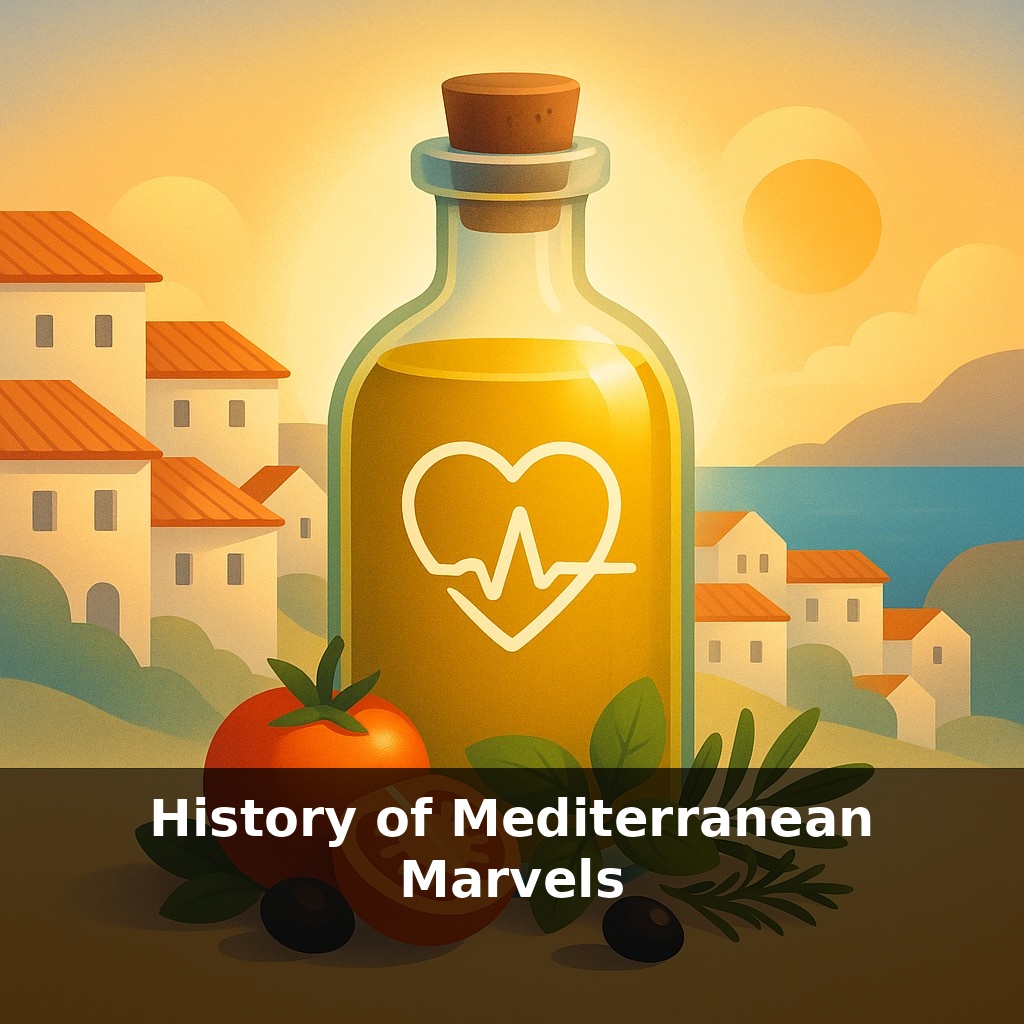
Olive oil once flowed through the Mediterranean like liquid gold—yet the people who used the most of it had some of the lowest heart‑disease rates on Earth. In this episode, we step onto those sun‑baked shores and ask: how did everyday food quietly become a medical marvel?
By the mid‑1900s, visiting scientists in Southern Europe noticed something they couldn’t shake: villages where people lived long, active lives, yet butchers were rare and supermarkets nonexistent. Kitchens ran on tomatoes simmering for hours, chickpeas soaking overnight, and fish hauled in before sunrise. To them, this looked less like a “diet” and more like a survival toolkit shaped by war rationing, lean wallets, and strict religious calendars that mandated meatless days. Trade routes added another twist: spices from the East, citrus from new orchards, and New World foods like tomatoes and peppers quietly slipped into old recipes. Over generations, families edited their tables like careful librarians, keeping what helped them work the fields, pray, and celebrate—discarding what weighed them down. Modern researchers would only later realise that this cultural patchwork was also a powerful shield against the diseases of our age.
By the time doctors arrived with clipboards and stethoscopes, the story was already written in family routines. Lunch wasn’t a rushed desk salad but the main meal, followed by rest; dinner happened late, often shared, rarely eaten alone in a car. Religious fasts structured the calendar like quiet health check‑ins, nudging people toward simpler dishes at regular intervals. Markets acted as daily “menus of the season,” limiting choice but boosting freshness. Even scarce resources helped: when meat is occasional and sweets are for feast days, everyday fare has to carry you through like reliable work boots, not party shoes.
Step inside one of those mid‑century kitchens and you’d notice something else the scientists eventually wrote down: the near‑absence of industrial shortcuts. Bread came from stone‑ground flour, often baked that morning. Beans and lentils weren’t props on the side of the plate; they were the plate—stews thick enough to feed a whole family on a few coins. Fish appeared not as fingers in a box but whole, grilled or stewed with whatever vegetables the season allowed.
This wasn’t nostalgia; it was infrastructure. Before cheap refrigerators and year‑round imports, people defaulted to what kept well without heavy processing: dried pulses, nuts, seeds, hardy greens, onions, garlic, fermented cheeses, and olives. Salt, sun, and time preserved food long before factories did. In today’s language, that translates into a pattern almost accidentally rich in fibre, antioxidants, and healthy fats, and unusually low in added sugars and ultra‑processed starches.
Social habits quietly reinforced this pattern. Meals were long enough that you could feel fullness arriving, not gulp past it. Children were handed bits of bitter greens and anchovies, training their palates away from constant sweetness. Grandmothers “measured” with their hands, but their experience functioned like a living algorithm: years of observation encoded into seemingly casual pinches and pours.
The modern proof arrived decades later. When researchers in Spain enrolled thousands of adults into the PREDIMED trial, they didn’t ask people to count every calorie or eliminate entire food groups. Instead, they nudged participants toward a recognisable template: more legumes each week, frequent fish, daily handfuls of nuts, fruit replacing pastries, wine never detached from meals. The result—far fewer heart attacks and strokes—validated what village cooks had beta‑tested across generations.
Thinking of it like software, those households were running an operating system optimised for scarcity and hard work. Today we’ve upgraded to abundance and sitting—but often kept the old “apps” of pastries, processed meats, and constant snacking. The Mediterranean pattern shows what happens when the core code stays aligned with human biology, even as the world around it changes.
Think of the Mediterranean table more like a well‑designed city than a single “superfood street.” Streets are the staples: whole grains, beans, lentils, potatoes. They carry most of the traffic—calories and satiety—without gridlock in your arteries. Buildings are the vegetables and fruits, stacked in layers of colour and function: tomatoes rich in lycopene, leafy greens loaded with folate, citrus supplying vitamin C and fragrance. Parks are the pauses built into meals: starters of raw vegetables, small plates of olives or nuts that slow you down and stretch the eating window so your body can register fullness.
Then come the specialised structures: fish as lean, omega‑3‑rich “clinics” for your blood vessels; modest portions of sheep or goat cheese as “libraries” of fermented microbes training your gut; herbs like oregano, thyme, and rosemary acting as rooftop solar panels, converting sun into dense packets of antioxidants. Wine is more like a town square—used sparingly, mostly in company, and never meant to take over the whole map.
Future implications of this “old” pattern may feel surprisingly high‑tech. Labs are testing how your microbiome responds to specific herbs, turning dinner into a kind of personalised update rather than a one‑size‑fits‑all patch. Farmers treating chickpeas and lentils like climate‑smart hardware can stabilise harvests as weather swings. Policy makers quietly copy the template into food guides, while food companies race to launch “next‑gen” Mediterranean snacks—like classic recipes rebuilt with higher‑polyphenol ingredients.
In the end, the “Mediterranean Diet” is less a recipe list and more a user manual for living where food, time, and community overlap. Centenarians in coastal towns aren’t counting macros; they’re guarding lunch as firmly as any meeting. Your challenge this week: protect one shared, unhurried meal a day—and build the menu around plants, not packaging.