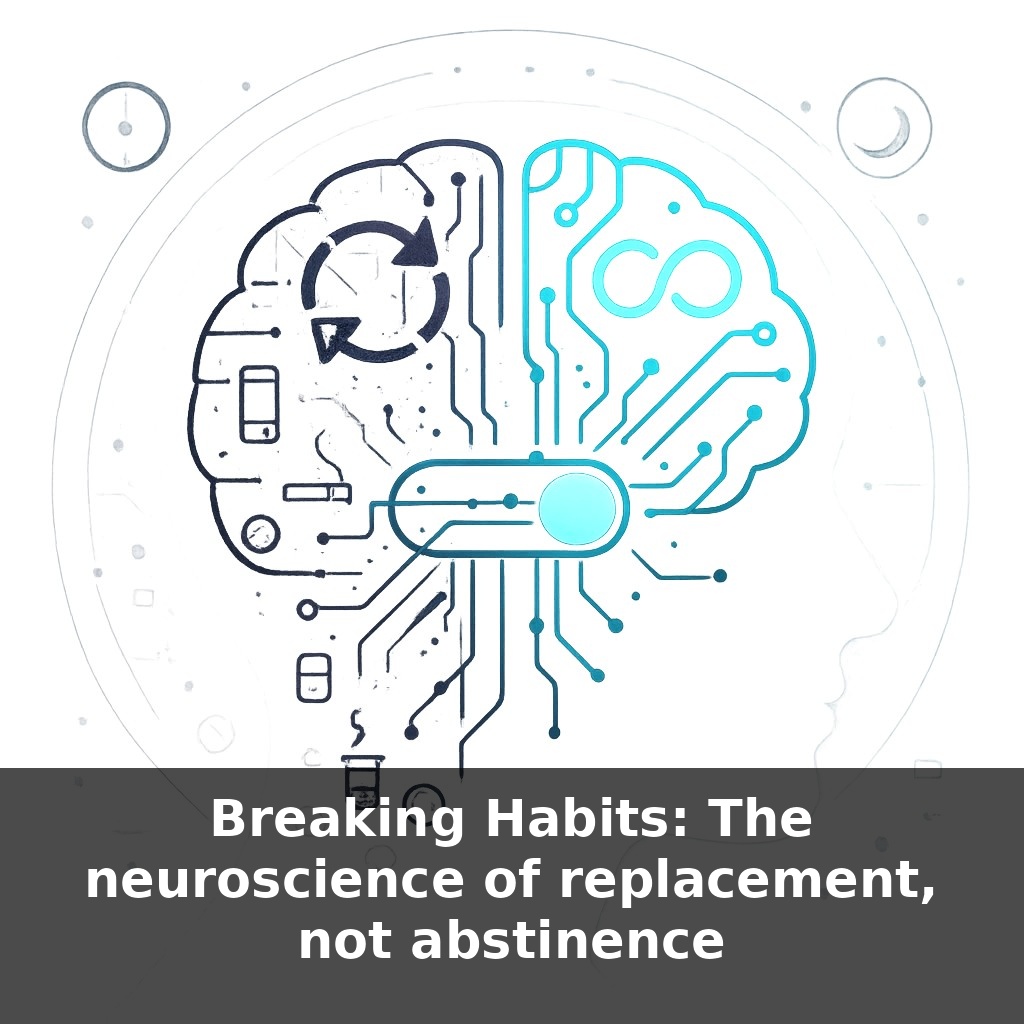
About half of what you did today wasn’t a choice; it was a script your brain ran automatically. Now, here’s the twist: your brain doesn’t really “delete” those scripts. So how do smokers, doom‑scrollers, or late‑night snackers actually escape a habit that never truly disappears?
About half of what you did today wasn’t a choice; it was a script your brain ran automatically. Now, here’s the twist: your brain doesn’t really “delete” those scripts. So how do smokers, doom‑scrollers, or late‑night snackers actually escape a habit that never truly disappears?
Neuroscience’s answer is blunt: most people fail because they try to fight an old pattern with empty space. They remove the behavior but don’t install a replacement. The cue still shows up. The craving still shows up. The brain asks, “Okay, what do we do now?” and, with nothing else prepared, it reaches for the old routine.
This is where “replacement, not abstinence” matters. We’re not talking about distraction or white‑knuckle willpower, but about deliberately pairing each risky cue with a new, rewarding action—one your brain can learn to prefer. Over time, the question shifts from “How do I stop?” to “What do I do instead?”
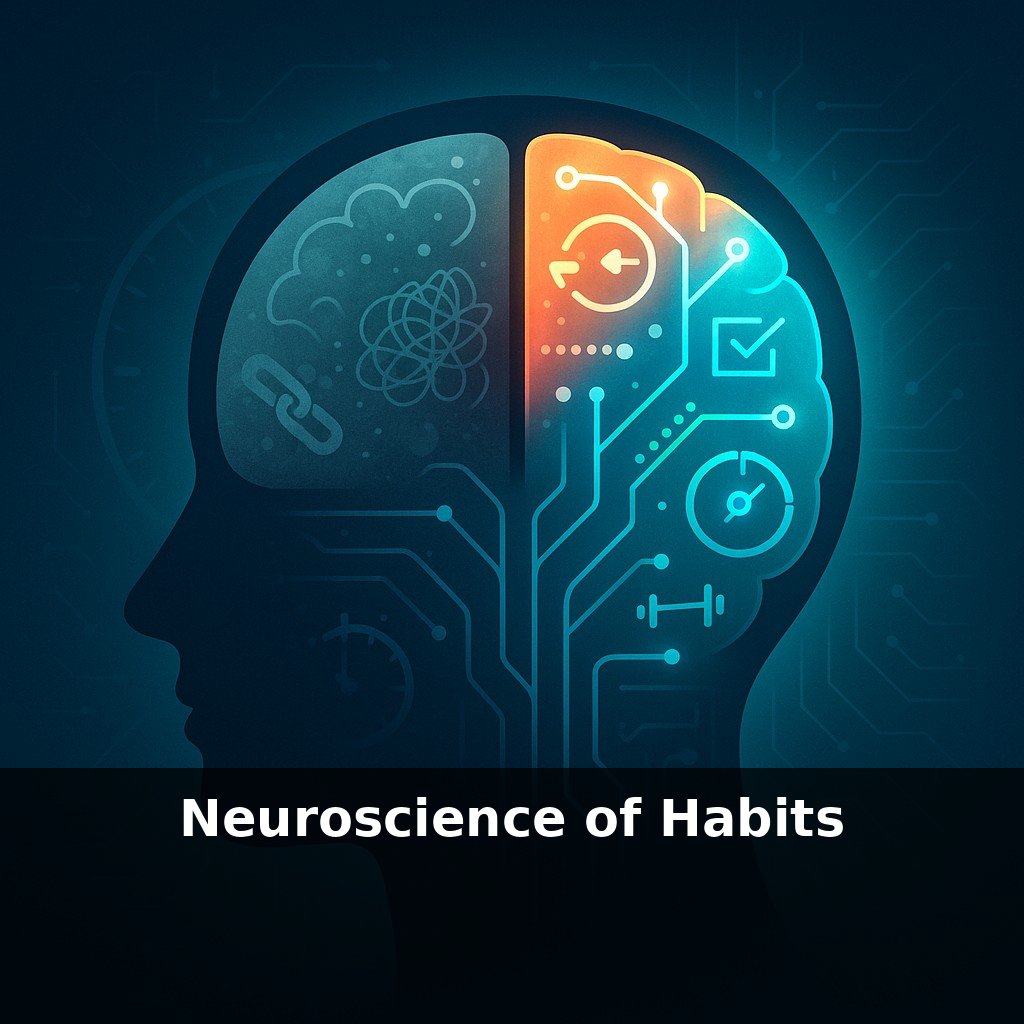
Here’s where the science gets practical. Those cue–routine–reward loops live in the basal ganglia, a region that doesn’t care whether a routine is “good” or “bad”—only whether it’s reliable and rewarding. That’s why stress, certain locations, or specific apps on your home screen can quietly trigger the same loop over and over. The crucial point: your prefrontal cortex (planning, values, goals) *can* intervene, but it’s slow and tires easily. So the real leverage isn’t brute self‑control; it’s redesigning what automatically happens when those familiar cues show up in real life.
Here’s where things get counterintuitive: your brain doesn’t care that you “stopped” something last week; it cares about what reliably happens *next* when a familiar cue appears.
You feel an afternoon slump → your cursor drifts toward a shopping tab. You open your laptop at night → your fingers auto‑navigate to social media. These aren’t just bad choices; they’re well‑rehearsed solutions your brain has tagged as “works reliably enough.”
To change that, you don’t start by asking, “How do I block this?” but, “What problem is this routine solving, and how else could I solve it?”
Three questions expose the underlying “job” of a habit: - What cue reliably precedes it? (Time of day, emotional state, place, device.) - What immediate benefit do I get? (Stimulation, sedation, escape, connection, relief.) - How quickly does that benefit arrive?
That last part is huge. Dopamine is extremely sensitive to timing. A replacement routine that pays off in 20 minutes will lose to one that pays off in 20 seconds—no matter how “healthy” it is in the long run. That’s why vague resolutions like “go for a run instead of scrolling” often fail: the physiological reward is real, but delayed, and your older loop wins the speed contest.
So effective replacement has to be: 1. **Cue‑matched** – tied to the *same* trigger the old habit responds to. 2. **Function‑matched** – addressing the *same* need (e.g., reduce anxiety, feel connected). 3. **Speed‑competitive** – delivering a noticeable reward within roughly the same window.
Technology habits are a clear test case. Many people try “digital detox” by deleting apps, only to reinstall them. A more brain‑compatible move is what some productivity designers call “adjacent substitutes”: when the cue hits (bored in a queue, anxious between tasks), you route yourself to a different but still instantly rewarding option—like a 60‑second breathing app, a saved reading queue, or a friend’s chat thread—*before* the old icon gets tapped.
Think of it like changing the default track on an autoplay playlist: the moment one song ends (the cue), another starts automatically. If you don’t curate that next song, the algorithm serves you whatever kept you listening before—whether you still want it or not.
A practical way to see this in action is to zoom in on tiny, ordinary switches. Say every time a meeting ends, your hand flies to your phone and you sink into feeds. Instead of declaring “no phone,” you pre‑load a 3‑minute voice note app in the same spot and, as the calendar alert fades, you dump thoughts about the meeting. Same transition moment, same device, different “next step” that still feels instantly gratifying because you’re off‑loading mental clutter.
Or take late‑night streaming. Maybe you don’t cut TV, but you set your platform to auto‑play a short language‑learning clip after your usual show. You still collapse on the couch, still press play, but the first few minutes redirect your focus just enough that stopping after one episode becomes easier.
Musicians do this instinctively: when a riff keeps slipping into an old melody, they don’t stop playing; they practice flowing into a new phrase so often that the fingers “forget” the previous landing spot and find the new one by default.
A future where your phone nudges you *before* you open that app isn’t sci‑fi; it’s a design question. As wearables quietly track heart rate, location, even typing rhythm, they could learn your “uh‑oh” patterns and surface a pre‑chosen alternative right on time—like a friend calling your name as you drift toward an old doorway. But once tools can steer micro‑choices this precisely, who decides which paths are highlighted—and whose interests that guidance serves?
Your challenge this week: Pick one tiny, specific habit you’d like to reroute—ideally something tech‑related, like late‑night scrolling or reflexive inbox checks. Then, for the next 5 occurrences, manually trigger a replacement routine *the moment* you notice the cue: e.g., swap to a 2‑minute breathing app, send a single thoughtful message, or read one saved article. Treat it as an experiment in being your own “closed‑loop system” and see how quickly the new path starts to feel more natural.
Change, then, is less about inner battle and more about quiet choreography: arranging your future self’s next move before the cue lands. As you test replacements, notice which ones feel like tuning a song slightly sharp or flat—small shifts that change the whole mood. The deeper question becomes: if your loops are editable, who do you want doing the editing?
Here’s your challenge this week: Pick ONE habit loop the episode talked about (cue–craving–behavior–reward), like “scrolling your phone in bed,” and for the next 7 nights, you’re not allowed to remove it—you have to replace the behavior only. Every time the usual cue shows up (e.g., you get in bed and reach for your phone), you must swap the old behavior with a pre-chosen alternative that hits a similar reward circuit, like 5 minutes of a gripping audiobook or a short, high-dopamine fiction read instead of social media. Track how many times the cue appears each day and how many times you successfully run the replacement behavior, aiming for at least 70% swaps by day seven.