The ocean quietly powers about half the oxygen in every breath you take—yet we treat it like a limitless ATM. In this episode, we’ll dive into a strange paradox: how protecting more of the sea can actually grow jobs, feed communities, and strengthen our global economy.
If the ocean were a country, its annual economic output would rank among the world’s largest—and yet enormous parts of this “blue economy” don’t show up in any national budget. In earlier episodes we saw how the sea regulates climate and supports life; now we’ll follow the money, policies, and choices that decide whether that living system thrives or collapses. We’ll look at fishing rules that can turn a crashing stock into a steady paycheck, and why closing some areas to extraction can boost catches outside their borders. We’ll explore how offshore wind farms, kelp forests, and shellfish farms can act like low-carbon factories at sea, providing energy and food with a lighter footprint. And we’ll meet the policies, treaties, and local cooperatives quietly redefining what “wealth” from the ocean really means.
On paper, ocean decisions look like lines on maps and numbers in policy briefs; in reality, they feel more like daily trade‑offs in a busy kitchen. A coastal government weighing tourism against trawling, a port city betting on offshore renewables, or a village cooperative choosing catch limits is really deciding which “recipes” for the future to keep, and which to retire. Add in global forces—subsidies, climate shifts, high‑seas treaties—and suddenly local choices ripple worldwide. In this episode, we’ll zoom into those pressure points where law, livelihoods, and living seas collide.
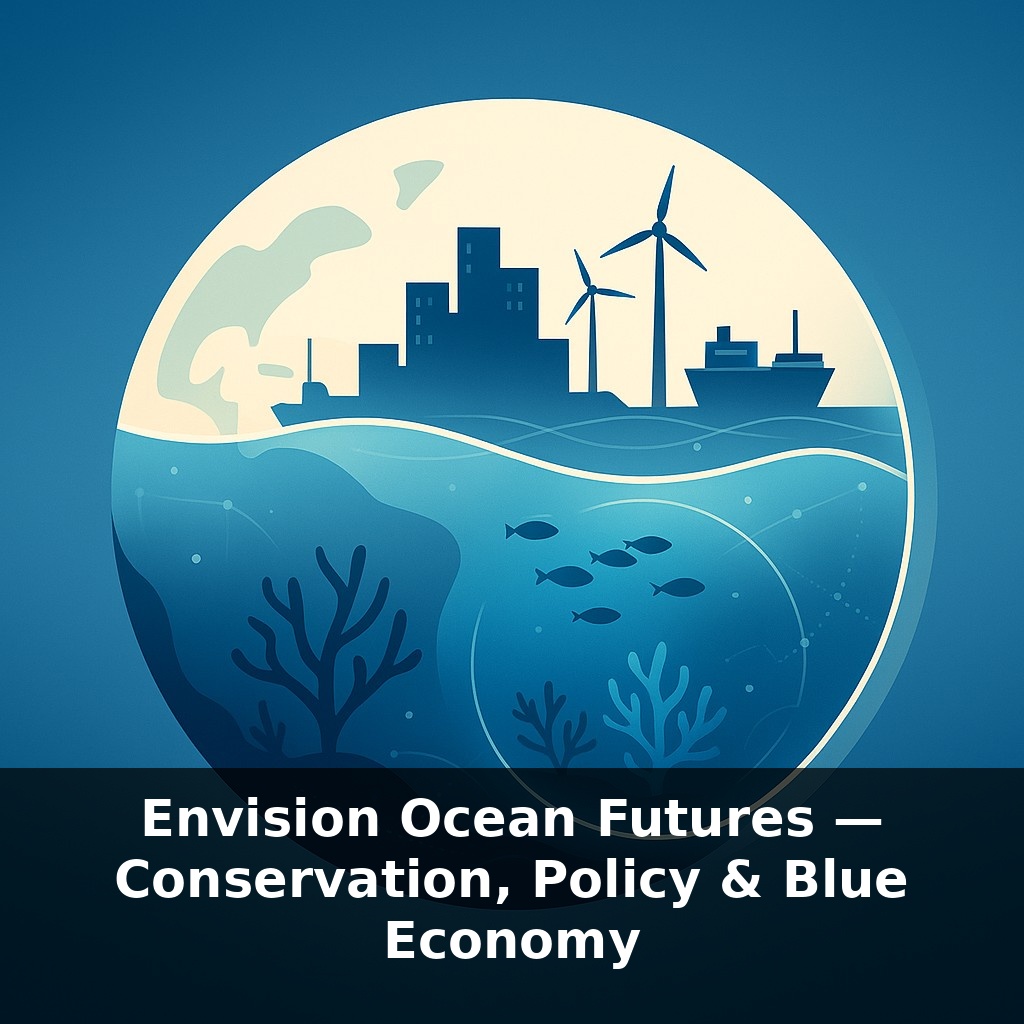
In practice, the ocean’s future is being shaped in three big arenas: how we take fish, how we set aside space, and how we build new industries on the water.
Start with fisheries. Science‑based management isn’t abstract; it shows up as concrete rules: catch limits tied to stock assessments, gear regulations that reduce by‑catch, and seasonal closures that protect spawning. Where countries pair these tools with strong monitoring—onboard observers, electronic logbooks, satellite vessel tracking—collapsed fisheries have rebounded within a decade, often yielding higher, more stable catches than before. The catch: illegal, unreported and unregulated fishing still bleeds up to US$20 billion a year from coastal nations, especially where enforcement is weak and data are scarce. Tackling it means coordinating port inspections, blacklisting repeat‑offender vessels, and following the money behind opaque shell companies that own distant‑water fleets.
Then there’s space. Current marine protected areas cover about 8 % of the ocean, but only a fraction are truly strict. The “30 by 30” goal—protecting 30 % of land and sea by 2030—has pushed governments to propose vast new zones on the high seas and within exclusive economic zones. The design details matter: boundaries need to encompass migration routes, breeding grounds, and climate refugia; zoning must balance local food security with conservation; and funding has to cover long‑term management, not just map‑making. Some countries are experimenting with “debt‑for‑nature” swaps that reduce national debt in exchange for durable ocean protections, tying fiscal stability directly to healthy ecosystems.
Finally, emerging sectors—offshore renewables, low‑impact tourism, restorative aquaculture—are competing with shipping, mining, and defense for the same seascapes. That’s driving a shift toward marine spatial planning: a kind of national “city plan” for the ocean that maps shipping lanes, fishing grounds, cultural sites, and conservation priorities together. Done well, it can steer wind farms away from key bird flyways and sensitive seafloors, keep seaweed farms out of shipping bottlenecks, and give coastal communities a real say in who uses their waters, and how. Done badly, it can entrench powerful interests and sideline small‑scale fishers.
Your challenge this week: trace one product or service you rely on—sushi, smartphone, electricity—back to where it touches the ocean, and ask whether that link is managed as if the sea were a finite, living system or an open‑access free‑for‑all.
Think about how a good chef treats their pantry. They don’t just grab whatever’s closest; they plan menus around what’s seasonal, what’s scarce, and what needs time to recover. Some coastal nations are starting to treat their waters the same way. In Chile, for example, “turf” rights give local cooperatives long‑term access to specific rocky reefs—but only if they follow strict harvest plans for high‑value shellfish like loco. Because fishers know they’ll be there in 10 or 20 years, they guard against poachers, record their catches, and adjust effort when signs of stress appear. In Kenya, community‑managed closures that rotate openings have turned once‑empty reefs into productive fishing grounds and snorkeling hotspots, pulling in tourism income that doesn’t depend on ever‑higher catch. Meanwhile, satellite data firms are partnering with small island states to spot “dark” vessels that switch off transponders, allowing tiny enforcement teams to target boardings instead of chasing rumors across thousands of square kilometers.
A decade from now, “ocean literacy” could be as basic as reading: kids learning to spot labels for well‑managed catch like they now check food allergies. Cities may publish “sea footprints” beside carbon ones, revealing how roads, data cables, and even concrete link back to coasts. Financial regulators might treat unchecked pollution risks the way they now treat bad debt. And like watching a storm forecast, citizens could follow real‑time maps of ecosystem stress, voting with both wallets and ballots as conditions shift.
So the frontier isn’t just new tech or bigger reserves—it’s changing our default settings. Think of your habits as a personal “tide”: small shifts in what you buy, vote for, or invest in can add up like lunar pulls, nudging whole markets and ministries. The secret world beneath the waves is already adapting; the open question is how quickly we choose to follow.
Start with this tiny habit: When you open your weather app each morning, also tap over to the “tides/ocean” or “marine” section (or Google “today’s ocean temperature + your nearest coast”) and spend 10 seconds noticing how the ocean is changing where you live. Then, once a week when you do this, look up one local marine protected area or coastal restoration project near you and follow them on social or sign up for their newsletter. This tiny check-in builds your “ocean awareness muscle” and quietly plugs you into the real conservation and blue-economy work happening around your own shoreline.