Right now, your body is quietly deciding how long you’ll live. Not in a hospital, not in a lab—on your walk to the kitchen, in your next snack, in tonight’s bedtime. Here’s the twist: tiny daily choices, not heroic efforts, are doing most of the heavy lifting.
The strange part is how *ordinary* the science of longer life looks up close. There’s no futuristic gene hack in your morning routine, just a handful of repeatable moves that quietly compound over years. Large studies following hundreds of thousands of people show a pattern so consistent it’s hard to ignore: people who walk a bit more, eat a bit more plants, sleep a bit more regularly, stress a bit less, connect a bit more, and avoid the obvious toxins don’t just feel better—on average, they live a decade longer than those who don’t.
Think of it less like chasing a single “longevity hack” and more like tending a small garden: several simple inputs, applied most days, change what your health looks like five, ten, twenty years from now. In this episode, we’re going to zoom in on the *daily* layer—what you can actually do between waking up and going to bed that moves your lifespan in the right direction.
So here’s where it gets interesting: those routine behaviors aren’t just “good habits,” they’re levers on specific aging pathways—blood sugar regulation, inflammation, blood pressure, even how well your blood vessels relax and contract across the day. Researchers can now watch markers like resting heart rate variability or fasting glucose shift within weeks of tiny behavior tweaks. That means your lifespan “trajectory” is not fixed; it’s being redrawn in real time. In this series, we’ll treat your ordinary day like a lab: testable experiments, measurable signals, and adjustments you can actually feel, not just read about.
Here’s where we turn the idea of “healthy habits” into something you can actually feel shifting inside a normal day.
Start with movement. Those 30 minutes of brisk walking that show up in big cohort studies? What matters most is *how* you distribute them. Short bouts—10 minutes three times a day—seem to deliver nearly the same mortality benefit as a single half-hour block, especially if at least one bout nudges your heart rate up enough that finishing a sentence takes a little effort. You’re teaching your cardiovascular system to handle tiny, frequent challenges, which in turn keeps your “default” risk lower the other 23 hours.
Nutrition works on a similar rhythm. Instead of obsessing over superfoods, look at *patterns across a week*. A Mediterranean-style pattern isn’t about occasional olive oil and salmon; it’s about plants showing up at most meals, ultra-processed foods showing up less, and your main fats coming from nuts, olive oil, and fish instead of deep fryers. People in the PREDIMED trial didn’t eat perfectly— they ate *consistently enough* in this direction to move their long-term odds.
Sleep is your nightly systems check. The research U‑curve around 7–8 hours isn’t just about time in bed; it’s about regularity. Going to bed and waking up within roughly the same 60–90‑minute window each day helps your internal clock coordinate hormones, appetite, and repair processes. Many people trying to optimize nutrition or exercise are really fighting hidden sleep debt.
Stress and social contact add a quieter layer. Ten minutes of mindfulness that lowers your blood pressure a few points doesn’t feel dramatic—but compound that every day for months and you’re shifting the mechanical strain on your arteries thousands of times. Regular conversations, shared meals, or group walks buffer that stress further; loneliness, in contrast, tracks with higher mortality even after accounting for smoking and obesity.
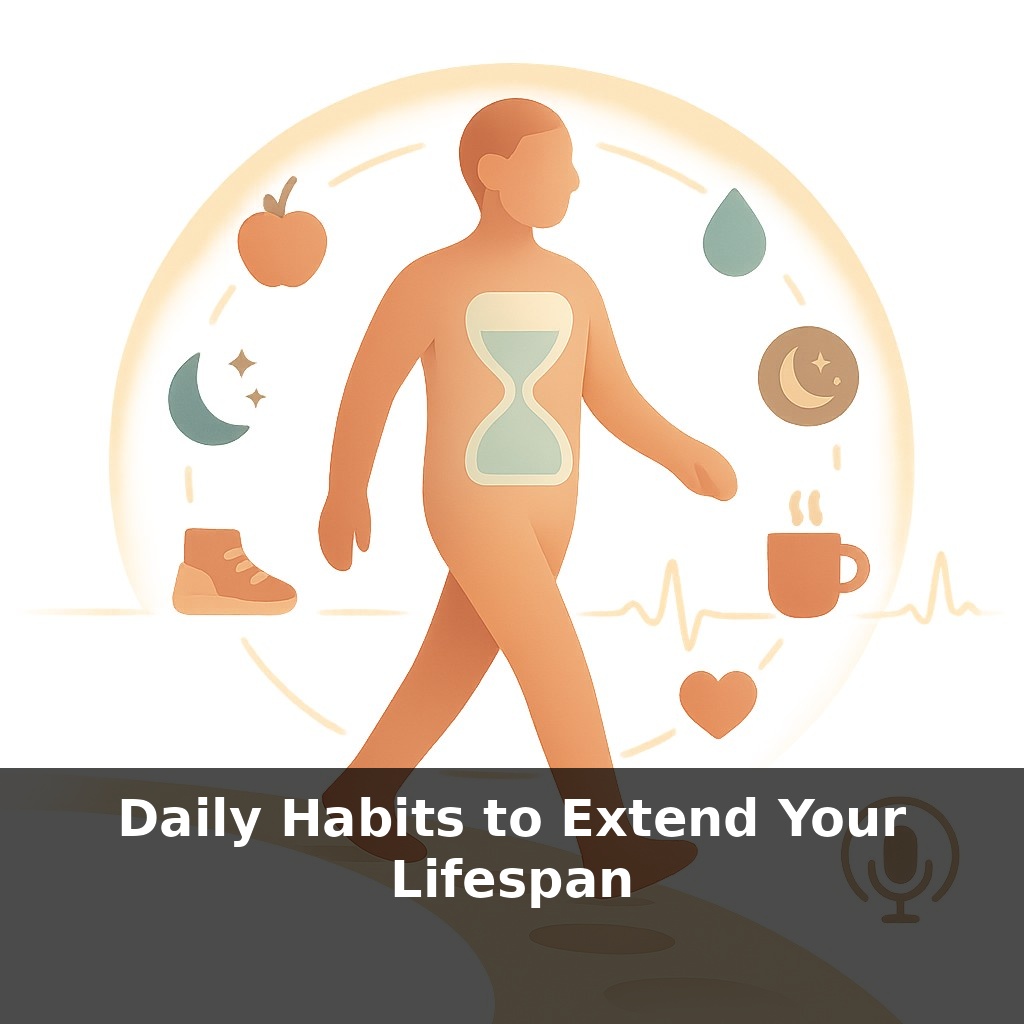
All of this stacks. Each domain—movement, food, sleep, stress, connection—nudges your risk curve a little, and the sum is where those extra 10–14 years emerge for people who stick with most of them.
Think of this like planning a long hiking trip, one waypoint at a time. You don’t need to see the whole mountain range; you just need the next cairn. For movement, a “waypoint” might be choosing stairs whenever you’re going three floors or less. Do that 5–10 times a week and you’ve quietly logged hundreds of extra flights this year. For food, pick *one* anchor: maybe every lunch includes at least two colors of plants, no matter what else is going on. It’s specific enough to follow, flexible enough to survive busy days.
Sleep can get its own anchor ritual: one small action that signals “day is closing” to your brain—dimming lights at a set time, or putting your phone in another room 30 minutes before bed. With stress, experiment with “micro‑exits”: three slow breaths every time you close a laptop tab or step into a meeting. Socially, attach connection to existing habits: a standing walk‑call with a friend during your commute, or a five‑minute check‑in with someone at home before you open any apps. Small, repeatable, and bound to moments that already happen—those are the levers that actually stick.
Soon, your watch may know more about tomorrow’s health than your doctor does today. Continuous streams of glucose, cortisol, and heart‑rate‑variability will let algorithms spot early drifts—subtle shifts in recovery or mood—days before you feel “off.” Like a weather app for your body, it could surface a storm warning: “Tonight, you need wind‑down, not inbox.” The upside is targeted nudges instead of guesswork; the risk is that only some people get that internal forecast.
Think of this week as a quiet pilot episode for the rest of your life. Test one small shift in each pillar—movement, food, sleep, stress, connection—and watch which one changes your day the most. Like rearranging furniture in a room you’ve lived in for years, a few deliberate moves can suddenly reveal space, light, and energy you didn’t know you had.
Start with this tiny habit: When you first put your feet on the floor in the morning, drink 1 big glass of water before you check your phone. When you sit down to eat lunch, stand up and do 5 slow air-squats next to your chair before your first bite. When you brush your teeth at night, take just 4 slow nasal breaths (in for 4 seconds, out for 6) while you’re brushing. When you turn off the TV or close your laptop in the evening, stand by a window or open door and look at the darkest point you can see outside for 30 seconds to help your body wind down.