Right now, your brain is quietly rewriting itself. Even in your seventies or eighties, new connections are forming. One person scrolls through the same three apps; another struggles through a new language class. Decades later, their brains will not age in the same way.
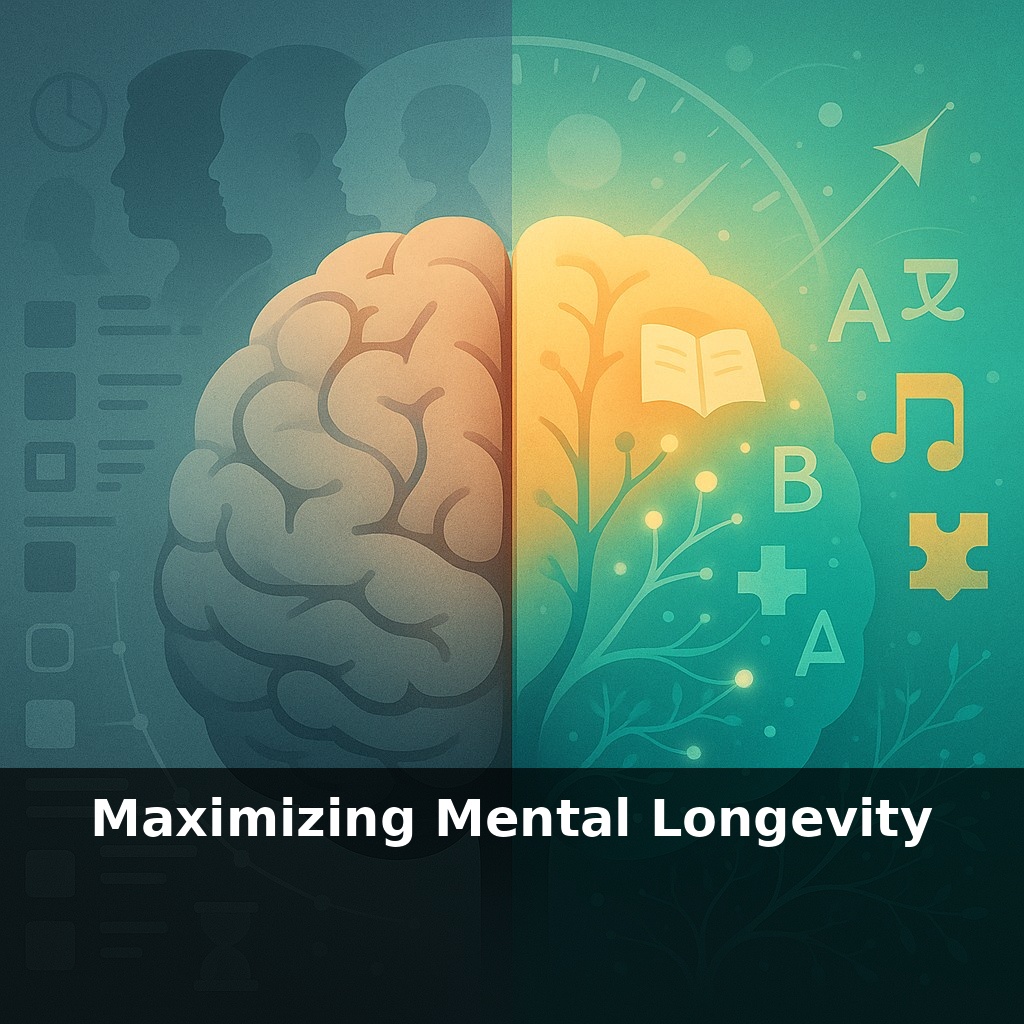
By midlife, many people quietly decide their brain’s “best years” are behind them. The data says otherwise. Mental longevity isn’t about having “good genes” or doing Sudoku on Sundays; it’s about how many different ways you consistently ask your brain to show up. Two 65-year-olds can have the same MRI findings yet wildly different daily function—because one has spent years stacking tiny habits that build cognitive reserve, while the other has been running the same mental “loop” for decades.
In this episode, we’re going practical: how to design a week that trains attention, memory, and problem‑solving as deliberately as you’d train strength or endurance. We’ll connect specific lifestyle levers—movement, food, sleep, stress, learning, and relationships—to concrete changes in how your brain performs now and in your seventies. No biohacking gadgets required; just evidence-based tweaks you can start layering in today.
Your brain doesn’t upgrade in a single “heroic” weekend; it responds to the quiet patterns you repeat for years. The catch: those patterns are often invisible. Many people swear they’re “mentally active” yet spend most evenings in passive consumption mode, asking their brain to do almost nothing new. Over time, that gap between what we *think* challenges us and what actually does can widen. In this episode, we’ll surface those hidden ruts, then layer in small, specific experiments—like swapping one low-effort habit for a slightly harder one—that compound into real protection against decline.
Most people hear “challenge your brain” and default to apps, puzzles, or brain‑training websites. The evidence points somewhere more ordinary—and more uncomfortable: you want regular, slightly effortful friction woven into things you already do.
Start with movement. That 2% hippocampal growth from a year of aerobic training didn’t come from all‑out sprints; it came from consistent, moderate work most people would classify as “doable but not lazy.” A practical target: three sessions a week where talking in full sentences is possible but not easy, plus two short bouts of resistance work that actually fatigue the last few reps. That intensity range drives blood flow, growth factors, and vascular health in ways that track with slower decline decades later.
Now contrast two kinds of “mental activity.” Listening to a podcast while doing dishes feels engaged, but your brain can coast. Leading a discussion about that same topic, teaching it to a friend, or writing a one‑page summary forces retrieval, organization, and precision. Those are the moments that seem to map with better long‑term performance. As a rule of thumb: if you can comfortably multitask, it’s probably not your hardest level.
Social life works the same way. Chatting with the same two people about the same three topics is emotionally valuable but cognitively light. Joining a group where you’re the least experienced person—a choir, coding meetup, community board—adds unpredictability, negotiation, and perspective‑shifting. Studies tie larger, more diverse social networks to lower dementia risk, even after controlling for education and income.
Food and sleep quietly set the floor for how much of that challenge you can tolerate. Mediterranean‑style patterns—plants, fish, olive oil, legumes, nuts—aren’t magic; they simply reduce the chronic inflammation and vascular damage that otherwise erode your return on every mental rep. And sleep isn’t just about duration; regular timing, a dark cool room, and winding down from bright screens in the last hour improve deep and REM phases where memories are consolidated and neural “housekeeping” runs.
Think of this as curating your mental landscape like an evolving art project: you keep adding new textures, colors, and layers, and you occasionally paint over stale sections instead of staring at the same finished canvas for 30 years.
Swap out “hard” for “unfamiliar” and you’ll often get more mileage. Scrolling complex news feels demanding, but joining a local debate night about one of those topics forces you to track arguments, remember details, and respond in real time. Cooking works the same way: repeating your three signature dishes is effortless; tackling a cuisine you’ve never tried taps planning, timing, and sensory discrimination. Even small frictions count—taking a new route to work and actually noticing landmarks, or changing your dominant hand for simple tasks like brushing your teeth.
You can also stack domains. Learn a dance style that pairs music with coordinated steps and social cues. Volunteer as a tutor in a subject you haven’t touched in years, where you must re‑learn, simplify, and respond to unpredictable questions. Think of these as “combo moves”: one action nudges language, motor skills, and emotional regulation at once. The common thread isn’t intensity; it’s deliberate engagement with something just beyond your current autopilot.
Future tools may turn brain care into something closer to personal finance: trackable, adjustable, and highly individual. AI could flag when your sleep, blood pressure, and daily focus patterns start drifting in risky directions—long before symptoms. Digital therapies might prescribe specific “mental workouts” after a rough week, the way a trainer adjusts a plan after injury. The big question: who owns that data, and who gets access to the smartest “coaches”?
Think of this as long‑term navigation, not a weekend road trip: you’ll miss exits, hit detours, and still drift generally toward a sharper, steadier mind. As research evolves, treat your habits like a living map—update routes, test new paths, and keep at least one “stretch” activity in your week that feels slightly beyond who you currently are.
Try this experiment: For the next 7 days, set a timer for 25 minutes and do a “deep-focus block” on a single mentally taxing task (like learning a new skill, doing a hard puzzle, or reading dense nonfiction) with your phone in another room and all notifications off. After each block, rate your mental clarity and energy on a 1–10 scale and jot one sentence about what distracted you most. On days 3 and 6, add a 10‑minute walk outside right after the focus block and rate your clarity and mood again. At the end of the week, compare your scores to see whether pure focus alone or focus-plus-walking gave you better mental sharpness, and decide which combo to keep as a weekly habit.