Understanding Insomnia: More Than Just Sleepless Nights
📝 Transcript
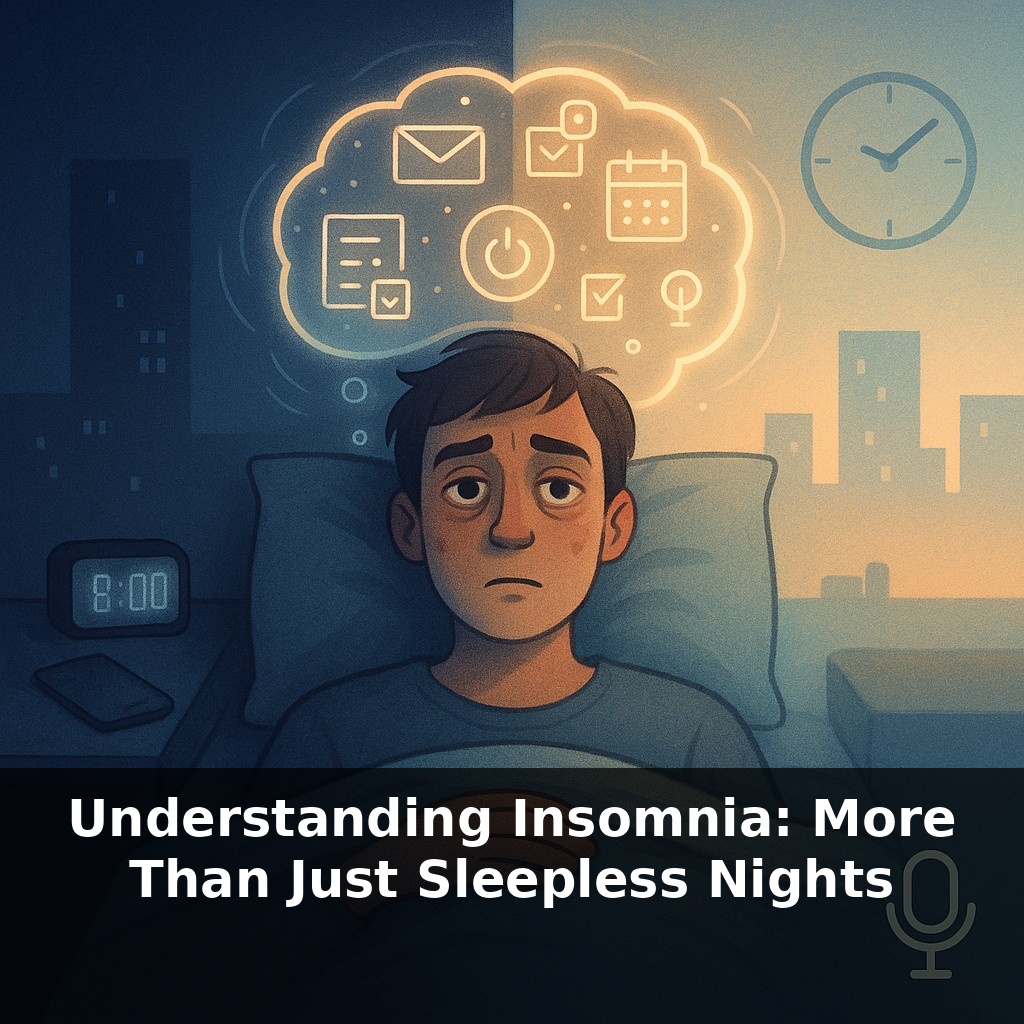
You can be exhausted, eyes burning, body begging for rest… and still feel wide awake. Here’s the twist: for many people with insomnia, the real problem isn’t just at night. It’s a full‑day “always on” mode that refuses to shut down, even when everything is quiet.
That “always on” state doesn’t show up only as staring at the ceiling at 3 a.m. It can look like lying in bed *tired but wired*, waking up too early with your mind already racing through emails, or dragging yourself through the day in a fog you can’t shake. Many people start to dread bedtime long before they turn off the lights, because it’s become less of a refuge and more of a performance review: “Will I sleep tonight, or not?”
Over time, the body starts linking your bed with frustration, clock‑watching, and worry. You might begin making quiet trade‑offs: more caffeine to function, skipping exercise because you’re wiped, working late because “I won’t sleep anyway.” Each small adjustment seems harmless, but together they can reinforce the very pattern you’re trying to escape, tightening insomnia’s grip on both your nights and your days.
Over months, this cycle can quietly reshape your days. You might start turning down social plans because evenings feel like “prep time” for the night ahead, or scrolling endlessly because it’s easier than facing another long stretch in the dark. Mood often shifts first: a shorter fuse, feeling “flat,” or needing more effort to enjoy things you used to like. Concentration can fray in subtle ways—re‑reading the same paragraph, losing your train of thought mid‑sentence. It’s less like a dramatic collapse and more like a slow software glitch that keeps freezing small parts of your life.
Many people assume insomnia is just “not sleeping enough,” but researchers describe it as a 24‑hour condition with several moving parts. At night, there’s the obvious trouble with falling or staying asleep. By day, there’s the mental fog, irritability, and that sense of running on fumes. Underneath both is something more subtle: the systems that usually help the brain “power down” stop cooperating.
Normally, tiny shifts in hormones, body temperature, and brain activity act like behind‑the‑scenes stagehands, quietly dimming the lights and lowering the volume as evening approaches. In insomnia, those cues can be mistimed, blunted, or drowned out by louder signals—like stress chemistry, late‑night stimulation, or irregular schedules. The result isn’t just fewer hours of sleep; it’s a body that has trouble switching modes.
This is where the concept of hyper‑arousal comes in. Studies show that many people with chronic insomnia have higher levels of physiological activation around the clock: faster heart rate, elevated stress hormones, more “busy” brain waves even when their eyes are closed. They don’t necessarily feel revved up all the time—sometimes they feel exhausted—but under the surface, the system stays slightly on edge.
Life circumstances can feed this edge. Big stressors are obvious culprits—bereavement, breakups, work crises—but smaller, repeated hits matter too: caring for a sick relative, constant deadline pressure, financial uncertainty. Mental health conditions like anxiety and depression can both trigger and be worsened by disturbed sleep, creating loops that are hard to untangle. Medical issues (chronic pain, reflux, asthma, overactive thyroid, hot flashes) and certain medications can quietly chip away at sleep quality as well.
Layered on top are habits that begin as coping and slowly backfire: irregular bedtimes, scrolling late into the night, relying on alcohol to “knock yourself out,” or staying in bed longer to “make up” for lost sleep. Even if they bring short‑term relief, they can confuse the body’s timing system and destabilize sleep further.
One way to picture this is like buggy code in a financial trading algorithm: a small error in timing or thresholds can lead to constant over‑reacting—buying and selling when the market is calm, then missing the real signals when they matter. With insomnia, the brain’s threat‑detection and sleep‑timing systems misread the environment, acting as if you’re in danger or “on call” when you’re not.
The hopeful piece is that this complexity also means there are multiple entry points for change. Modern treatments don’t try to “force” sleep; they work by nudging these systems back into alignment—reducing unnecessary activation, clarifying sleep‑wake cues, and loosening the loops that keep insomnia self‑sustaining.
Think of how a smoke alarm behaves in different apartments. In one place, it only goes off with real smoke. In another, it shrieks every time someone makes toast. The wiring is the same device, but the sensitivity and surroundings are different. Insomnia often develops in that second kind of “apartment”: the system is intact, just reacting to too many cues as if they’re emergencies.
You might notice this in oddly specific ways. Some people fall asleep easily on the couch but jolt awake the minute they move to bed. Others sleep better in a hotel than at home, or only on nights when they *don’t* have an early meeting. Certain “trigger nights”—before travel, presentations, or medical scans—can become mini‑training sessions in staying awake, teaching the brain that these contexts equal threat.
Unhelpful patterns can be highly personal: midday naps that quietly stretch longer, “just in case” checking of tomorrow’s tasks, or repeatedly shifting sleep schedules on weekends. Mapping these details is often the first real clue to where change can start.
Insomnia’s ripple effects may quietly shape big life choices. Some people dodge evening social plans, others turn down promotions that demand early starts or late shifts. Over years, that can narrow careers and relationships, not just bedtimes. On the flip side, workplaces and cities designed with sleep in mind—lighting that dims like sunset, commutes that shrink, cultures that don’t glorify “running on empty”—could act like scaffolding while your own sleep system relearns how to stand steadily on its own.
Seeing insomnia as a whole‑day condition can shift the question from “How do I knock myself out at night?” to “How do I help my system feel safe enough to stand down?” Small, repeated choices—like dimming lights earlier or protecting wake‑up times—work less like a magic pill and more like steady deposits in a long‑term savings account for your sleep.
To go deeper, here are 3 next steps: 1) Download the free CBT-I Coach app (from the VA/DoD) and, tonight, use its “Sleep Diary” feature to log your actual sleep and wake times for the next week, just like the structured tracking described in the episode. 2) Pick up "Say Good Night to Insomnia" by Gregg D. Jacobs and work through the first chapter’s exercises on sleep misperceptions, comparing your own beliefs about sleep to the cognitive distortions the guest talked about. 3) Visit SleepFoundation.org and print their “Stimulus Control” and “Sleep Restriction” guides, then choose one protocol (for example, only using the bed for sleep and sex, getting out of bed after 20 minutes awake) and commit to following it exactly for the next 7 nights.
From this course
Sleeping Soundly: A Journey to Reclaim Your Rest
5 episodesUnlock all episodes
Full access to 5 episodes and everything on OwlUp.
Subscribe — $1.99/monthLess than a coffee ☕ · Cancel anytime