About half of adults climb into bed tired… and then lie there, wide awake. Your eyes are closed, but your brain is still in “meeting mode,” replaying emails, arguments, and to‑dos. You changed locations, but not gears—and that hidden mismatch is what we’re going to unpack.
Nearly every system in your body runs on rhythm—heartbeats, hormones, body temperature—yet most people treat bedtime like a random event. One night you crash at 11:00, the next at 1:15, sometimes straight from a bright screen, sometimes after work emails. To your brain, that’s chaos, not “sleep time.”
Here’s what the research says: when you walk through the same short sequence of steps before bed, at roughly the same time, your nervous system starts the sleep process *before* you hit the pillow. In one study, a fixed pre‑sleep routine cut average time to fall asleep from 25 minutes to about 17 in just four weeks—essentially gaining you an extra hour of rest every three nights.
A nightly ritual doesn’t have to be long or fancy. Think 20–40 minutes, 3–5 simple steps, done in the same order so your brain learns, “This means we’re done for the day.”
Here’s the twist most people miss: your “night” doesn’t start when you get into bed; biologically, it starts 60–90 minutes before. That window is when light, temperature, and mental load either line up with sleep—or quietly sabotage it. Blue‑heavy light from phones and laptops can push back melatonin by up to 2 hours, so a midnight scroll can make your brain think it’s closer to 10 p.m. Likewise, a bedroom that stays above 70–72 °F can keep you restless. In this episode, we’ll turn that last slice of your evening into a short, repeatable sequence that reliably shifts you toward sleep mode.
Think of your ritual as a tiny algorithm for your night: same inputs, same sequence, same output. Practically, that means deciding *exactly* what happens in the last 30–60 minutes before bed—and sticking to it long enough for your brain to recognize the pattern.
Start by choosing a **fixed “start” time** for your wind‑down, not just a target bedtime. If you want lights out at 11:00 p.m., your sequence might reliably begin at 10:15. Your brain cares more about that consistent cue than whether you’re off by 10–15 minutes on lights out.
Next, build a **3–5 step sequence** that hits three levers: environment, body, and mind.
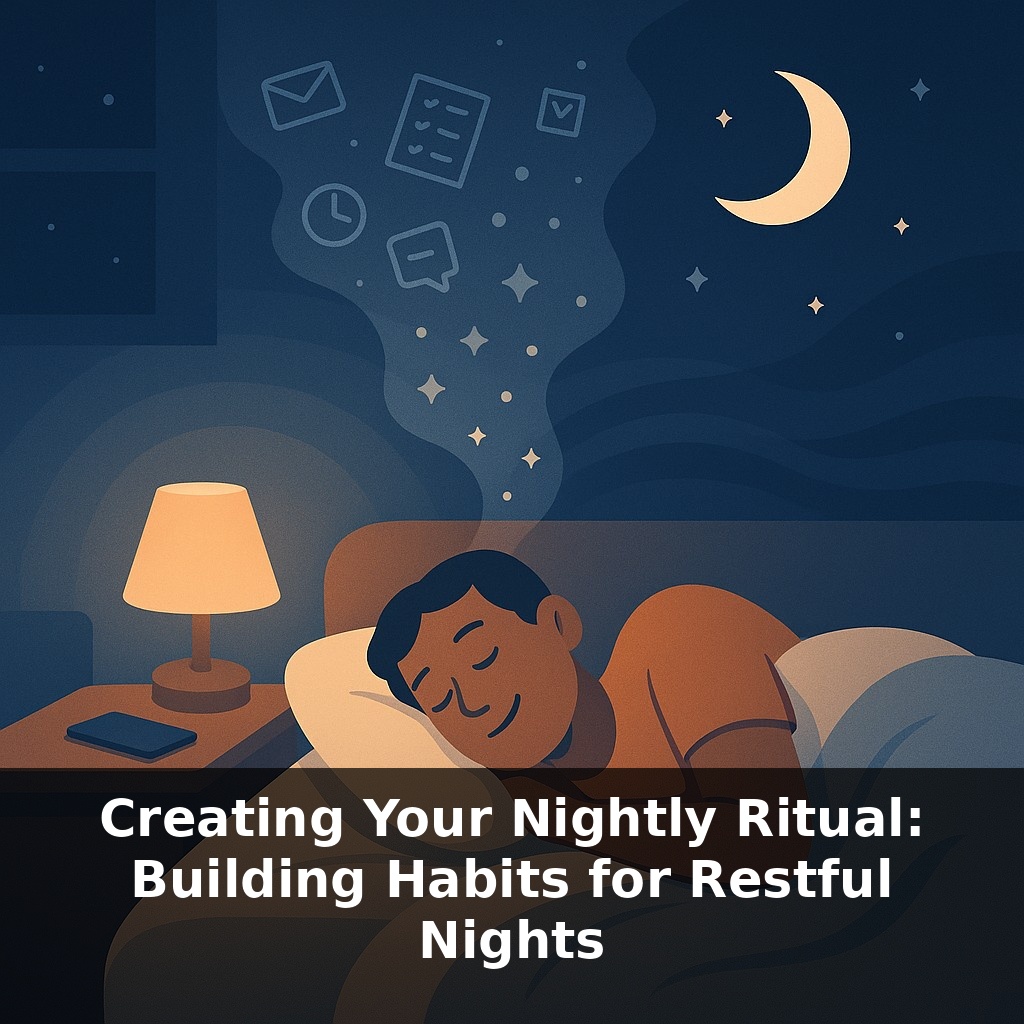
**1. Environment (5–10 minutes)** Shift your space from “day” to “night” in clear, physical ways. Examples: - Dim overhead lights to 30–40% brightness - Switch from harsh ceiling lights to one warm lamp - Put your phone on Do Not Disturb and leave it across the room
The key is consistency: same light sources, same actions, same order.
**2. Body (10–15 minutes)** You’re aiming for small, predictable signals. For most people: - A brief hygiene sequence: wash face, brush teeth, change into sleep‑only clothes - Optional: 5 minutes of gentle stretching or a short, warm (not hot) shower
Keep it repeatable: if it takes more than 15 minutes, you’re less likely to sustain it for the 66‑day median habit‑formation window.
**3. Mind (10–20 minutes)** This is where you prevent “meeting mode” from following you into bed. Options with research support: - **Brain dump (3–5 minutes):** write tomorrow’s key 3 tasks and any looping worries - **Static, low‑stakes reading:** 10–15 minutes of paper book or e‑reader on low, warm light - **Breathing drill:** for example, inhale 4 seconds, exhale 6 seconds, 20–30 cycles
What you *don’t* want here is anything open‑ended or emotionally charged: no inbox, no news, no intense shows.
Your sequence might look like: 10:15 – dim lights, phone away 10:20 – bathroom routine, change clothes 10:30 – 5 minutes of stretching 10:35 – 5‑minute brain dump 10:40 – read a calm book in bed, lights out by 11:00
Run that in the same order, at roughly the same times, every night. You’re not chasing perfection; you’re training recognition.
Leverage the “algorithm” idea by making your ritual modular and adjustable, the way a good app has settings. Start by deciding how many versions you need. For most people, three tiers work well:
- **Full sequence (30–40 minutes):** use this on 4–5 nights a week. For example, on Sundays–Thursdays you might include stretching, reading, and a brief breathing drill.
- **Condensed sequence (15–20 minutes):** reserve this for late evenings. You might cut stretching and trim reading to 5–7 minutes but keep the same order and core actions.
- **Emergency “minimum viable” sequence (5–7 minutes):** protect this on your busiest nights. For example: dim one lamp, do your bathroom routine, 2‑minute brain dump, 10 slow breaths—then lights out.
Aim to use the same core 2–3 actions in all tiers at least 80% of nights for four weeks. This keeps the pattern recognizable while still fitting real life, travel, or unexpected work.
As consumer sleep data grows, your ritual will sit inside a larger “health stack.” In the next 5–10 years, expect wearables to auto‑suggest adjustments: dimming lights 20 minutes earlier after 2 consecutive nights with >25 minutes to fall asleep, or nudging your wind‑down 15 minutes later after late‑evening workouts. Insurers and employers may reward 80%+ weekly adherence with lower premiums or bonuses, turning your 30‑minute routine into measurable, billable prevention.
In four weeks, a consistent sequence can reclaim ~8 extra hours of real rest; in a year, that’s over 400 hours—10 full workweeks—returned to your life. Your challenge this week: run the *same* version of your ritual at least 5 nights, then rate each morning’s energy from 1–10. Next week, drop the lowest‑rated step and replace it with a calmer option.