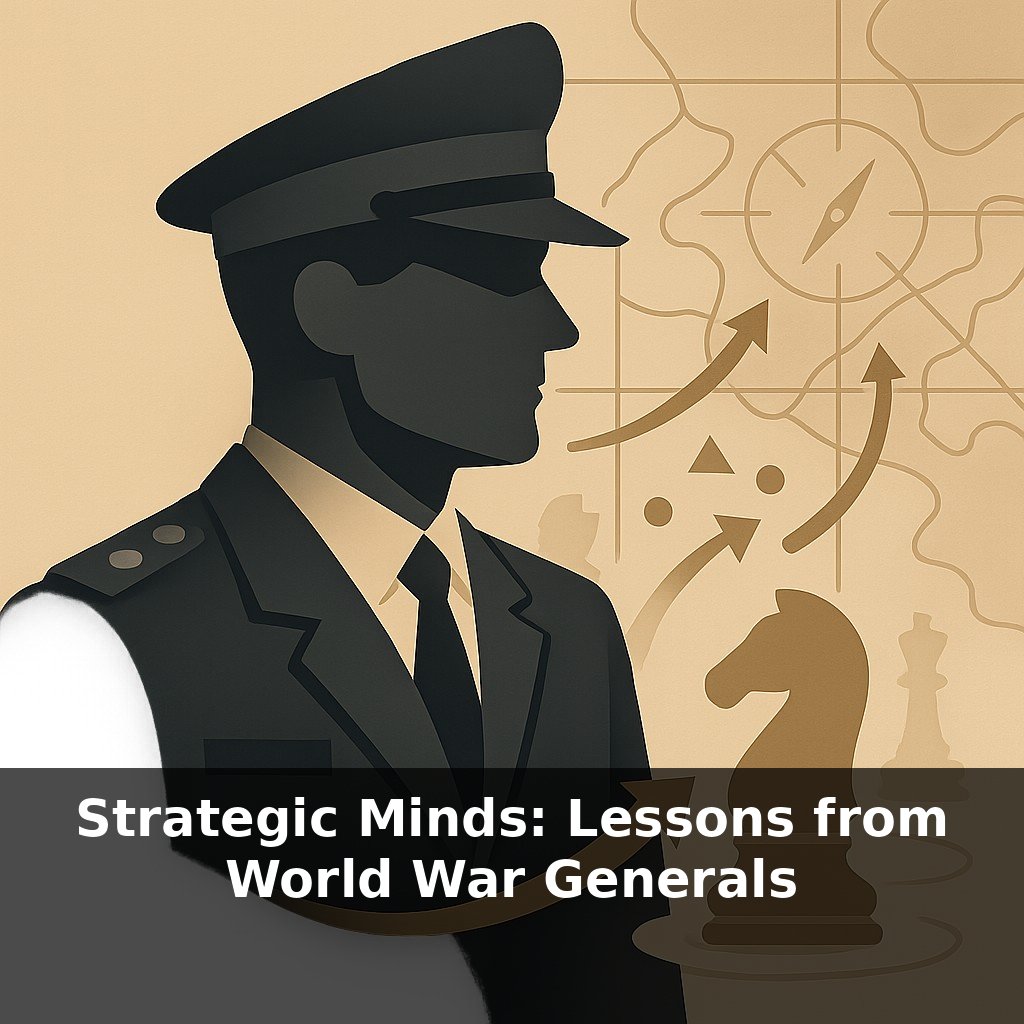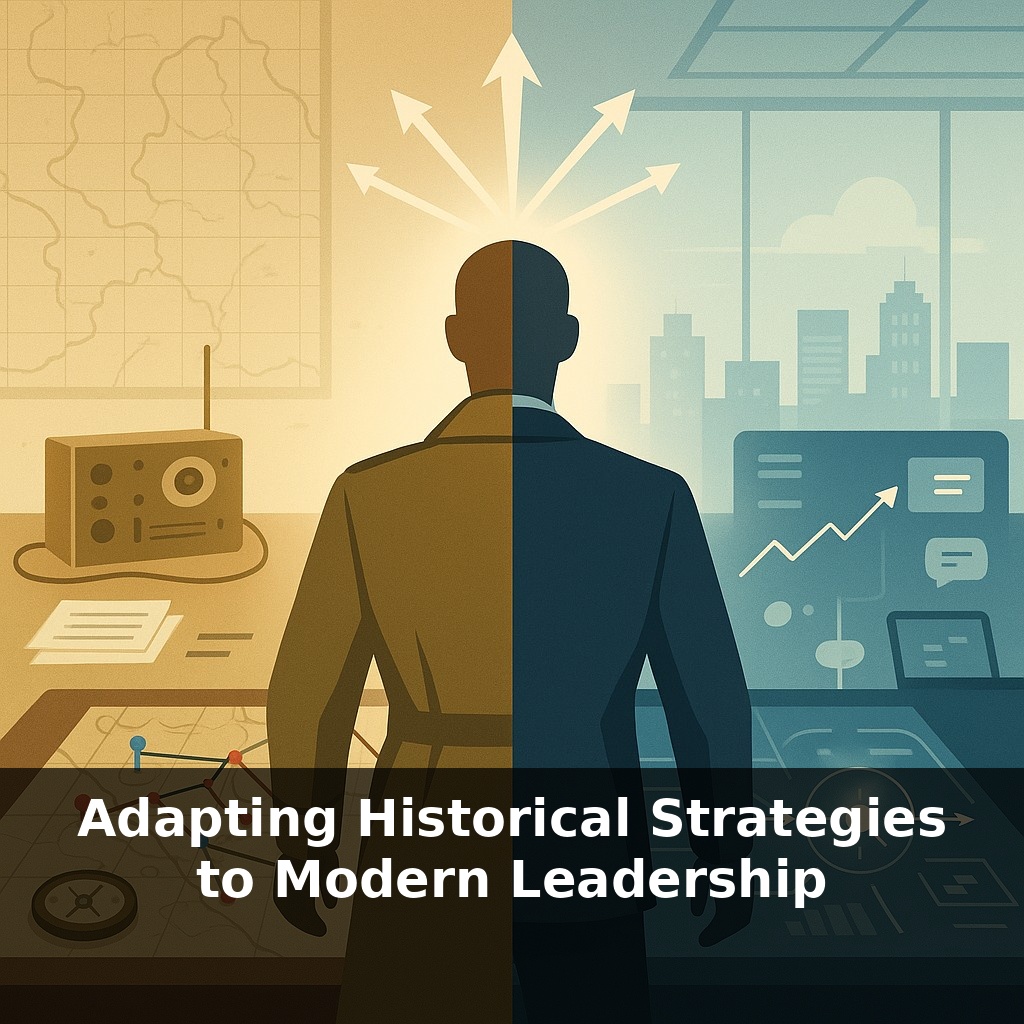
A single decision in 1944 coordinated millions of people across a dozen nations—without Slack, email, or even reliable phones. Today, you lead with far more tech and far less clarity. So here’s the puzzle: why were some wartime leaders better at alignment than most modern CEOs?
By 1945, Eisenhower was coordinating 4.2 million people from 12 different nations—while some leaders today struggle to get a dozen executives moving in the same direction for a single quarter. The uncomfortable truth: complexity isn’t new; what’s new is how exposed it makes weak leadership.
In this series, we’re not glorifying war; we’re reverse‑engineering patterns. WWII generals operated in what we’d now label extreme VUCA conditions—only their feedback loop was measured in lives and cities, not quarterly reports. That pressure forced them to strip leadership down to what actually works when excuses run out.
Now we’ll layer in four more pillars—decentralised execution, agility & tempo, resource resilience, and calculated innovation—and translate them into tools you can use when projects derail, markets flip, or your “carefully crafted strategy” collides with reality.
Eisenhower, Rommel, Patton, Zhukov, and Yamamoto weren’t following a shared “leadership model.” They were solving wildly different problems with oddly similar instincts. That’s what makes them useful to you. Each faced constraints you know in softer form: too few resources, clashing egos, unreliable information, political interference, brutal deadlines. Swap “front line” for “customer edge,” “supply line” for “cash flow,” and the patterns stay surprisingly intact. In this episode, we’ll stress‑test those five pillars against modern realities: remote teams, AI disruption, and stakeholders who can fire you on social media.
Four point two million people. Twelve nations. One headquarters. And somehow, Eisenhower still found time to walk the corridors, listen, and adjust. The detail most modern leaders miss isn’t the scale; it’s the integration. His coalition vision only worked because each commander could see their own victory *inside* the bigger one.
That’s the first shift for today: your strategy only becomes powerful when every team can rewrite it in their own language without breaking its meaning. Eisenhower didn’t hand out posters; he negotiated a story the British, Free French, Canadians and Americans could all sell back home. In a modern org, that means marketing, product, and ops should be able to explain the same priority using different examples—but identical trade‑offs.
Rommel pushes this further. Operating hundreds of kilometres from resupply, he couldn’t afford leaders who needed permission. What he built was a bias: if you’re closer to the facts and your move doesn’t violate intent, *you act*. Translate that forward: stand‑ups where people only report status are wasted chances. The real question is: “What are you seeing that I can’t from here, and what decision are *you* making because of it?”
Patton adds an uncomfortable corollary: speed is useless if it outruns understanding. His famous pace worked because logistics and intel teams quietly removed friction in advance. In practice, that looks less like “move fast and break things” and more like “move fast where we’re already over‑prepared.” High‑tempo leaders today pick a few lanes—customer onboarding, release cadence, pricing tests—and deliberately over‑invest in the plumbing so teams can safely sprint.
Zhukov reminds us that tempo without depth is just bravado. His real edge was redundancy: extra routes, backup units, alternative plans. In business terms, that’s cross‑trained people, multiple revenue paths, and honest buffers in your calendar and budget. Resilience isn’t a motivational poster; it’s designing so a single bad week doesn’t destroy the quarter.
Finally, Yamamoto shows the hardest discipline: knowing your window. He understood Japan’s early advantage would evaporate—and behaved as if the clock were visible on the wall. For you, that might be a brief period before a competitor copies you, before regulation catches up, or before investor patience runs out. The question is less “Can this work?” and more “How long can this advantage last, and what must we learn before it closes?”
A tech company rolling out a new product line can quietly test all five pillars in one launch. Start with a coalition vision: instead of “hit Q3 targets,” the CPO frames the release as “earning the right to be our customers’ default choice for X,” then invites sales, support, and engineering to sharpen what that means in their world. To avoid top‑down bottlenecks, squad leads own pricing tweaks, messaging experiments, and small UX changes without approvals, as long as they serve that shared intent. Tempo comes from two‑week release trains with pre‑cleared automation and monitoring so fixes move faster than complaints. Resilience shows up in staggered rollout regions, overflow support capacity, and a budget reserved for “unknown unknowns.” Innovation is treated like a portfolio: a few bold bets (a novel pricing model, a new data‑sharing feature), each with explicit kill criteria and review dates. Like a coach rotating players mid‑game, leadership keeps swapping tactics while protecting the overall game plan.
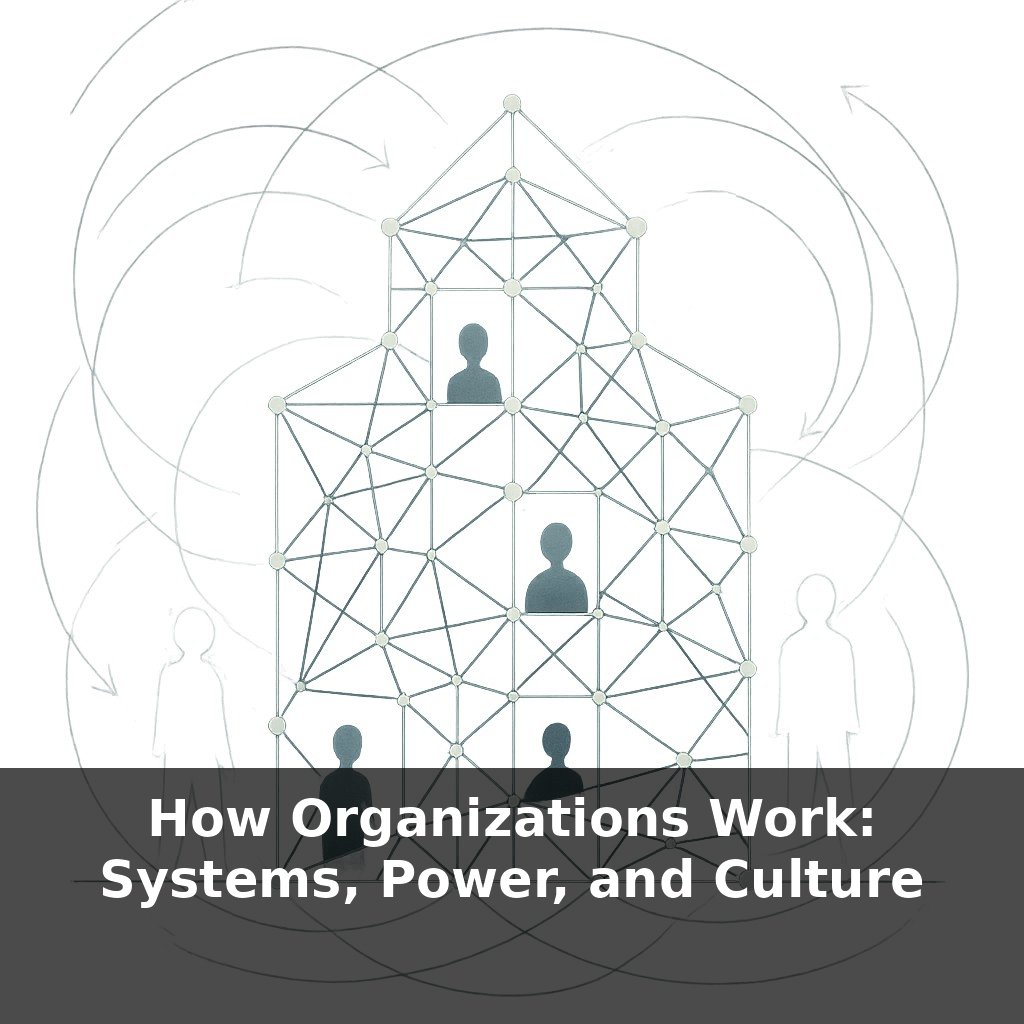
Future-ready leaders will treat their organisations less like machines and more like living ecosystems that continuously sense, adapt and regenerate. As data streams thicken, the real differentiator won’t be access but interpretation: who can turn noisy signals into timely, shared choices. Expect leadership roles to blur—product heads shaping culture, HR owning experimentation, CFOs modelling scenarios like weather forecasts—so decisions shift from annual decrees to an ongoing, collaborative navigation of unfolding reality.
Treat these pillars less like a checklist and more like a mixing console you’re learning to play. Some weeks you’ll need volume on speed, other weeks on depth or experimentation. Your real skill will be sensing which dial to nudge next. Over time, patterns emerge, and you’re no longer reacting to change—you’re quietly conducting it.
Start with this tiny habit: When you open your laptop in the morning, whisper one historical leader’s name from the episode (like “Mansa Musa” or “Queen Elizabeth I”) and ask yourself out loud, “What would they do with this next hour?” Then, before you click anything, change just one calendar event title to reflect that strategy (for example, add “– diplomacy focus” or “– long-term vision” to a meeting name). This keeps historical thinking tied directly to your daily leadership choices, without adding extra time or tasks.