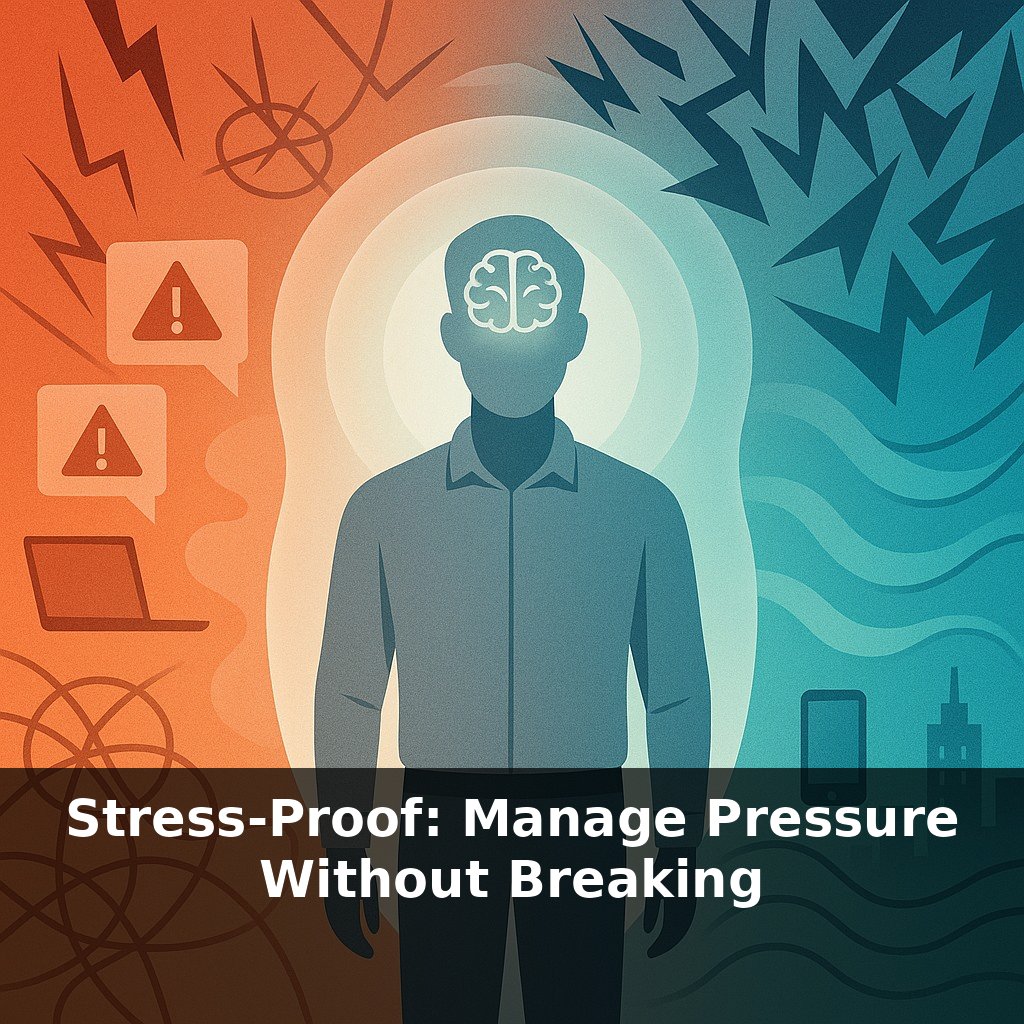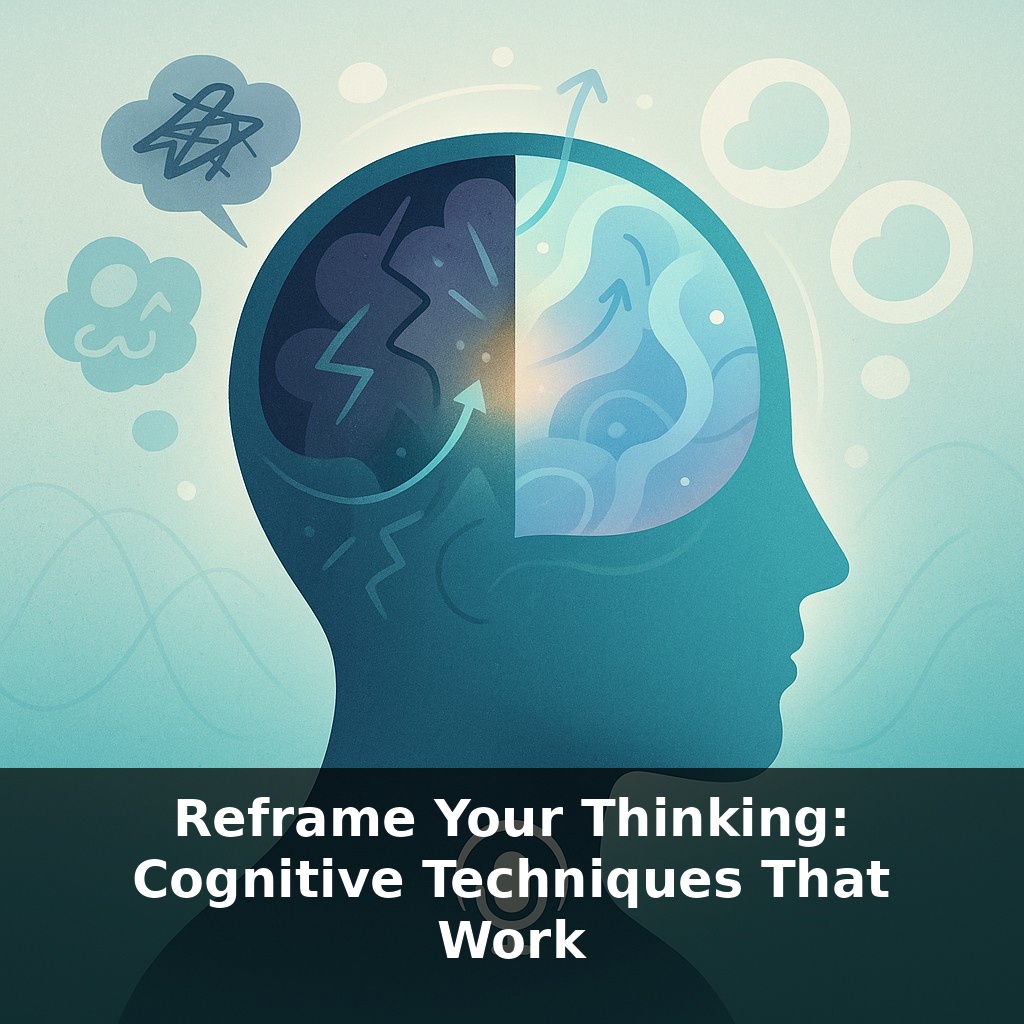
Your brain can lower your stress hormones without changing a single thing in your calendar. In one study, simply reinterpreting nerves as “energy” nudged test scores noticeably higher. Today, we’re stepping into that gap between “what happened” and “what it means” to you.
Stress doesn’t always announce itself as panic or meltdown. Sometimes it’s the quiet story running in the background: “I’m behind,” “They’re judging me,” “If I mess this up, it’s over.” Those sentences can spike your heart rate as surely as a looming deadline. What’s powerful—and a little unnerving—is how automatic they feel. They sound like “truth,” but they’re often just unexamined habits of interpretation your brain keeps recycling.
In this episode, we’ll treat those habits as testable hypotheses instead of verdicts. You’ll learn concrete ways to catch your inner narration in real time and run simple “mental experiments” on it. Instead of forcing yourself to “think positive,” you’ll practice thinking more precisely: separating facts from assumptions, threat from challenge, and worst‑case movies from what’s actually in front of you.
You’ve already seen that your inner storyline can be treated like a set of hypotheses. Now we’ll zoom in on *how* those storylines are built. Often, they’re stitched together from quick, invisible shortcuts your mind takes—like jumping from “My boss replied ‘OK’” to “They’re disappointed in me” with no conscious step in between. These shortcuts aren’t personal flaws; they’re default settings your brain uses to save time. Today, we’ll start spotting a few common patterns, so you can notice when your mind is auto‑completing a sentence you never actually chose.
Stress‑shaping thoughts often follow a few predictable patterns. Once you can name them, they’re much easier to challenge and redirect.
One common pattern is **catastrophizing**: sliding from a setback to a disaster script. The proposal is late, and within seconds your mind is at “They’ll never trust me again” or “My career is over.” Notice how the leap usually skips several realistic steps between “problem” and “permanent ruin.” That gap is where reframing has room to work.
Another is **mind‑reading**: assuming you know exactly what other people think or feel about you, usually in the harshest possible terms. Your colleague doesn’t respond in a meeting, and the story becomes “She thinks I’m incompetent,” even though you have no direct evidence. This pattern quietly keeps social stress high because every neutral silence can be read as criticism.
Then there’s **all‑or‑nothing thinking**: evaluating yourself or a situation in extremes—success or failure, strong or weak, in control or falling apart. If your performance review includes nine positives and one “needs work,” this filter zooms in on the single negative as if it erases everything else. Stress spikes because there’s no room for “improving” or “good enough”—only “perfect” or “disaster.”
You may also notice **over‑generalizing**: one bad night’s sleep becomes “I can’t function anymore”; one awkward presentation becomes “I’m terrible at public speaking.” The brain creates a sweeping rule from a tiny sample, which then shapes what you expect next time—and how tense you feel going in.
Finally, watch for **emotional reasoning**: “I feel anxious, so something must be wrong,” or “I feel guilty, so I must have screwed up.” Here, the emotion is treated as proof, not as data. That can lock you into alarm mode even when the external situation is manageable.
Each of these patterns can be spotted by their fingerprints: words like “always,” “never,” “everyone,” “no one,” or conclusions that appear fully formed without a clear chain of evidence. When you can say, “Ah, that’s my catastrophizing talking,” you’ve already shifted from being *in* the story to observing it from the outside—right at the moment you have the most leverage to reframe.
“Everyone else has it together.” That’s a quiet example of **over‑generalizing** plus **mind‑reading** that shows up in ordinary places—scrolling social media between meetings, overhearing a confident coworker, watching a polished presentation. Notice how quickly your mind leaps from a few curated snapshots to a sweeping rule about your own worth.
Take a familiar situation: you send a message, see “seen” but no reply. One storyline says, “They’re annoyed; I messed up.” Another says, “They’re in back‑to‑back calls; this isn’t about me.” Both are guesses, but only one keeps your body in alarm mode. You’re not faking reality when you choose the second; you’re updating the “default” story to include more possibilities.
Or consider feedback at work: “This slide could be clearer.” One lens translates it into “I’m terrible at this,” while another turns it into “Here’s a specific lever I can pull to get better.” The sentence is the same; the conclusion you practice will quietly train your stress response over time.
A future where “reframing” is as normal as checking email is closer than it looks. Wearables could flag rising tension and cue micro‑reappraisal drills tailored to your patterns. VR might rehearse hard conversations so new interpretations feel familiar before real stakes appear. Your challenge this week: when tech stresses you out—notifications, delays, glitches—treat each moment as a tiny lab for testing one alternative, kinder explanation than your first reaction.
When you catch yourself tightening around a familiar story, treat it like tasting a soup mid‑recipe: pause, notice what’s overpowering, and adjust the seasoning, not the whole meal. Over time, these tiny tweaks stack up into a default flavor of self‑talk that’s less corrosive and more curious—so pressure stays real, but it stops dictating who you believe you are.
Before next week, ask yourself: 1) “What’s one stressful situation I keep replaying in my head, and if I paused the ‘catastrophe movie,’ what are three other plausible explanations for what happened?” 2) “The next time my ‘all-or-nothing’ voice says ‘I always screw this up’ or ‘nothing ever works,’ what specific evidence do I have that *doesn’t* fit that story?” 3) “When I catch a negative thought today, how would I rewrite it if I were talking to a close friend I really cared about—what would that kinder, still-honest version sound like?”