One study found people who say “yes” less often actually get higher performance ratings. So why do so many of us keep rescuing coworkers, fixing problems that aren’t ours, and staying late to do it… even as our own priorities quietly fall apart?
That same research also found a twist most people miss: the “yes to everything” employees weren’t just more stressed—they were less trusted with the work that actually mattered. Colleagues quietly tagged them as the person who’d pick up loose ends, not the person to lead the next big project.
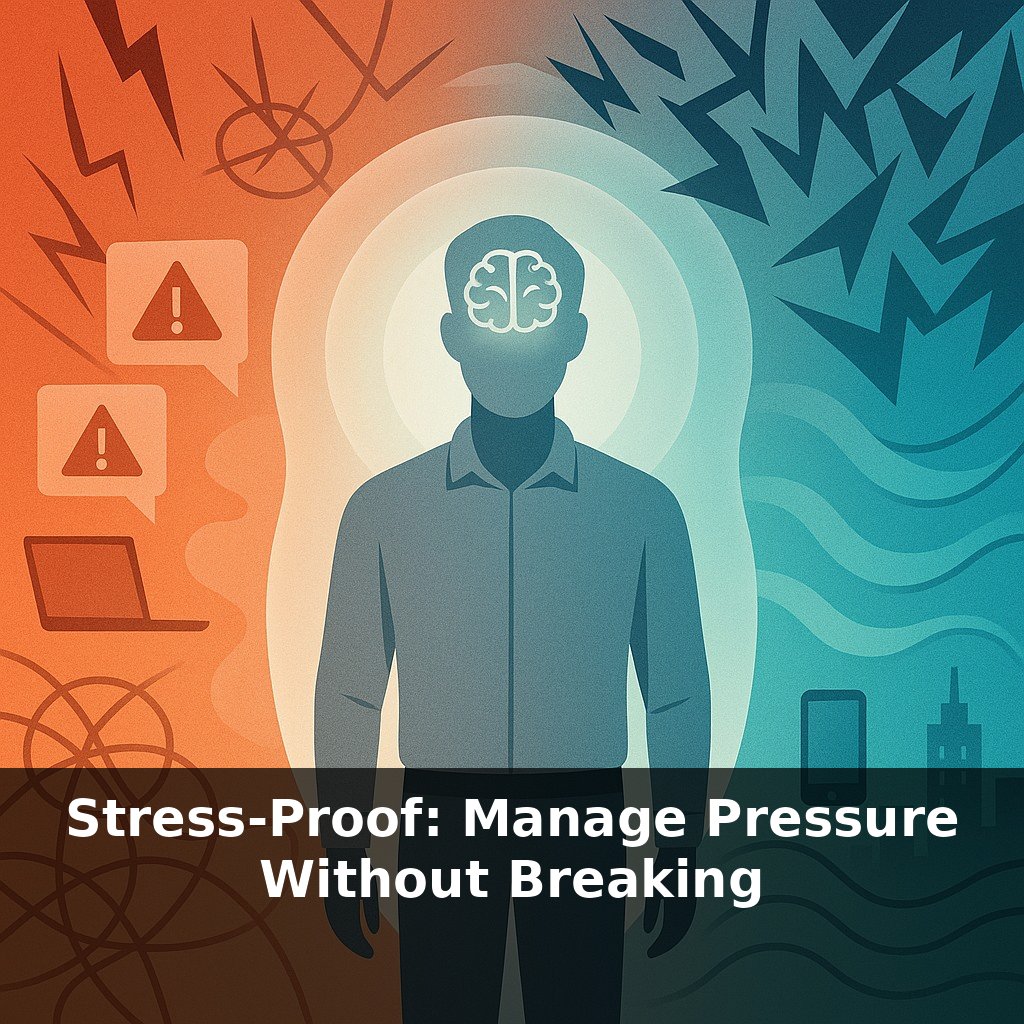
Meanwhile, your brain and body keep the score. Chronic role overload spikes cortisol, fogs your thinking, and makes it harder to do the deep work that would move your career forward. It’s like trying to cook a full dinner using only the microwave: technically possible, but everything comes out a bit rubbery and rushed.
In this episode, we’re going to treat boundaries less like a personality trait and more like a strategic skill: something you can learn, practice, and refine—without turning into “the difficult one” at work.
Healthy boundaries aren’t about building a wall; they’re about drawing a smart map. Today we’ll zoom in on where your map is blurry. Research on the Job Demands–Resources framework shows that burnout isn’t just about “too much work,” it’s about an imbalance: demands that drain you outpacing resources that refill you. At work, that can look like being the default troubleshooter without the time, authority, or energy to match. Think of it as constantly turning up the heat under the same pot—eventually it boils dry, no matter how capable the cook is. Our goal is to rebalance the stove, not blame the water.
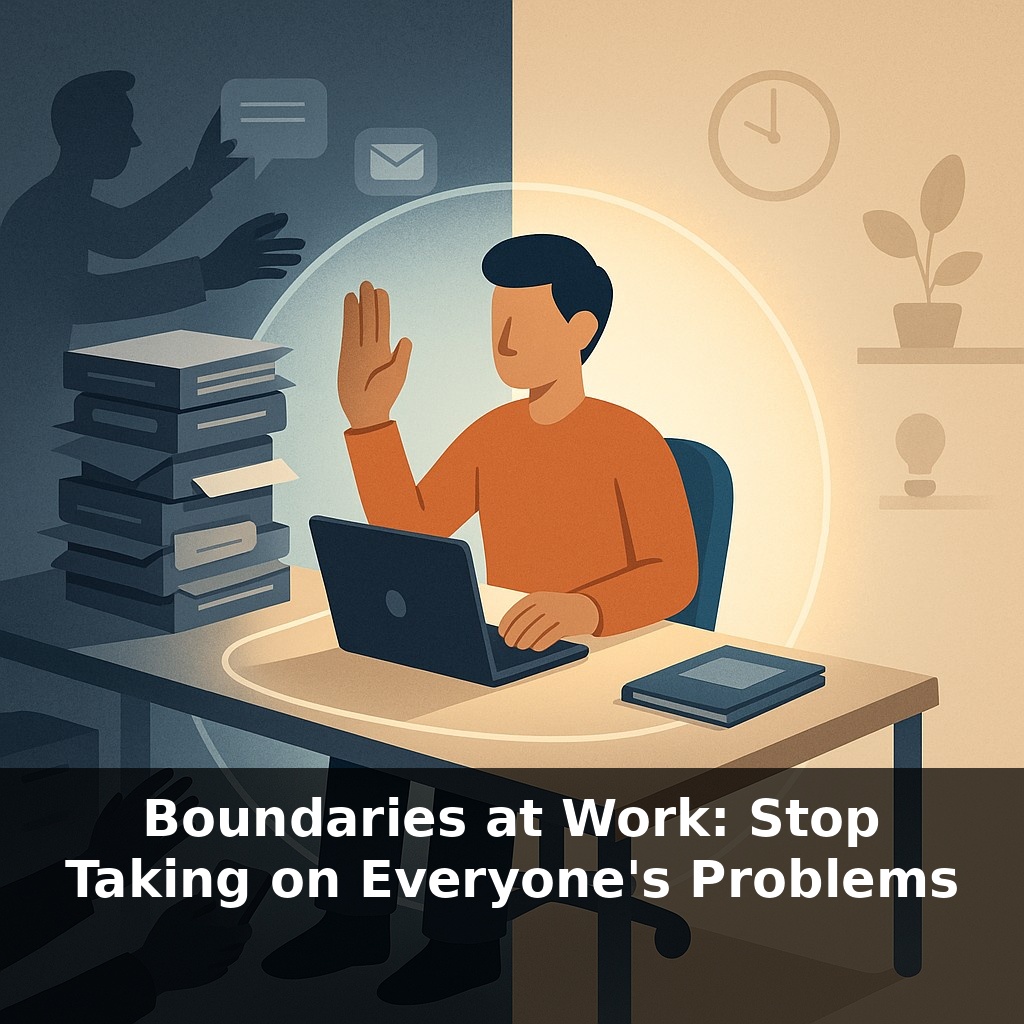
Here’s the first quiet problem with weak boundaries at work: other people start writing your job description for you.
It happens slowly. You answer “quick” questions in every chat channel. You’re the unofficial backup for vacationing teammates. You smooth over client issues “just this once.” None of those moments feels dramatic. But together, they create a shadow role that sits on top of your actual job.
Research on role clarity shows that when people don’t know where their responsibilities start and end, stress rises and performance drops—not because they’re incapable, but because they’re constantly context-switching. Your brain is trying to solve two puzzles at once: “What should I be doing?” and “How do I keep everyone happy?” That double load is exhausting.
So instead of asking, “How do I say no more?” it’s more useful to start with, “What is mine to own?” There are three layers:
1. **Core work** – the tasks you’re explicitly measured on. 2. **Collaborative work** – shared goals where your contribution is important, but not solo. 3. **Helper work** – favors, advice, emotional labor, informal mentoring, “just checking in” tasks.
None of these are bad. In fact, people who never do helper work can seem detached. The stress spike comes when helper work quietly swallows the other two.
Here’s where the evidence-based tactics come in. Clarifying role expectations isn’t just a one-time HR exercise; it’s an ongoing negotiation. High-performing teams regularly revisit questions like: - “Which requests should come to me, and which should go elsewhere?” - “What’s urgent for the business this week, and what’s nice to have?” - “If I take this on, what should move down the list?”
Assertive communication is what lets you raise those questions without sounding combative. It’s the difference between, “I can’t, I’m swamped,” and, “I can do X by Friday, or Y by Friday—what’s the higher priority?” Same stress reality, different signal: you’re still solution-focused, but you’re not volunteering to silently absorb every overflow.
One helpful check-in: notice when your body reacts before your words do—tight jaw, held breath, that subtle dread when someone says, “Do you have a second?” Those are early-warning signs that a hidden “yes” is forming. Catching that moment gives you a tiny window to pause, clarify, and choose instead of defaulting.
Your body often spots a boundary problem before your brain admits it. Say you’re halfway through focused work and a coworker pings, “Can you jump on a quick call?” Your shoulders lift, your stomach drops, but your fingers still type, “Sure!” That tiny physical flinch is data: your system flagging that this request competes with something more important.
Consider three concrete moments:
A project manager sees their calendar fill with “just 15 minutes” check-ins. Instead of absorbing them, they bundle support into a twice-weekly office hour. Same helpfulness, less erosion of focus.
An engineer keeps getting tagged to “quickly review” others’ code. They respond: “I can do deep reviews on Tuesdays and Thursdays. Please add anything non-urgent to that queue.” Turnaround stays strong, but the work stops bleeding into every day.
A team lead notices they’re the unofficial conflict buffer. They start attending only the first 10 minutes of tense meetings to co-create ground rules, then leave the group to apply them.
Legally protected “off switches” at work are quietly becoming a competitive advantage. As more teams go hybrid and global, time zones blur, and the real power move is designing how you’re reachable—through status messages, response windows, and notification rules that everyone can see. Leaders who treat boundary-setting like version control for attention will likely attract talent that wants impact, not constant availability, and that expectation will spread.
Your challenge this week: Run a “boundary beta test” with one concrete change. For the next 7 days, pick a single boundary to trial—like no replies after 7 p.m., office hours for ad-hoc help, or one daily block of do-not-disturb focus time. Tell your team exactly what you’re testing and when you’ll reassess. At week’s end, ask three questions: What got easier? What pushed back? What data did I get about how I actually work best?
Boundaries aren’t walls; they’re traffic lights for your energy, deciding what flows, slows, or stops. Over time, they turn scattered effort into something closer to a well-edited playlist—less noise, more signal. As you experiment, notice which “small no’s” create space for the kind of work that feels like a yes in your body, not just your calendar.
Here’s your challenge this week: For the next five workdays, say a clear, kind no to at least one “emotional dumping” or “fix this for me” request by using a boundary script like, “I can’t take this on, but I can give you 5 minutes to think through your next step.” When someone brings you a problem, ask them, “What have you already tried?” and resist offering a solution—your job is to coach, not rescue. Pick one “go-to rescuer” behavior (staying late to redo someone’s work, jumping into every Slack crisis, or volunteering for extra tasks) and stop doing it completely for the week, even if it feels uncomfortable. At the end of each day, quickly rate yourself from 1–5 on how well you stayed out of fixer mode and celebrate any moment you held the boundary, no matter how small.