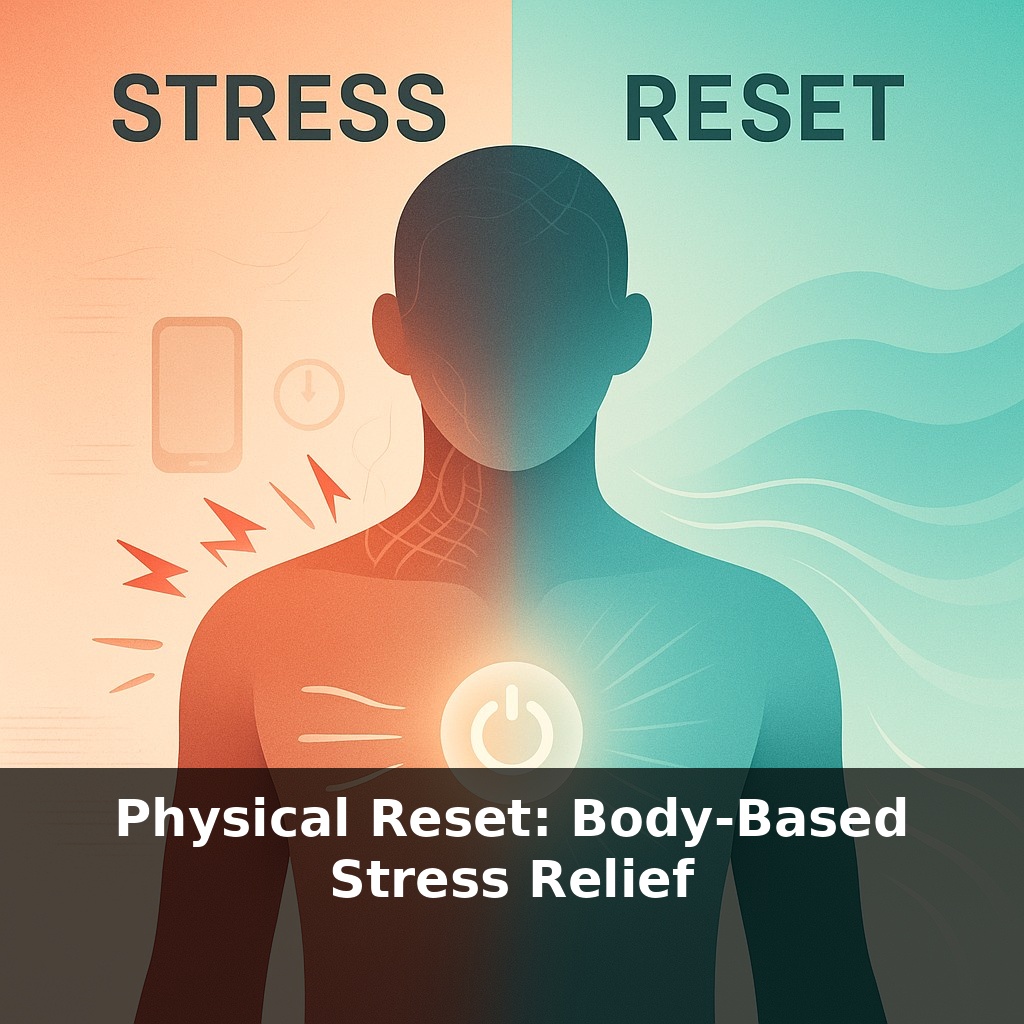
You can change your stress chemistry in less time than it takes to scroll your feed. A rushed commute, a tense meeting, a late-night email—each one stamps itself into your muscles and breath. This episode asks a simple question: what if your body could hit the reset button, on purpose?
Most people try to “think” their way out of stress while their body is still stuck on high alert. That mismatch is why you can finish a meditation, close the app, and still feel wired or tense in your shoulders. In this episode, we’ll flip the sequence: instead of starting with thoughts, we’ll start with muscle, breath, and small physical levers you can pull in the middle of a busy day.
You’ll see how tiny shifts—uncrossing your legs in a meeting, loosening your jaw at a red light, standing to stretch between emails—can quietly change what your nervous system is doing in the background. This isn’t about becoming a gym person or rolling out a yoga mat at work. It’s about building a menu of short, body-based “resets” you can use in real time, so your brain isn’t trying to calm a body that never got the signal to stand down.
Most of us only notice our bodies when they cross a loud threshold: a pounding headache, a racing heart, a back so tight it hurts to stand up. But long before those alarms, tiny signals are already there—how shallow your breath gets during a tense call, how your shoulders creep up as your inbox fills, how your jaw clenches when you switch between tasks. In this episode, we’ll treat those early signals like gentle notifications instead of emergencies. You’ll learn to catch them sooner and use small, physical “micro-adjustments” to keep pressure from silently accumulating in the background.
Stress doesn’t just “live in your head”; it follows routes through your muscles, lungs, and heart that are surprisingly predictable. Under pressure, your posture narrows, your breath gets quicker and higher in your chest, and certain muscles switch “on” and refuse to let go. These patterns are so consistent that researchers can often guess how stressed you are just by looking at your breathing and tiny changes between heartbeats.
That predictability is good news: if stress shows up in reliable body patterns, you can target those patterns directly. Think of three main dials you can turn: movement, breath, and muscle tone.
Movement is the fastest dial. When you walk briskly, climb stairs, or do 20 bodyweight squats beside your desk, you temporarily raise your heart rate on purpose. When you stop, your system practices coming back down. Over time, that “downshift” becomes smoother, which is one reason regular movers tend to have higher heart-rate variability and a more responsive parasympathetic system. You’re not just burning off tension; you’re training your recovery reflex.
Breath is the most portable dial. Slow, diaphragmatic breathing—belly expanding on the inhale, softening on the exhale—sends direct signals along the vagus nerve that it’s safe to de-escalate. Lengthening your exhale slightly more than your inhale (for example, in for 4, out for 6) is especially effective for nudging the body toward rest-and-digest. You can do this in a meeting without anyone noticing.
Muscle tone is the quiet dial most people overlook. Under pressure, certain areas become chronic “brakes”: jaw, neck, shoulders, hips, hands. Briefly tensing and then releasing these zones, or deliberately softening areas like your tongue, forehead, and palms, tells your brain there is no immediate threat. Progressive muscle work and simple stretches are less about flexibility and more about flipping those brakes off.
Put together, these dials form a customizable reset. You don’t need a full workout or a silent room. You need small, intentional tweaks that interrupt automatic stress patterns and give your body a different script to follow.
Think of this like learning a new language your body already half-speaks. Instead of waiting for a “big practice session,” you slip phrases into your day. Walking to the printer becomes a tiny training ground: you notice your pace, let your arms swing a bit more freely, and let one slow exhale spill out as you turn back to your desk.
In a difficult conversation, you might quietly anchor one physical cue—pressing your feet firmly into the floor whenever you feel your chest tightening. Over time, your brain starts pairing “pressure is rising” with “support is under me,” which subtly changes how threatened you feel.
People who do this regularly often report a strange shift: they don’t feel “less busy,” but spikes of pressure don’t linger as long. Your commute stops being dead time and becomes a lab—two bus stops of gentle shoulder rolls, three red lights of softening your jaw, the last block as a brisker walk than usual.
The moves stay small; the accumulated signal to your body quietly gets louder.
Office layouts, transit systems, even meeting agendas may soon be designed with “reset windows” baked in—like tiny rest stops on a highway. As biometric wearables get smarter, they could nudge you before you hit overload, the way a fuel gauge flashes before empty. Schools might pair math drills with short movement drills, and high-pressure jobs could track recovery as closely as output. The culture shift: taking 90 seconds to reset could be seen as professionalism, not a lack of grit.
Treat this like seasoning, not a makeover: lightly sprinkle these resets onto moments you already have—waiting for coffee, walking to the bathroom, pausing before you unmute. Notice which tiny moves change your “background weather” the most. Your challenge isn’t perfection; it’s curiosity about how little it can take to feel just 5 % more steady.