Right now, millions of people are trying to lose weight by following rules that actually make them hungrier. You’re in the car, swearing you’ll “be good” today—yet by late afternoon you’re raiding the pantry. If willpower isn’t broken, what is your body trying to say?
A 2021 review of nearly 100 studies found that people who eat more intuitively tend to have fewer disordered‑eating symptoms and a *lower* BMI—without chasing weight loss. That’s the opposite of what most diet ads promise, yet it’s what your biology has been wired for all along.
In this episode, we’re shifting from “How do I control my eating?” to “How do I cooperate with my body?” Modern food culture trains you to outsource decisions to apps, points, and meal plans, while your gut hormones and brain are quietly sending signals you barely hear anymore.
This isn’t about eating “perfectly”; it’s about rebuilding a working partnership with your body so you can eat enough, enjoy food, and still support your health goals. Step one: learning to notice the early whispers of hunger and the gentle rise of fullness before they turn into an emergency.
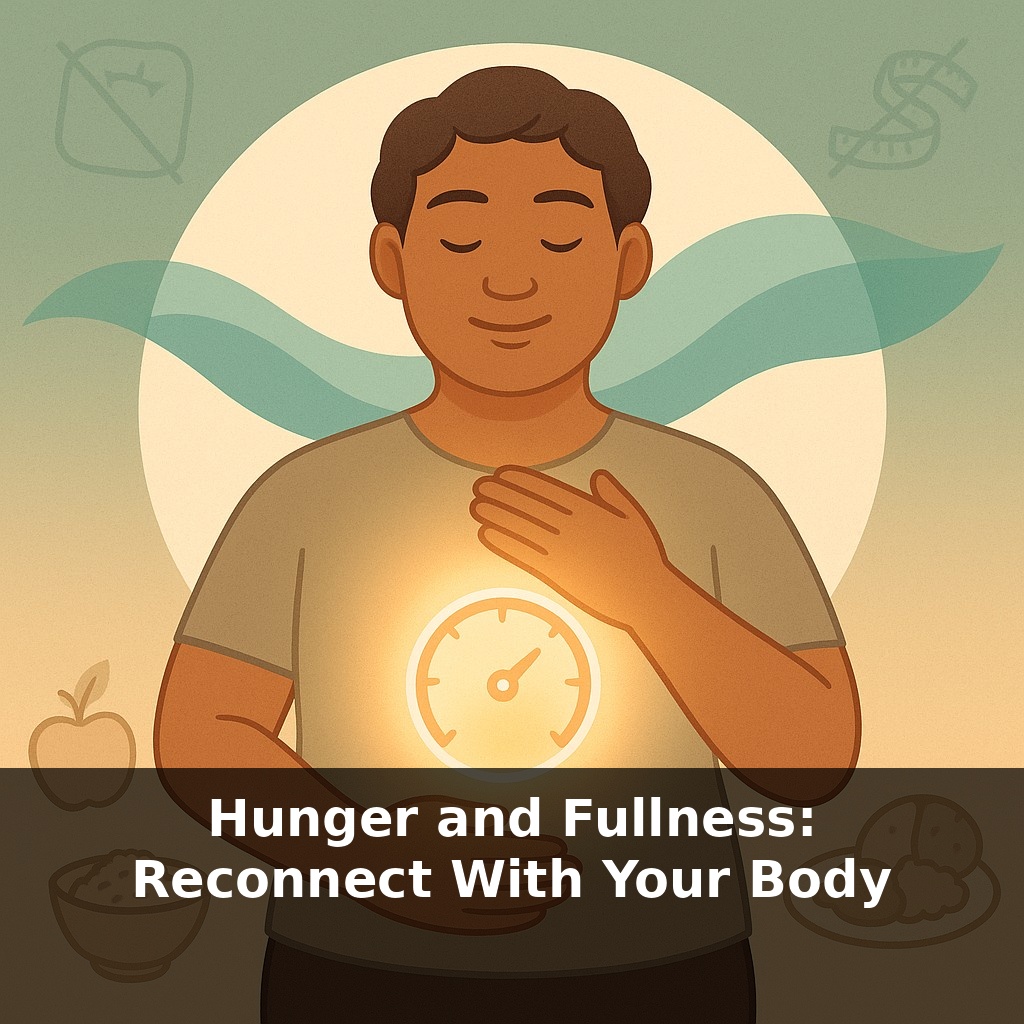
Here’s the twist: those “listen to your body” cues aren’t just about your stomach. They’re part of a whole internal conversation—breath, heartbeat, temperature shifts, even mood changes—that your brain is constantly tracking. Researchers call this interoception: your built‑in “status dashboard.” Years of external rules can turn that dashboard dim, so early signs of needing fuel feel blurry or delayed. That’s why you might suddenly “snap” into eating instead of noticing a gradual build‑up. Today, we’ll practice turning the brightness back up on that dashboard in simple, doable ways.
Your body’s “status dashboard” has knobs you can tune—and years of chronic dieting can knock them out of calibration. Hormones like ghrelin and leptin start pulsing on a rhythm that doesn’t always match your schedule, especially if you’ve bounced between skipping meals and overeating. In people with a reasonably steady routine, ghrelin tends to rise every 3–4 hours, nudging you toward your next meal. But if you regularly push past that nudge, the signal often arrives later, louder, and more chaotic—more like a sudden craving storm than a gentle suggestion.
That’s one reason restrictive plans backfire. Within just a couple of weeks of chronic restriction, leptin can drop by a third. Lower leptin means your brain reads “energy emergency” and cranks up the drive to eat. From the outside, it looks like “I blew my diet.” Under the hood, it’s simply a body trying to correct course.
So how do you work *with* this system instead of fighting it?
One approach many clinicians use is a simple 0–10 hunger‑fullness scale—not as a rulebook, but as a language lesson. Rather than waiting until you’re at a 0 or 1 (shaky, ravenous), you experiment with eating when you’re in the gentle hunger range, then stopping around a comfortable “I could go for a walk” level instead of “I need to unbutton my pants.” A Kaiser Permanente pilot that coached people to eat above the “running on fumes” level and pause before discomfort saw meaningful improvements in blood sugar control, even without a strict calorie target.
The key is curiosity, not perfection. Some days, emotions, poor sleep, or social events will blur the signals. That doesn’t mean you’ve failed; it means more data. Over time, you start noticing: “When I wait until I’m light‑headed, I overshoot,” or “When I start eating at that early, hollow feeling and slow down halfway through, I feel energized instead of foggy.”
Think of it as adjusting medication doses in a clinic: you try, observe, and tweak, rather than expecting the first prescription to be flawless. Your job isn’t to hit the “right” number every time; it’s to rebuild enough trust that the numbers become background, and your lived experience leads.
Think of a day like this: you wake up at a 3, eat something small, then rush into back‑to‑back meetings. By noon you’ve slid to a 1, but you don’t notice until your head aches and every snack in sight looks irresistible. That’s not “lack of discipline”; it’s what happens when you only check in once you’re already depleted.
Now contrast that with someone who glances at their inner “weather report” every few hours: light grumbles, tiny drop in focus, slight irritability. Those become cues to *plan* food, not wait for an emergency. Over time, they learn, “If I’m at a 4 and have a busy afternoon, a more substantial lunch keeps me steady. If I’m at a 5 and heading to dinner soon, a small snack is enough.”
Another example: one person always cleans their plate at restaurants out of habit. Another practices pausing halfway, asking, “Where am I now?” The first discovers they often leave feeling foggy. The second notices that stopping earlier means better sleep and fewer late‑night cravings. Same meal, different outcome—because one person gathered data in real time.
As researchers map these inner cues, policy may follow. Cafeterias could label meals not just by nutrients, but by how steadily they tend to keep most people satisfied—like weather apps showing likely forecasts, not guarantees. Apps might sync sleep, stress, and movement to predict when your signals get fuzzy, nudging you to pause and check in. Over decades, that shift from “eat this, not that” to “notice this, adjust that” could reshape public health more than any single diet trend.
As you practice, notice how mood, sleep, and stress color your appetite—like filters on a camera changing the same scene. No need to chase a “perfect day”; treat each meal as a small lab note. Over weeks, you’re not chasing control so much as learning your personal patterns—and that quiet familiarity becomes its own form of stability.
To go deeper, here are 3 next steps: Explore the official Intuitive Eating Workbook by Tribole & Resch and complete the specific hunger/fullness scale exercises for 3 meals this week, circling the number you’re at before, midway, and after each meal. Download a mindful eating app like Eat Right Now or Balance, and use one of their guided practices while eating a snack in complete silence, focusing on taste, texture, and your body’s signals instead of rules. Queue up the “Hunger & Fullness” episodes of the Food Psych or Maintenance Phase podcasts and listen during a walk, pausing once to ask yourself, “Where do I feel hunger/fullness in my body right now?” and jot a quick note in your phone about it.