About half of what you do each day runs on autopilot—and most of it was never consciously chosen. You brush, scroll, sip, check, swipe. Now here’s the twist: the smallest action you quietly attach to those routines could change your weight more than your next big diet.
Neuroscientists have watched this play out in brain scanners: repeat a simple action in the same context and the basal ganglia quietly takes over, turning effort into reflex. That’s the engine we’re going to hijack. Instead of trying to “be more disciplined,” you’ll start grafting tiny upgrades onto habits you already trust to show up.
Think less “total lifestyle makeover” and more “micro add‑ons.” A 30‑second pause before you open the fridge. Two sips of water after every meeting. A quick stand-and-stretch right after you hit “brew” on the coffee machine. Small enough to feel almost silly—yet repeated enough to leave fingerprints all over your health.
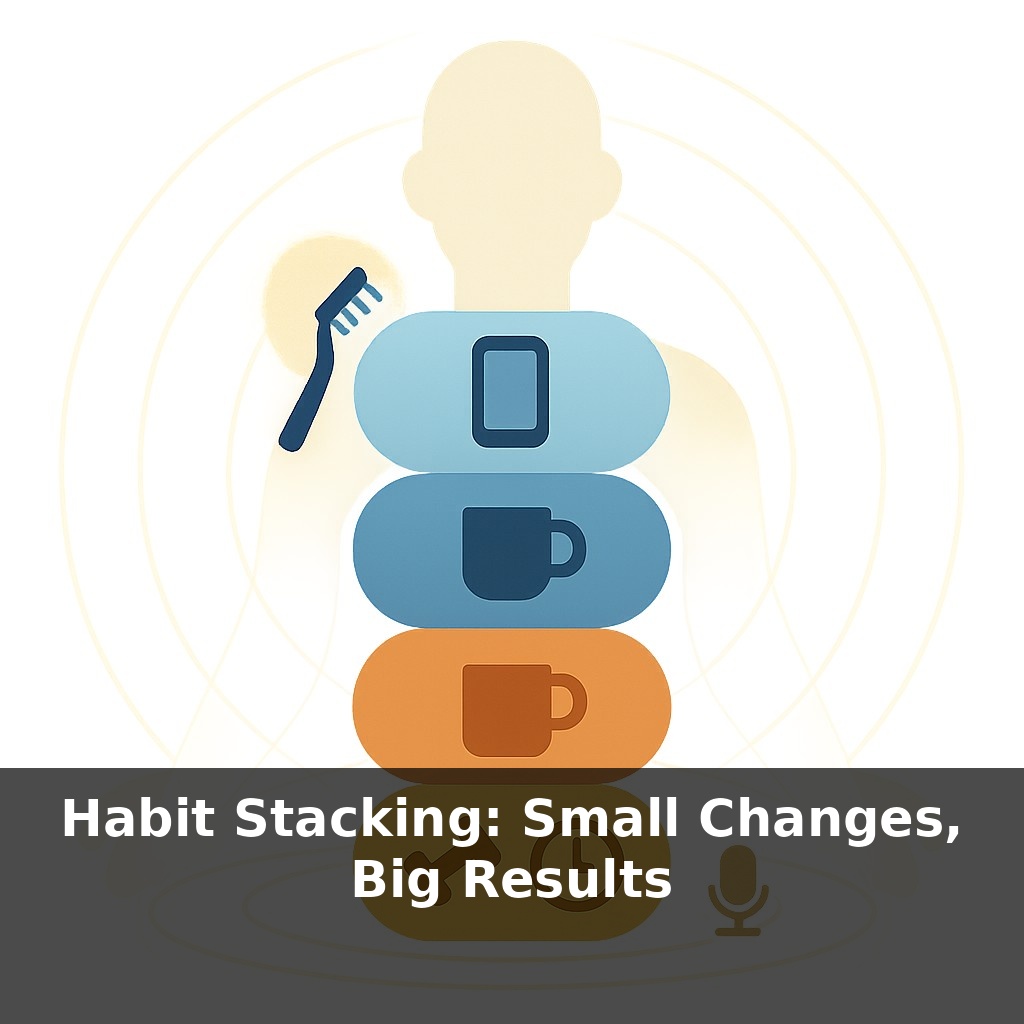
Here’s where this gets useful for weight loss. Those little “after this, I do that” links don’t have to be heroic to matter—they just have to be reliable. Most people try to bolt on huge new routines that collapse by week two; you’re going to slip in changes so light they barely register. Think of it like adjusting seasoning while a soup simmers: a pinch here, a sprinkle there, but over time the flavor is completely different. We’ll focus on moments that already happen daily—waking up, commuting, eating, winding down—and quietly attach actions that tilt your choices toward eating less, moving more, and sleeping better.
Here’s the part most people underestimate: the *anchor* habit has to be clearer than the new behavior you’re adding. “After breakfast, I’ll be healthier” is mushy. “After I put my bowl in the sink, I will plan tonight’s dinner” is a clean link. The brain loves that kind of precision: this *exact* moment → this *exact* action.
Good anchors are: - **Stable** – they happen almost every day (coffee, brushing teeth, opening your laptop). - **Concrete** – you can point to the last step (“when I hear the microwave beep,” “when I sit in the driver’s seat”). - **Single-step** – not a whole sequence, just one clear event.
Now layer on the second piece: keep the new action *ridiculously* small at first. Not “go for a 30‑minute walk,” but “put on my walking shoes and step outside.” Not “prep all my food for the week,” but “wash one piece of produce.” The research on tiny habits suggests that when the bar is low enough to succeed even on a bad day, your odds of sticking with it jump.
You’re also going to use *context* to your advantage. Each stack lives in a specific time and place: - “After I unlock my phone at lunch, I’ll log what I just ate.” - “After I hang up my bag when I get home, I’ll set out tomorrow’s gym clothes.” - “After I turn off the TV at night, I’ll set a glass of water by my bed.”
Notice these aren’t random moments—they’re friction points where decisions usually go sideways. Instead of relying on willpower right as you’re tired or hungry, you pre-load a tiny behavior earlier in the chain that nudges the outcome.
Over weeks, repetition in the same context is what matters, not perfection. Missing a day doesn’t reset anything; it just means the groove in your brain deepens one day later. And because the anchor is already dependable, your job isn’t to “remember the habit” in the abstract. Your job is simply to notice, “Oh, I just did X—that’s my cue for Y.”
This is why habit stacks can eventually bootstrap bigger changes. Once a micro-action feels automatic, you can very cautiously extend it—*only after* it’s easy. The sequence stays the same; the duration and intensity slowly grow.
Think of this like adjusting a medication dose instead of switching drugs entirely: you’re fine‑tuning what already works, not starting from zero. To make it concrete, pick one daily moment where your choices usually drift: late‑night snacking, second helpings at dinner, or skipping movement after work. Then design a specific “after X, I do Y” that gently redirects you without feeling like punishment.
For example: - After you place your fork down between bites at dinner, take one slow breath and ask, “Am I still physically hungry?” - After you close your email at 5 p.m., walk three minutes before touching your couch or phone. - After you open the fridge at night, drink four sips of water *before* deciding whether to grab a snack.
These aren’t rules; they’re experiments. You’re watching for which tiny links actually fire in real life and which ones quietly fizzle. Keep the ones that run almost without thinking; retire the rest.
Soon, your “after X, I do Y” patterns won’t just live in your head. Wearables could flag stress spikes and suggest a 20‑second reset the moment your heart rate jumps, like a nurse quietly adjusting a drip instead of waiting for a crisis. AI coaches might test different sequences—water after meetings, a walk after long drives—and keep the ones your data shows you actually follow, turning daily life into a personalized, evolving protocol rather than a fixed plan.
Your life will still look like your life—same job, same family, same calendar—but the texture of your days shifts. One new cue at breakfast, another at your commute, a third before bed: like seasoning a dish, tiny pinches added in the right moments change the whole flavor. Over months, you’re not “on a plan”; you’re simply living in a different default.
Start with this tiny habit: When you pour your morning coffee, say out loud one specific habit you’ll stack today (for example, “After I close my laptop at 5, I’ll put my running shoes by the door”). Then, when you actually close your laptop at the end of the workday, simply move your running shoes from the door to right beside the couch or TV. That’s it—no promise to run, just the tiny act of placing the shoes where you’ll see them. This keeps the “habit stacking” muscle alive without overwhelming you, and you can build from there once this feels automatic.