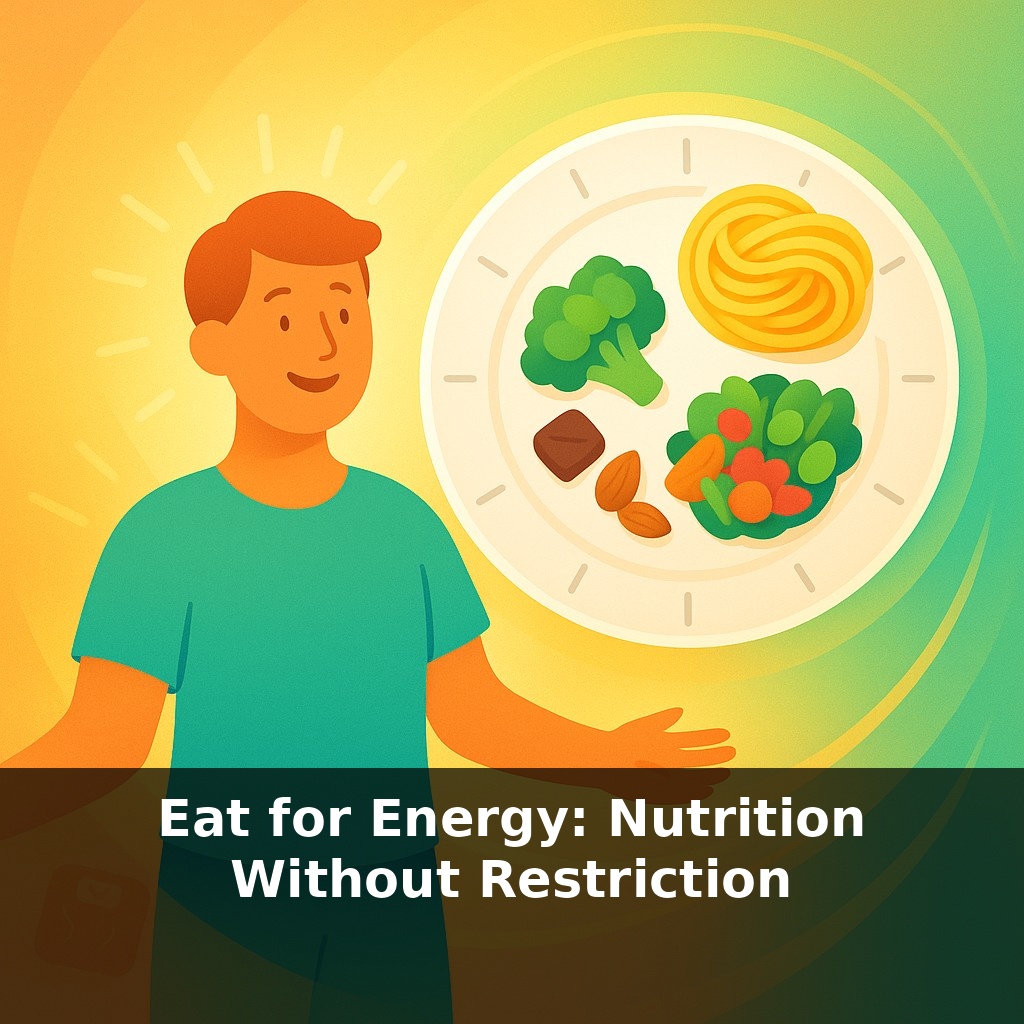
You can eat pasta, enjoy snacks, skip counting calories… and still have *more* energy by mid‑afternoon than most strict dieters. One twist: it depends less on how little you eat, and more on *when* and *what* you pair together on your plate throughout the day.
Most “eat clean” rules quietly drain your spark: they shrink your menu, your social life, and—ironically—your motivation. A smarter goal is different: design the way you eat so your body *trusts* that steady fuel is always coming. When your brain stops bracing for famine, cravings ease up, stress-hormone spikes soften, and willpower stops feeling like a full‑time job. That shift doesn’t come from banning bread or memorizing gram counts; it comes from patterns you can repeat on busy workdays, travel days, and even takeout nights. Think of it as building a personal “food rhythm” that fits how you actually live: your commute, your workouts, your late‑night emails. In this episode, we’ll connect that rhythm to real‑world choices: how you stock a snack drawer, how you build a lunch when options are limited, and how you adjust on days that go completely off script.
Once your basic rhythm is in place, the next lever isn’t eating *less*—it’s choosing fuel that actually lasts. This is where macronutrients and timing quietly team up. Think less about “good” or “bad” foods, and more about how each choice shapes your next few hours. A muffin alone might carry you through a quick meeting; oats with nuts and berries can carry you through the whole morning. We’ll zoom out from single meals and look at the daily pattern: which foods slow the blood‑sugar roller coaster, how hydration fits in, and how to nudge your plate toward nutrients that keep your brain switched on without feeling restricted.
Think about the last time you hit a 3 p.m. wall: staring at your screen, rereading the same line, hunting for caffeine or something sweet. That crash rarely comes out of nowhere. It’s usually the end result of a whole morning of tiny energy decisions—most of them made on autopilot.
Nutrition that keeps you steady starts with *what* you choose, not how strict you are. Complex carbs, quality protein, and healthy fats sound technical, but in practice they’re just the quiet backbone of meals that actually carry you through the day.
Here’s the twist: carbs are not the villain. They’re your most efficient fuel—*which* carbs matters. When most of your starches are refined (white bread, pastries, sugary drinks), you get fast spikes followed by sharp dips. Swap a chunk of those for fiber‑rich options—grains and beans with at least 5 grams of fiber per serving—and research shows the energy release can stretch almost 50 % longer. That’s the difference between “wired then wiped out” and “alert but calm” for the same number of calories.
Protein is your stabilizer. Instead of seeing it as something you only “do” at dinner, scatter it through the day. A snack with about 20 grams of protein plus a bit of healthy fat—like Greek yogurt with nuts, hummus with seeds, or edamame and cheese—can keep you satisfied for roughly two extra hours compared with a carb‑only snack. That extra runway means fewer emergency raids on the vending machine.
Fats are your slow‑burn fuel. Focus on sources that tend to show up in Mediterranean‑style eating: olive oil, nuts, seeds, avocado, fatty fish. People who lean into this pattern don’t just lower long‑term disease risk; they’re also about a quarter less likely to struggle with fatigue‑related issues. You’re not chasing “low‑fat”; you’re choosing *useful* fat.
Underneath all of this, micronutrients quietly decide how well your engines run. Leafy greens, colorful vegetables, legumes, and fruits like berries or citrus deliver iron, B‑vitamins, magnesium, and antioxidants that support oxygen transport, nerve signaling, and mood. You don’t need to memorize each role; a simple rule is enough: the more colors and plants on your plate across the day, the more your cells have to work with.
This is how you shift from “eating less” to “eating *smarter* for energy”—not with rigid rules, but by nudging each meal toward fiber, protein, healthy fat, and color so the next few hours feel noticeably better.
Instead of aiming for “perfect” meals, treat your day like a series of small experiments. Breakfast might be oats with chia and berries one day, then a veggie omelet with toast another; notice which option keeps you more focused through your morning tasks. Lunch could be a grain bowl piled with lentils and roasted vegetables one week, then a big salad with salmon and olives the next; track which combination leaves you clear‑headed rather than searching for sugar.
Think of your body like a wood‑burning stove: tossing in crumpled newspaper ignites fast but burns out quickly, whereas dense logs produce steady, lasting heat. In practice, those “dense logs” might look like a chickpea curry with brown rice before an afternoon of meetings, or whole‑grain toast with avocado and smoked trout before a long walk.
Micronutrient‑dense add‑ons are low‑effort upgrades: a handful of arugula under leftovers, pumpkin seeds over soup, citrus squeezed on fish. Each tweak is data—feedback you can actually *feel* within a few hours.
As this way of eating spreads, “energizing” might replace “skinny” as the label people look for. Workplaces could redesign cafeterias like training tables, where smart options are the default, not the “healthy corner.” Grocery shelves may sort foods by how long they tend to keep you steady, the way running shoes are sorted by distance. And as home cooking tools get smarter, your oven or blender could nudge you toward combinations that match tomorrow’s calendar, not yesterday’s diet rules.
You don’t have to overhaul your life overnight; start by adjusting the edges. Swap one “tired” choice a day for a version that leaves you feeling 10 % better—slightly clearer, slightly more upbeat. Over weeks, those tiny upgrades stack like compound interest, reshaping not just your plate, but your mornings, meetings, and moods in ways diets rarely touch.
Start with this tiny habit: When you sit down for your first meal of the day, add just **one palm-sized serving of protein** (like an egg, Greek yogurt, cottage cheese, chicken, or tofu) before anything else on your plate. Don’t change the rest of the meal yet—just slide that protein onto your plate and take a few bites first. This simple swap helps stabilize your blood sugar, smooths out energy dips, and builds momentum without feeling like a “diet.”