Your heart can double its pace in less than a second, even when you’re just sitting in traffic. A red brake light flashes, your chest tightens, your breath shifts. No tiger, no chase… but your body reacts as if your life is on the line. Why does modern stress feel so ancient?
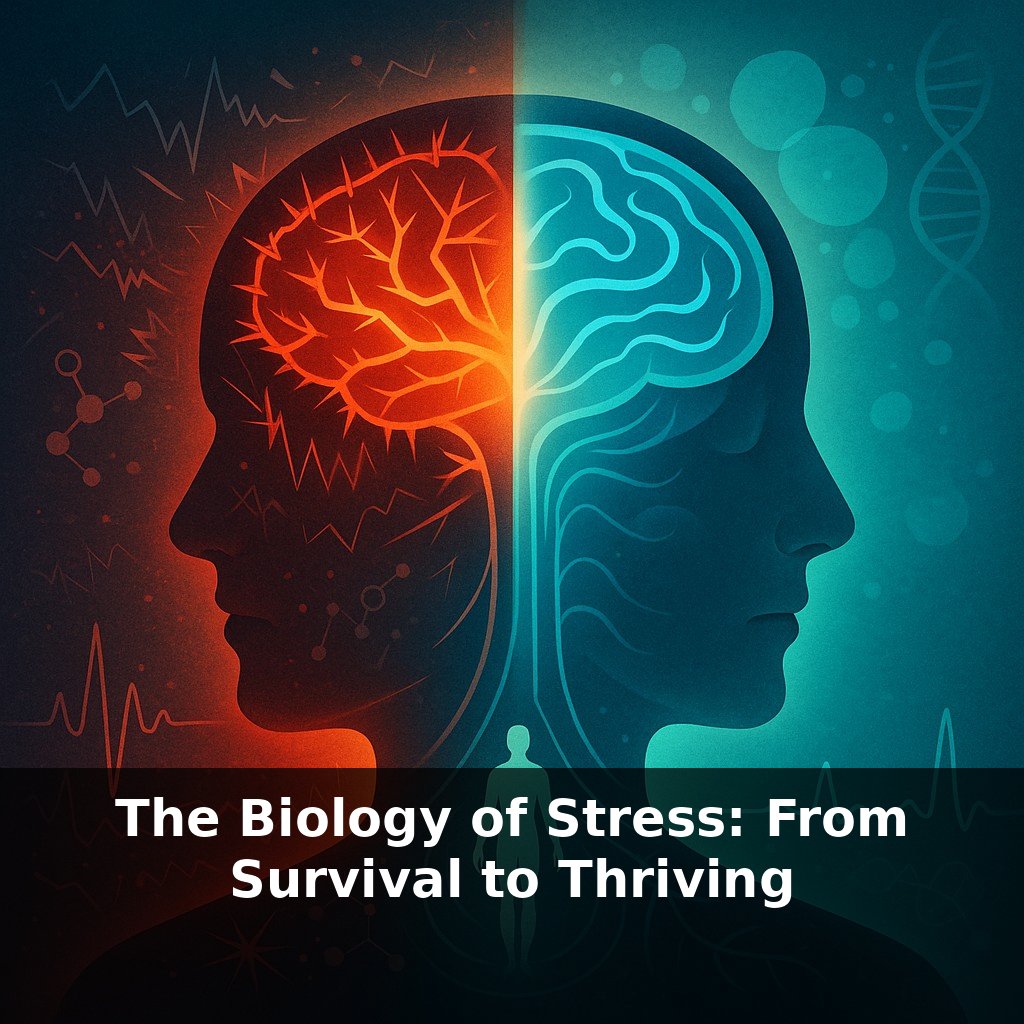
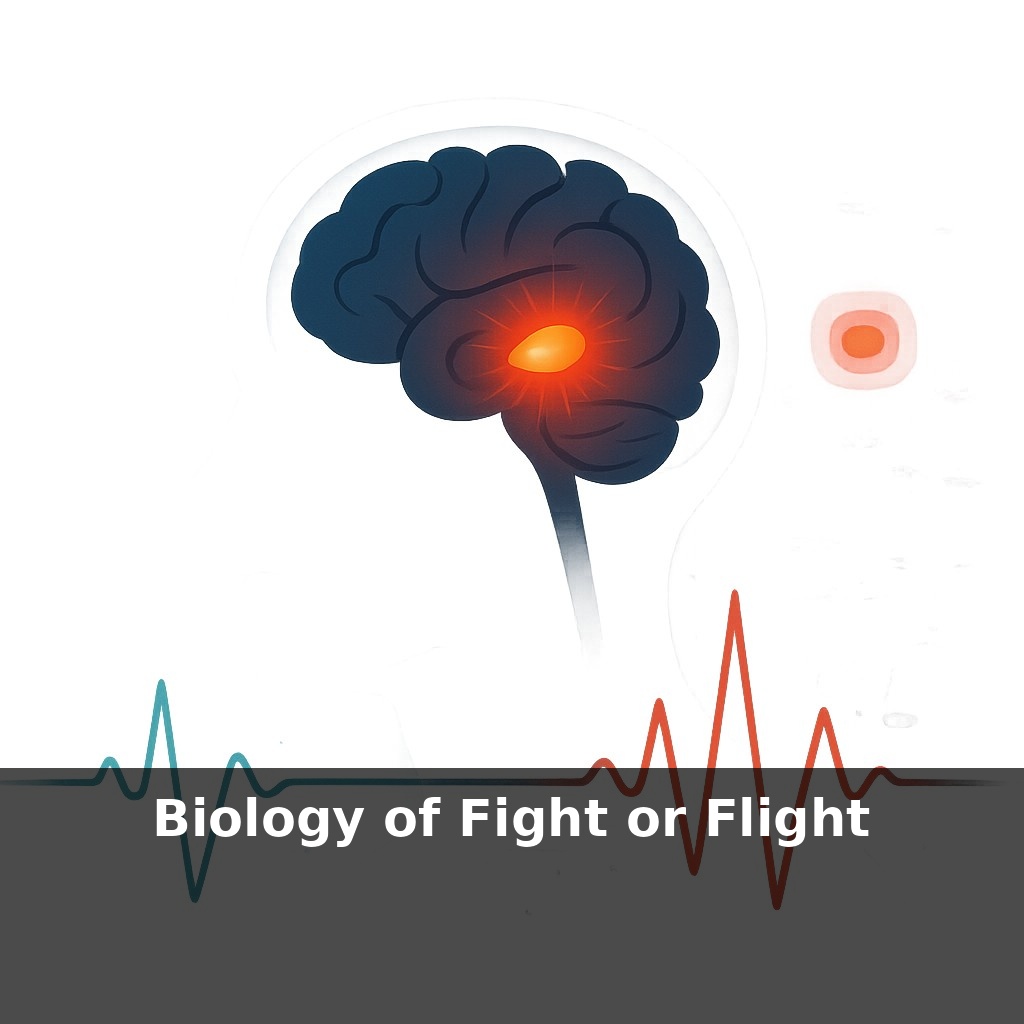
Stress doesn’t start in your chest or your breath; it starts in a tiny almond-shaped region deep in your brain: the amygdala. Long before you consciously “feel” nervous, this threat detector has already scanned the scene, made a snap decision, and fired off a neural SOS. That signal races to the hypothalamus, your body’s crisis coordinator, which in turn contacts two powerful partners: the nerves that talk directly to your organs, and the glands that release stress hormones into your blood. Within fractions of a second, this network can shift your entire internal state. What’s remarkable is how fast and how small the machinery is. A few cubic millimeters of brain tissue, a pair of glands lighter than a small coin, and yet they can re-prioritize nearly every system in your body, from vision and muscles to immunity and memory. Understanding this chain of command is key to learning how to interrupt it.
Once that first alert is sent, your body doesn’t rely on a single switch—it runs two overlapping stress programs on different timelines. The fast one races through your sympathetic nerves, reaching organs in a flash and prompting your adrenal medulla to dump adrenaline and noradrenaline into your blood. The slower one travels as a hormone relay, stepwise, until cortisol finally enters circulation minutes later. Together, they change where your blood flows, which fuels are burned, and which systems are temporarily sidelined so your muscles and senses get priority. The catch: both systems can activate even when you never move a step.
Once the alert goes out, two timelines start running in parallel—one in milliseconds, one in minutes—and each reshapes your body in a different way.
On the fast track, signals racing through sympathetic nerves hit targets almost everywhere: pupils widen so more light hits your retina, tiny muscles in skin tighten (ever notice goosebumps when startled?), and blood vessels in the gut constrict while those in leg and arm muscles open. Blood pressure climbs, not randomly, but to guarantee that oxygen-rich blood can be forced into tissues that might need to move or brace. Even your airways dilate slightly, so each breath can pull in more oxygen with less effort.
The slower timeline adds persistence. As the hormone relay unfolds, cortisol begins to change your internal chemistry. It tells the liver to convert stored glycogen into glucose and encourages fat cells to release fatty acids—high-octane fuels that keep muscles and brain supplied if the crisis drags on. It also tweaks how responsive your blood vessels are to those earlier nerve signals, helping sustain elevated pressure and readiness beyond the initial shock.
But this readiness comes with trade-offs. Digestive activity drops as blood and energy are diverted away from the stomach and intestines; this is one reason stressful days can leave you bloated, constipated, or running to the bathroom at odd times. Reproductive processes are dialed down: sex hormones may dip, menstrual cycles can become irregular, and libido often fades when threat feels constant. Even growth and repair slow, as tissues postpone “maintenance work” that isn’t urgent for survival right now.
The immune system is reshaped rather than simply “suppressed.” In short bursts, stress can sharpen some defensive responses—mobilizing certain white blood cells and inflammatory signals to prepare for potential injury. When the state becomes chronic, though, that same bias toward inflammation can damage blood vessels and contribute to atherosclerotic plaques, helping explain why long-term stress is tied to higher cardiovascular risk.
Your brain isn’t spared. Rapid, threat-focused circuits gain influence, while slower, reflective networks lose bandwidth. Concentration narrows around potential danger cues; you become better at scanning for risk and worse at planning, creativity, and flexible thinking. Memory also shifts: emotionally charged details tend to stick, while neutral information blurs.
Crucially, these patterns are graded, not binary. The response can be a faint ripple or a full cascade, depending on how big the brain judges the threat, how controllable it feels, and whether the stressor is brief or relentless. The same machinery that prepares you for a sudden near-collision can, if repeatedly engaged by emails and notifications, start to feel like a background operating system you never meant to install.
Your challenge this week: pick one common stress moment you experience most days—opening your inbox, joining a meeting, getting a notification—and, for that one context only, run a 30‑second internal “systems check” as it begins. Track three signals: (1) where your attention snaps to first (body, thoughts, or the other people/situation), (2) any shift in your breathing depth or pace, and (3) one organ system you suspect is being turned down (digestion, sex drive, immunity, sleep, or recovery). Each time, note which of those three changes is most obvious, and whether it fades quickly or lingers for minutes. At the end of seven days, review your notes and identify which body system seems to be your personal “cost center” for everyday fight‑or‑flight activation.
Think of daily life as a series of “micro‑alarms” that your brain ranks on an internal threat board. A blunt email from your boss might light up the same circuitry as a slammed door once did in a dangerous neighborhood, but the “threat” now is status or income rather than physical harm. That’s why two people can read the same message and have wildly different bodily reactions: each brain is comparing it to a different personal archive of past stressors.
Real‑world patterns make this clearer. Surgeons often report that their hands are steady during operations but shake while filling out legal forms afterward—their internal threat board rates paperwork, not blood, as riskier. Elite athletes show something similar: heart and breathing data in competition can look calmer than in contract meetings, where uncertainty, not exertion, dominates.
The paradox is that your body’s most ancient wiring can end up serving your most modern worries. Learning your own pattern isn’t about avoiding stress entirely, but about noticing which “micro‑alarms” your system keeps over‑ranking.
As sensors and algorithms get better at reading subtle shifts in your physiology, fight‑or‑flight could become something you watch in real time, like checking the weather radar before a storm. Instead of guessing whether you’re “stressed,” a dashboard might show how often you hover in a yellow zone and which environments flip you to red. That same data could guide city planners, managers, and app designers to build spaces and tools that keep more of us in blue‑sky mode.
Even without gadgets, you can start quietly mapping your own stress landscape. Treat each spike as a data point, not a failure—like noting where a bridge sways in heavy wind so engineers can reinforce it later. Over time, that curiosity lets you redesign small pieces of your day, turning automatic reactions into signals you can work with instead of obey.
To go deeper, here are 3 next steps: 1) Practice shifting from “gas pedal” (sympathetic) to “brake” (parasympathetic) by doing 5 minutes of the **physiological sigh** (double inhale through the nose, long exhale through the mouth) while following along with a free guided clip from **Andrew Huberman’s “Tools for Managing Stress & Anxiety” episode** on YouTube. 2) Learn what’s happening to your hormones and brain circuits during fight-or-flight by reading the chapter on the **sympathetic nervous system and acute stress response** in **Robert Sapolsky’s “Why Zebras Don’t Get Ulcers”**, and highlight any sections that explain symptoms you personally experience (racing heart, tunnel vision, stomach issues, etc.). 3) Build a daily “stress inoculation” habit by using the **Waking Up app** or **Headspace** to run one **5–10 minute body-scan or breath-focused session** right after a mildly stressful event (e.g., difficult email or commute) so your nervous system learns to come back down more quickly after activation.