Right now, your body might be running a full stress program… while you’re just checking email. In the next few minutes, your heart rate, hormones, and thoughts can quietly shift from calm to crisis mode—without a single “emergency” in sight. How is that even possible?
Stress isn’t just something that “happens” to you; it’s also something your brain learns to rehearse—or retire. While your old patterns may keep firing automatically in traffic, in meetings, or during late-night scrolling, your nervous system is far from fixed. In fact, under the right conditions, it’s remarkably trainable.
Here’s the twist: the most effective tools for dialing down stress don’t look dramatic from the outside. A five-minute breathing drill at your desk, noticing and reframing a single catastrophic thought, or choosing a short walk instead of another news cycle can, over time, alter the very circuits that keep you stuck on high alert.
Think of today’s episode as updating your internal operating system: we’ll look at specific practices that nudge your biology away from chronic threat mode and toward flexibility, stability, and genuine recovery.
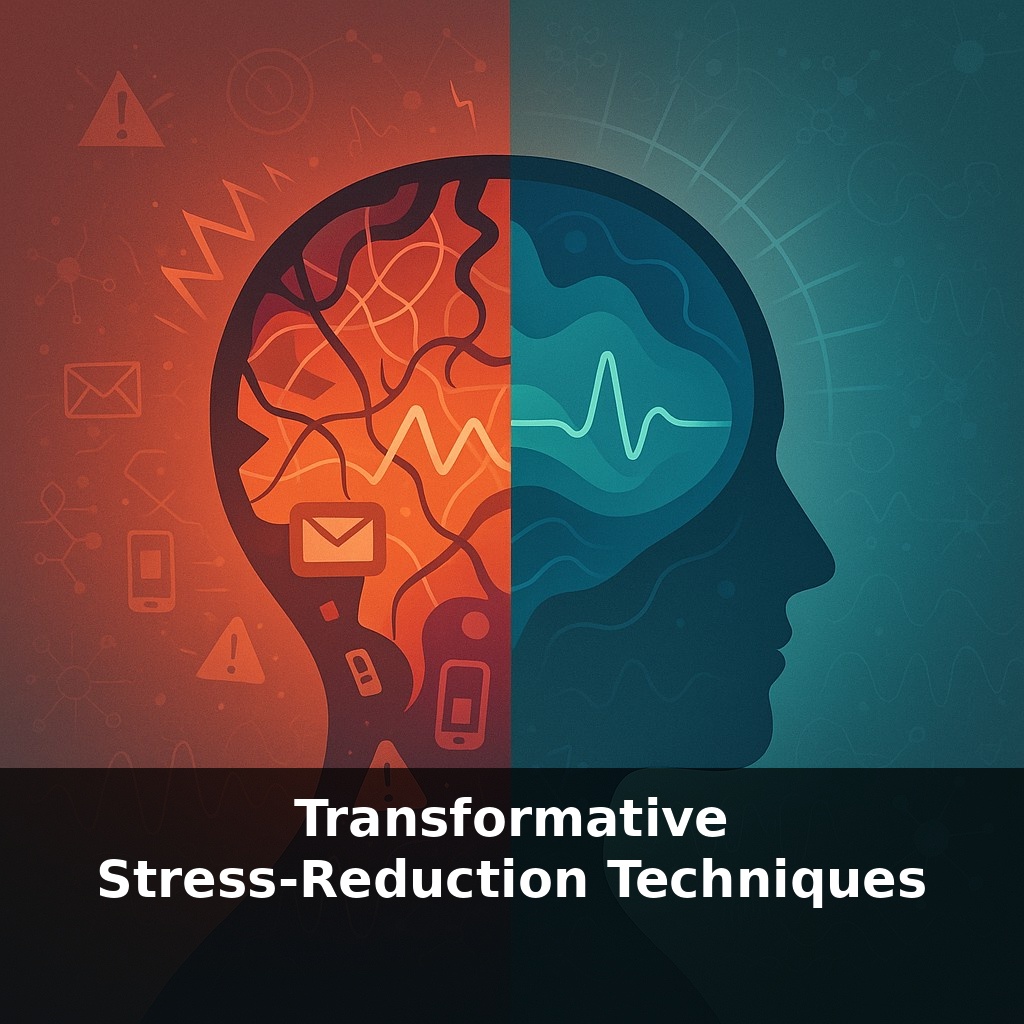
Here’s the key shift for this episode: instead of treating stress relief as a last‑minute fix, we’ll treat it as daily skills training. The research you heard about—lower cortisol, better HRV, fewer anxiety symptoms—doesn’t come from occasional “relaxing weekends.” It comes from small, repeatable inputs that teach your brain and body new default settings. Think of your day as divided into practice windows: brief pauses before meetings, transitions after difficult conversations, the first five minutes after waking, the last ten before sleep. Each of these is a built‑in slot for training a calmer baseline.
A 2019 study found that just five minutes of slow breathing could measurably change HRV—a marker of how adaptable your body is to challenge. That’s not a wellness myth; it’s your physiology responding in real time to a deliberate input. This is the logic behind all the core stress‑reduction tools: they give your brain repeated proof that it can shift state on purpose, not only react on autopilot.
We’ll focus on four levers that, together, create that shift.
First, mindfulness‑based practices. In MRI studies, 8‑week courses like MBSR are linked to changes in regions involved in attention and emotional regulation. Practically, this looks like short, scheduled check‑ins with your experience: noticing sensations, emotions, and thoughts as events passing through awareness rather than commands you must obey. Over time, this “meta‑awareness” lets you catch stress spirals earlier and opt for different responses.
Second, cognitive restructuring. When your brain predicts threat, it often runs on distorted shortcuts: “This one mistake means I’m a failure,” or “If I say no, they’ll be furious.” CBT teaches you to surface those predictions, test them against evidence, and generate alternatives that are both realistic and less activating. You’re not forcing positivity; you’re training accuracy under pressure.
Third, controlled breathing. Specific patterns—like exhaling slightly longer than you inhale, or spending a few minutes at around six breaths per minute—send a clear signal via your vagus nerve that conditions are safe enough to down‑shift. It’s one of the fastest ways to influence your internal state without needing to change the external situation.
Fourth, lifestyle adjustments that support recovery: sleep regularity, physical activity, and boundaries around work and digital input. These aren’t background “nice‑to‑haves.” They determine how quickly you return to baseline after a spike.
Think of these as modular tools in a kit. You won’t use all of them every day, and you don’t need hour‑long sessions. What matters is strategic repetition in those practice windows you mapped out: before stress ramps up, right after it hits, and as you wind down. Over weeks, you’re not just “feeling calmer”; you’re teaching your biology to recognize more situations as manageable and fewer as emergencies.
A practical way to see these tools in action is to zoom into small, ordinary moments. Someone in a noisy open office might set a timer for three minutes between tasks: eyes on a fixed point, tracking breath, then labeling the top three thoughts running through their mind. Another person, stuck in a conflict‑heavy role, might use a micro‑script like, “What else could be true?” whenever they notice a sharp internal story about another person’s motives. Over a month, that one question can quietly soften dozens of tense interactions.
You can also stack techniques. A manager heading into performance reviews could do ten slow breaths while walking to the meeting room, then choose a single “anchor phrase” such as, “One conversation at a time,” to return to whenever tension rises. After work, a consistent “shutdown ritual” (closing laptop, brief stretch, step outside) becomes a cue that the workday’s elevated vigilance no longer needs to run the show.
Analogies aside, these tiny, repeatable moves are how the abstract idea of resilience turns into something you can actually feel in your day.
Therapies now in trials hint at a future where your daily strain becomes live data, not a vague feeling. Wearables could flag rising pressure the way GPS flags traffic, triggering just‑in‑time nudges: a two‑minute exercise, a tailored cognitive prompt, or even a VR “rehearsal” for tomorrow’s hard meeting. On a larger scale, anonymized patterns might guide how teams schedule work, like city planners redesigning streets after studying rush‑hour flow, shifting whole systems toward prevention rather than repair.
Your challenge this week: run a live experiment. Pick one “pressure zone” in your day—commute, inbox, or bedtime. For seven days, pair it with a single practice: a brief mindfulness check‑in, a thought reframe, or slow breathing. Treat it like tuning a musical instrument: small, repeated adjustments, then listen for how the whole piece of your day starts to sound.