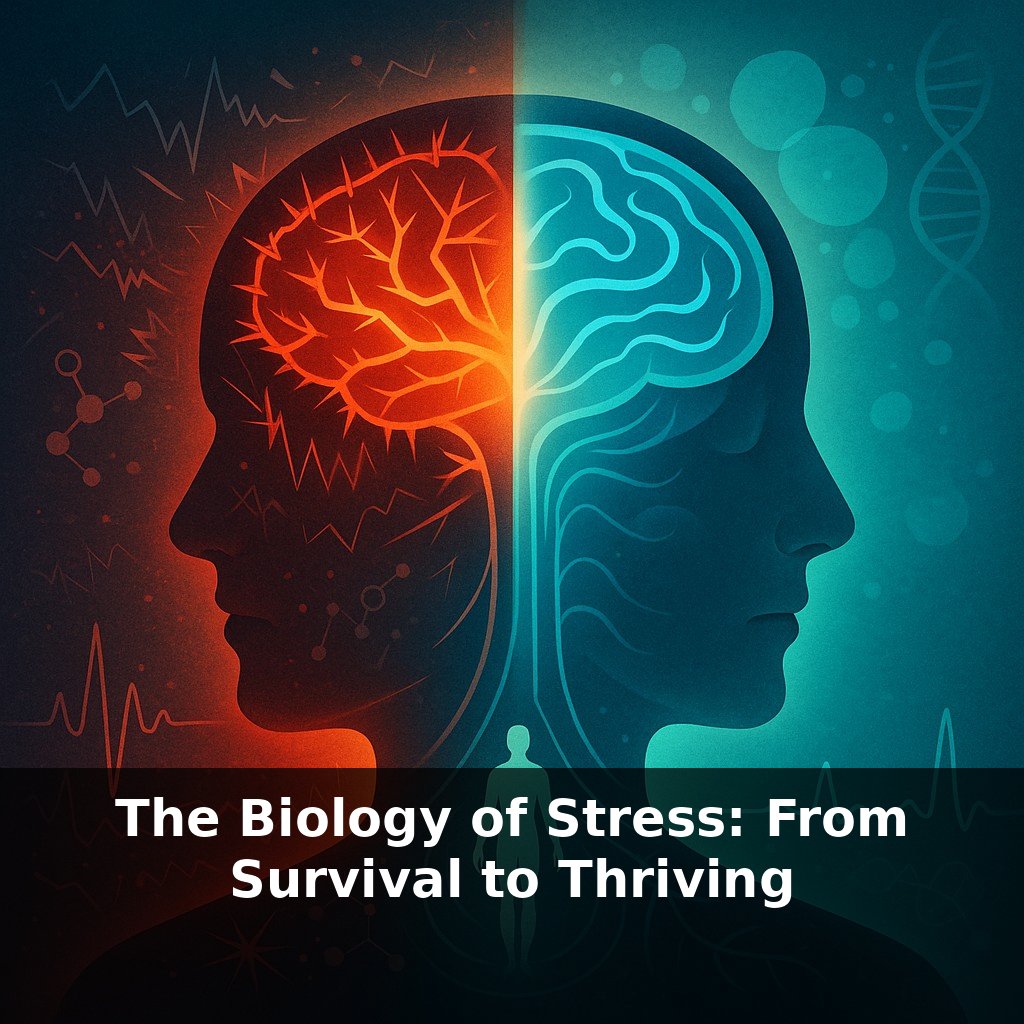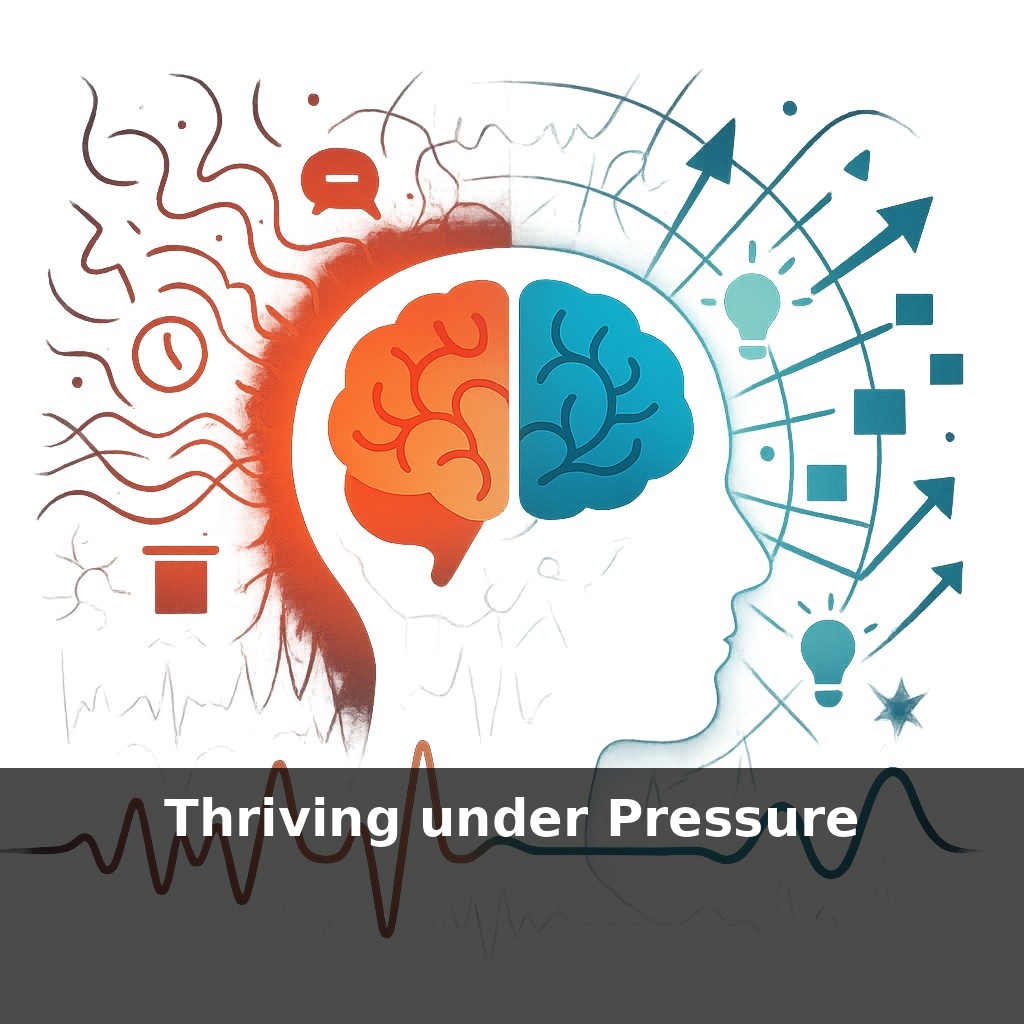
Stress can sharpen your brain, boost your immune system, and make you more creative—if your mind labels it “challenge” instead of “threat.” A deadline, a tough conversation, a big presentation: same pressure, totally different biology, depending on the story you tell yourself.
Elite military units deliberately seek out pressure. Not because they enjoy suffering, but because they’ve learned something counterintuitive: well-designed strain today can mean calmer nerves, clearer thinking, and even lower hormonal spikes when it truly counts later.
You don’t need a battlefield for this to apply. Modern research shows that when you meet demanding moments with a specific mindset and then step away to recover, your system doesn’t just cope—it learns. Over time, your reactions can shift from jittery and scattered to focused and energized.
Think of a difficult conversation at work, a high-stakes exam, or a make-or-break client pitch. In each case, how you *interpret* that surge inside you, and what you do in the hours after, can turn a draining ordeal into a kind of internal training session. Repeated wisely, those sessions become a personal toolkit for staying steady when the stakes climb highest.
Most of us never got “pressure training” growing up. We were taught algebra, not how to handle a boss’s sudden email, a partner’s tense tone, or a roomful of eyes during a presentation. So our bodies learned on their own—often by flinching, avoiding, or powering through until we’re wiped out. The research twist is that everyday life is already giving you raw material for growth: brief spikes before speaking up in a meeting, that jolt as your phone lights with unexpected news, the uneasy buzz before a hard decision. Each one is a small, real-world lab where you can start experimenting on purpose.
Most of us respond to intense moments on autopilot: heart races, thoughts speed up, you either clamp down or go blank. What’s easy to miss is that those reactions are highly *trainable*—and not only by “toughing it out,” but by changing what your brain thinks the surge is *for*.
Psychologists call this “cognitive re-appraisal.” In plain terms: you rewrite the meaning of what’s happening inside you, in real time. The sensations don’t vanish, but their *job description* changes.
When volunteers in Jamieson’s Harvard studies were told, just before a stressful task, that pounding hearts and quick breaths were signs their bodies were gearing up to perform, their physiology actually shifted. Blood vessels stayed more open, looking more like a focused workout than a health scare. Same pulse, different pattern.
That’s one pillar of thriving under pressure: instead of “calm or fail,” you practice “activated and effective.” A tight stomach becomes a cue to narrow your focus. A spike in alertness becomes a reminder to lean on skills you’ve rehearsed.
The second pillar is *where* you practice. Elite performers don’t wait for the championship game to test their responses; they create reps in smaller, controlled settings. You can do the same:
– If you dread speaking up, you start with one prepared sentence in a low-stakes meeting, not a keynote. – If you freeze in conflict, you rehearse a single boundary sentence with a friend before using it at home or work. – If deadlines derail you, you simulate a 25-minute “sprint” with a visible timer and minor consequences, like sharing your draft with a colleague.
The third pillar is what happens *after*. Strain only becomes growth when it’s followed by deliberate recovery: sleep that’s protected, a walk without headphones, a debrief with someone you trust. That’s where your nervous system files the experience as “survived and learned,” rather than “barely escaped—avoid next time.”
Over time, this creates a different internal expectation: not that life will be easy, but that you’ll be able to meet difficult moments with increasing skill—and then step back, reset, and be ready for the next one.
A programmer notices their hands shake slightly before every code review. Instead of hiding, they treat it as a signal to run a tiny “performance script”: one deep breath, one sentence summarizing their idea, one question inviting feedback. After a month, the script feels almost automatic; the same physiological buzz now pairs with quicker clarity instead of mental static.
A nurse on a busy ward experiments with micro-recovery. After each intense interaction, she spends 60 seconds at the sink naming one thing she handled well and one thing she’ll adjust next time. Those one-minute debriefs become bookends, preventing a 12-hour shift from blending into one long, undigested surge.
A junior manager builds her own version of stress inoculation by scheduling monthly “pressure reps”: volunteering to lead a short update to senior staff, negotiating timelines with a firm “no,” or asking for direct feedback. Like a runner increasing mileage in planned increments, she’s not waiting for confidence; she’s constructing it, rep by rep, with exits and recovery pre-planned.
Soon, you may get a “readout” on tough weeks the way you check weather or traffic: not to avoid the storm, but to route around flood zones and choose when to accelerate. Teams could plan workloads like coaches managing game minutes, rotating people before they hit cumulative overload. Kids might learn early to surf rising arousal instead of fearing it, reshaping norms so intense weeks aren’t badges of honor or doom, but signals to rebalance and refine.
You won’t control when life accelerates, but you can shape how prepared you are when it does. Small, chosen tests—like a tougher workout, a bolder question in a meeting, or a candid check-in with a friend—quietly raise your baseline. Over time, you’re not dodging intensity so much as learning to steer it, the way a pilot learns to ride out turbulence.
Try this experiment: For the next three days, deliberately create a “pressure sprint” once per day by choosing one meaningful task and giving yourself a tight 20-minute countdown to complete a specific, visible outcome (like sending the draft email, finishing the slide, or making the tough phone call). Before you start, rate your stress from 1–10 and say out loud one way this pressure could actually help you (e.g., “This deadline will force me to focus on what really matters”). During the sprint, you’re only allowed to work on that task, and you must stop when the timer ends, no matter what. Afterward, quickly rate your stress again and note whether you performed better, worse, or differently than when you give yourself unlimited time. By the end of day three, look for patterns: when does pressure sharpen you, and when does it start to sabotage you?