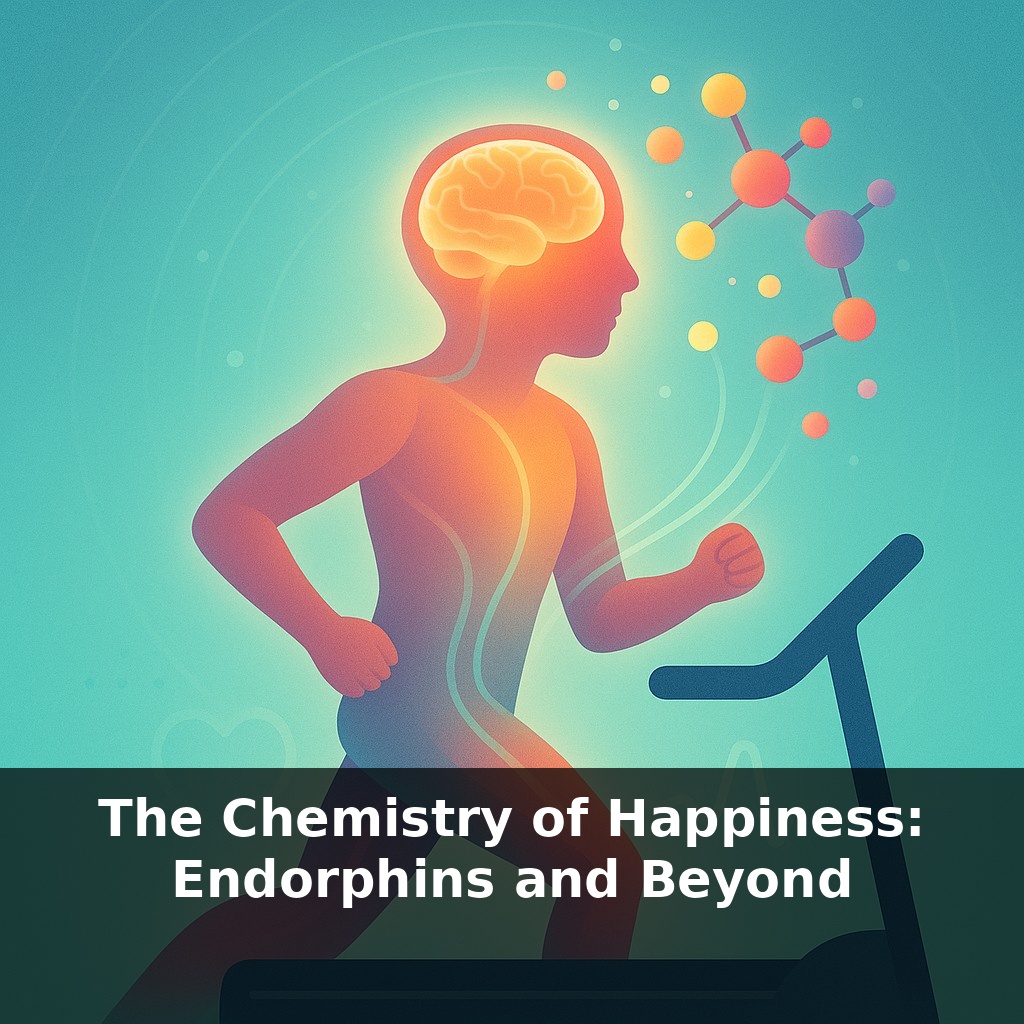
Right now, somewhere on a treadmill, someone is unknowingly giving themselves a dose of chemistry as powerful as a mild antidepressant. You lace up, your heart rate climbs, and quietly your brain starts mixing a cocktail of “feel‑better” molecules behind the scenes.
But here’s the twist: the “high” most people blame on endorphins alone is actually a team effort. While you’re focused on your breathing or counting down minutes on the bike, muscles are sending signals to your brain, stress circuits are being quietly dialed down, and systems that usually only shout during danger learn to whisper instead. Some of these signals come from unexpected places—molecules released by working muscles that talk directly to mood centers, natural cannabinoids that overlap with the effects of cannabis, and classic mood messengers that psychiatry has targeted for decades. The result isn’t just feeling good after a workout; it’s gradually changing the baseline of how reactive, anxious, or resilient you are. In this episode, we’ll unpack how moving your body reshapes your mind.
As researchers zoomed in on this “mood shift,” they stopped thinking only about single molecules and started mapping the timing and layers of the response. First comes a rapid change in brain activity: regions that constantly scan for threat quiet down, while networks involved in focus and reward light up. Then, across the next hour, blood levels of various messengers rise and fall in a distinct sequence, like waves hitting a beach. Hours to days later, genes tied to stress handling, inflammation, and even neuron growth switch their activity patterns. That’s the part most people miss: the “good mood” after a workout is just the visible tip of a much longer biological story.
Under the microscope, that “tip of the story” splits into several players that each carry a different kind of psychological message.
Start with β‑endorphin. Its binding power at the µ‑opioid receptor is about eighteen times stronger than morphine’s, which helps explain why effort can blunt discomfort and turn “this hurts” into “this is hard, but I can keep going.” After 20–30 minutes of moderate movement, circulating levels can jump two‑ to five‑fold. But here’s the nuance: the large β‑endorphin molecule doesn’t simply flood the thinking parts of your brain. Local release inside the brain, triggered by activity, matters more than whatever shows up in a blood sample. That’s one reason chasing ever‑higher intensity for “more endorphins” often backfires; you can push yourself straight into headache, irritability, and elevated cortisol instead.
Running parallel to this are endocannabinoids like anandamide. In several studies, including 5 km runs, anandamide has roughly doubled—from about 1.4 to 3 nmol/L—at distances and paces many non‑athletes can manage. Unlike β‑endorphin, these lipid messengers slip easily across boundaries, binding to receptors involved in worry, pain, and sensory filtering. People often describe this phase less as euphoria and more as a comfortable softening of edges: sounds feel less jarring, minor frustrations don’t bite as deeply, and internal chatter quiets.
Then there’s serotonin and dopamine. Rather than a single “hit,” their levels and receptor sensitivity adjust over repeated sessions. That cumulative remodeling is why a 2019 Duke trial could show 45 minutes of cycling, three times per week, matching sertraline’s roughly 40 % symptom reduction in mild‑to‑moderate depression. The antidepressant didn’t suddenly become weaker; the nervous system simply has more than one route to rebalance mood circuits.
Zoom out further and working muscle begins to look like an endocrine organ in its own right, releasing myokines that influence inflammation, stress reactivity, and even brain cell growth. Over weeks, this quieter, systemic shift may matter more than any single post‑workout high. It’s also where population‑level data enter: the WHO’s 150 minutes per week of moderate movement isn’t a random target. Meta‑analytic work from Cambridge suggests that if people merely met that bar, up to about a quarter of depression cases might never develop, because the entire internal environment in which stress is processed would have tilted in a healthier direction.
In that sense, following the guidelines is less about chasing a fleeting rush and more like steadily redirecting an underground river that feeds your emotional landscape.
Think about how different activities “color” this system in distinct ways. A brisk 20‑minute walk outside often generates a clear, mentally spacious after‑effect: many people notice it’s easier to solve a nagging problem immediately afterward. Interval‑style efforts—short bursts on a hill or bike with gentle recoveries—tend to leave a sharper sense of accomplishment and confidence, as if your nervous system just rehearsed “doing hard things and surviving.” Gentle, longer efforts, like an easy 45‑minute swim, more often produce a quiet, before‑bed calm that can spill into deeper sleep that night.
People with demanding, high‑cognitive jobs sometimes find that repetitive, low‑skill movement (like cycling or jogging an easy loop) works better than complex sports; with fewer decisions to make, attention can drift and reset. By contrast, if your day is monotonous, dance classes, pickup games, or climbing walls add novelty and social contact—extra inputs that seem to amplify the emotional payoff beyond the physical effort alone.
Future work may treat your weekly workouts more like a custom playlist than a generic prescription. Genetic hints and wearable data could help tune how hard and how often you move to hit a personal “sweet spot” for mental steadiness. Therapists may dose movement alongside meds or therapy sessions, timing sessions before difficult conversations or busy days. For those who can’t be active, lab‑made signals that mimic key workout effects might offer a parallel path to emotional protection.
So instead of treating movement as a chore, you can start treating it like tuning knobs on a mixing desk: small, regular tweaks that reshape how your day feels. Your challenge this week: notice which kinds of movement leave you clearer, kinder, or more creative afterward—and then slightly bias your schedule toward those “better‑day” sessions.