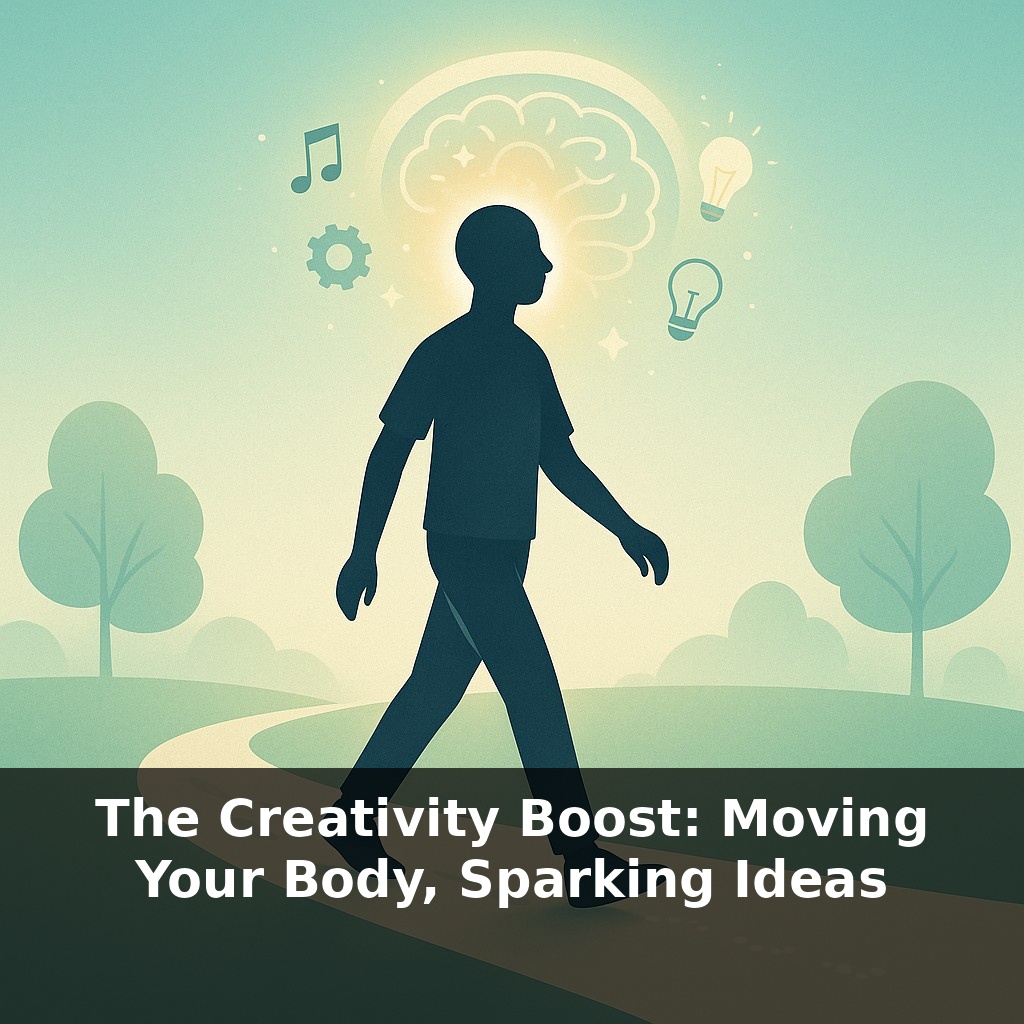
A quiet walk can make you more creative than sitting at your desk brainstorming with your whole team. A songwriter gets their chorus during a grocery-store stroll. A stuck engineer solves a problem on the stairs. Why does moving your body unlock ideas your sitting brain can’t reach?
Your brain does some of its best work when you’re “not really working.” Those half-focused moments—walking to refill your coffee, swaying in the kitchen while something simmers, pacing during a phone call—quietly set the stage for breakthroughs you can’t force in front of a blank page or spreadsheet.
What changes isn’t just your scenery, it’s your mental stance. The pressure to “come up with something” eases, attention widens, and scraps of memories, random headlines, and half-finished thoughts start to bump into each other. That’s when unlikely combinations appear: a podcast you heard last month collides with a frustrating email from this morning and suddenly becomes a solution, a tagline, a storyline.
In this episode, we’ll zoom in on those in‑between moments and show how to turn ordinary movement into a reliable, repeatable creativity habit you can actually use at work and in daily life.
But here’s the twist: not all movement “feels” creative in the same way. The slow lap around your block, the fidgety sway in your office chair, the headphones‑on dance in your living room—they each tune your mind differently, like shifting between playlists. Some rhythms are better for loose, playful ideas; others for sharpening and choosing between them. The goal isn’t to turn every walk into a productivity hack, but to notice which kinds of motion pair best with which kinds of thinking—and then deliberately script them into your day like meetings you actually look forward to keeping.
Think of movement in three “creative gears” you can deliberately shift between.
First, there’s **wandering gear**—easy, almost aimless motion. This is your hallway loop while you’re on mute, your stroll around the block while a timer runs, your lazy dish‑washing sway. The key here is low effort and low stakes. In this gear, you’re not trying to solve anything. You’re just giving half‑formed thoughts somewhere to drift. Background noise helps (a podcast, café sounds, light music) as long as it doesn’t demand full focus. People often notice surprising connections popping up in the corner of their mind: “Oh—that’s how those two projects fit together.”
Next is **circling gear**—slightly more intentional, but still relaxed. Think pacing with a notebook on the table, walking the same short route with one sticky question in mind, or doing light stretches between bullets of a presentation. Here, you keep a specific prompt nearby: a draft headline, a tricky sentence, a product name, a single “how might we…” question. You’re not wrestling with it; you’re orbiting it. When a tweak or angle arrives, you stop briefly, capture it, and start moving again.
Finally, there’s **landing gear**—short, focused bursts of motion right *before* you sit down to refine something. Ten minutes of brisk stairs before editing a proposal. A fast walk around the building before choosing between three options. This gear isn’t about more ideas; it’s about warming up the mental brakes and headlights so you can see which ideas actually fit and which need to be cut.
Over time, you can map specific tasks to specific gears. Need lots of raw options? Default to wandering. Have options but feel torn? Use circling. Need to choose and commit? Switch to landing. The art is in keeping each gear short and repeatable—tiny rituals you can use at your desk, in your kitchen, or in a crowded office without announcing you’re “being creative.”
Wandering gear might look like a “no‑agenda commute” inside your day. A designer walks slow laps around the office while scrolling unrelated images on their phone—not hunting for inspiration, just letting colors and shapes drift past. The winning layout shows up later at their desk, wearing pieces of three different posts they barely remember seeing.
Circling gear can be more like rehearsing lines backstage. A product manager loops the same parking lot row with one sticky phrase in mind: “Onboarding feels clunky.” Each lap, they casually try a different mental finish to that sentence. By the time they return to their laptop, two concrete experiments are waiting.
Landing gear works well in micro‑transitions. A lawyer does ten flights of stairs before revising a contract, not to “think harder” but to arrive sharper. The climb marks a boundary: upstairs is for weighing trade‑offs, downstairs was for gathering input. That tiny ritual keeps second‑guessing from sneaking into the final draft.
As workplaces and schools shift, we may see “moving meetings” become as normal as calendars, with teams blocking 15‑minute walk‑and‑talks to tackle stuck projects. Cities could design paths the way they design Wi‑Fi zones—clear, safe routes where people can think on the go. Even solo work might change: instead of grinding at a screen, you’d rotate through small “idea circuits”—a lap, a note, a stretch—treating motion like a quiet co‑author in your day.
Treat this like tuning an instrument: tiny, repeated adjustments, not one grand overhaul. Try pairing certain songs, routes, or rooms with specific kinds of thinking and notice which combos consistently give you better results. Your challenge this week: pick one task you usually dread and redesign it so at least half of it happens on your feet.