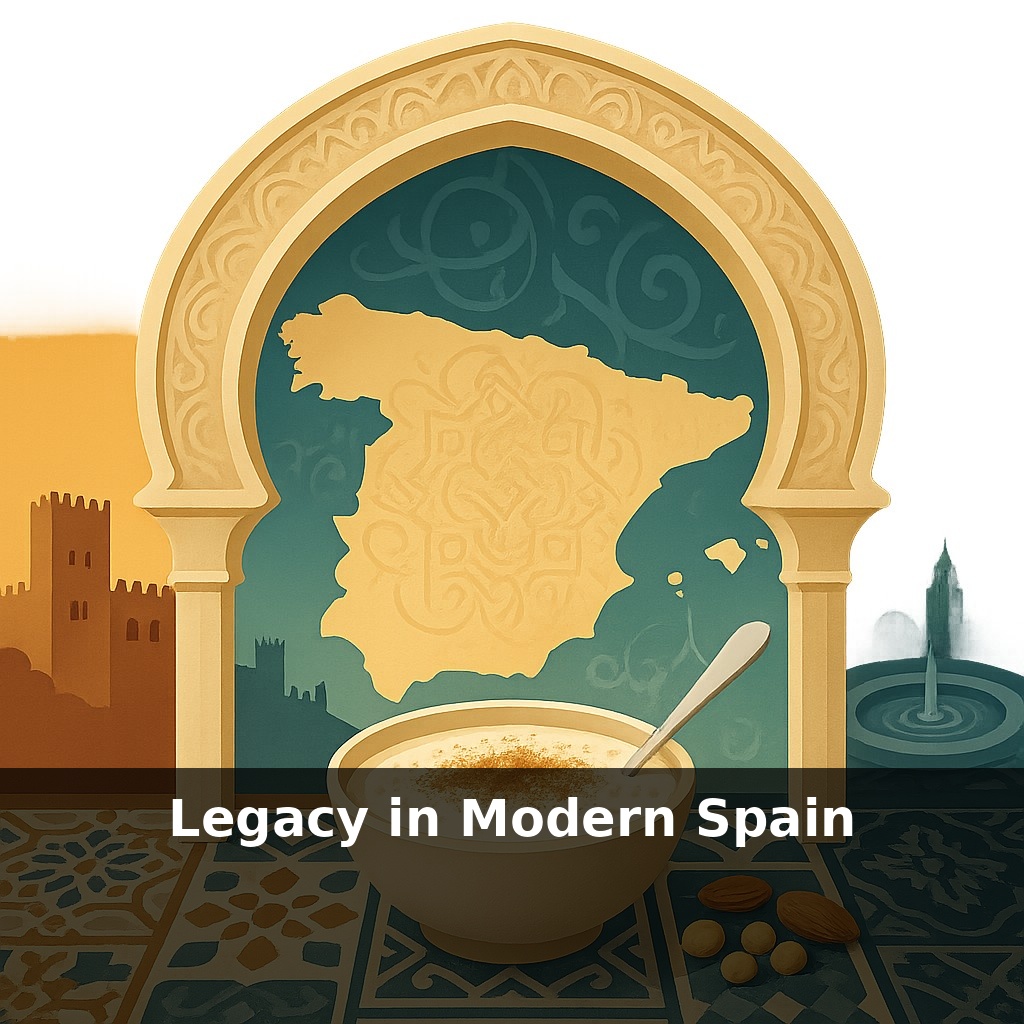
Spanish people use thousands of Arabic words every day—yet many would insist Spain is purely “European.” A child orders arroz con leche, a judge meets at Valencia’s ancient water court, tourists flood the Alhambra… and almost no one names the hidden source behind it all.
Walk through any Spanish supermarket and you’re quietly touring a Middle Eastern marketplace: shelves of chickpeas and cumin, orange blossom honey, turrón made with almonds that arrived with Andalusi farmers, and cured meats that only make sense as a post‑Islamic response to centuries of dietary rules. Step outside and the pattern continues—street plans in older barrios twist in narrow, shaded lanes ideal for hot climates, while flat roofs and interior patios cool homes long before air conditioning. Even Spanish daily rhythm carries echoes of the south and east: late meals that dodge midday heat, social life spilling into plazas after dark, and agricultural routines tuned to irrigation rather than rainfall. Put together, these habits feel “naturally” Spanish, yet they were engineered over generations by people speaking Arabic, Berber languages, and Romance dialects side by side.
Modern Spain doesn’t just inherit places and products from al‑Andalus; it also inherits arguments. School textbooks still tiptoe around eight centuries of Muslim rule, politicians weaponize the word “Reconquista,” and tourism ads sell “Moorish charm” while avoiding the history of expulsions that emptied many of those palaces and barrios. At the same time, scientists quietly map North‑African ancestry in Spanish DNA, and local cooperatives restore medieval irrigation channels to cope with drought. It’s as if the country is updating an old operating system while still debating who wrote the original code.
A judge in Madrid can sign a ruling, drive home past a barrio called “Guadarrama,” cook dinner with saffron and aubergines, and never once think of the people who normalized those words and flavors on Iberian soil. Yet the legacy of al‑Andalus doesn’t just sit in museums; it runs quietly in the background of Spanish life, more like a phone’s operating system than an old app you’ve deleted.
You see it in how land is used. The lush huertas of Murcia and Granada, terraced hills in the Alpujarras, and networks of acequias in Aragón all rely on gravity‑fed irrigation and cropping patterns perfected under Muslim rule, then adapted by Christian, Jewish, and Morisco farmers. When today’s Spain confronts drought, many engineers and activists are effectively “debugging” or restoring Andalusi water infrastructures rather than inventing from scratch.
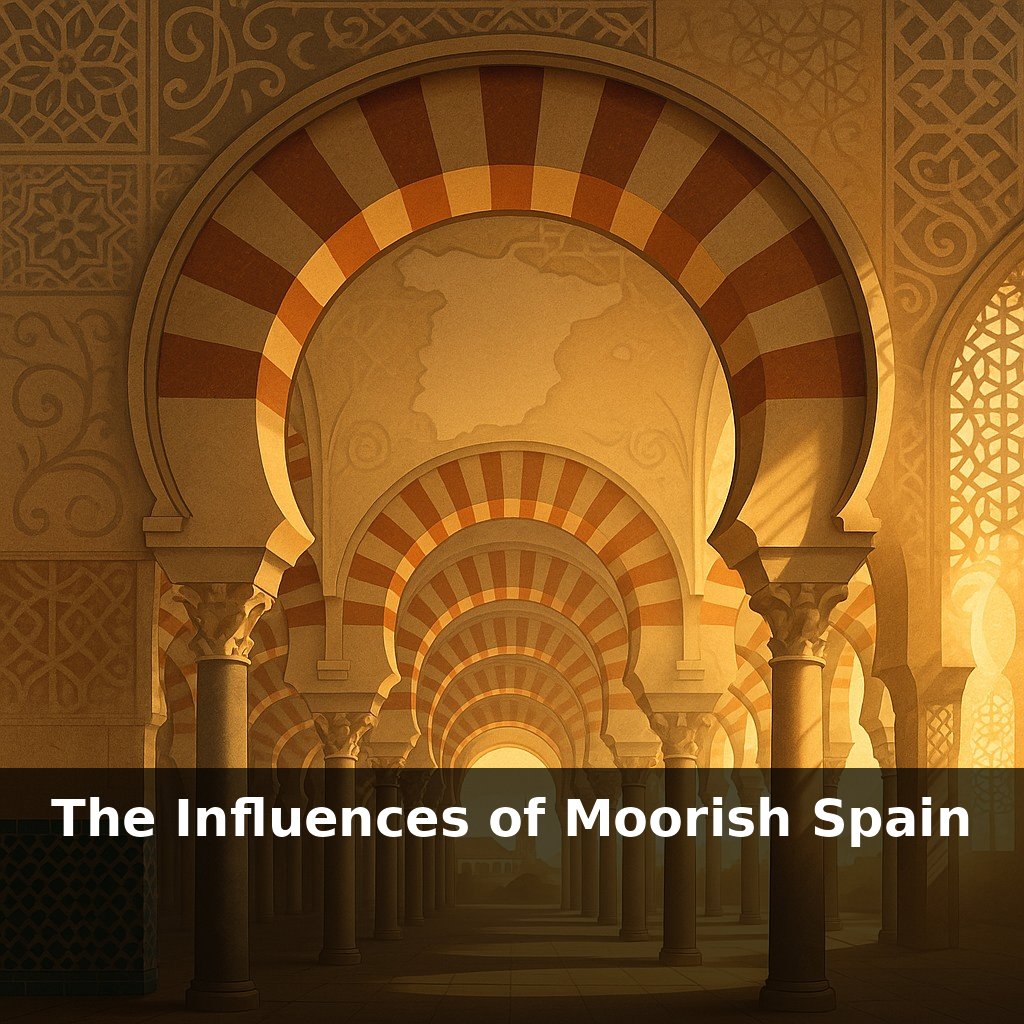
You see it in cities built for shade and trade. Markets called alcaicerías, old caravan routes that became commercial streets, and neighborhood names beginning with “Al‑” or “Ben‑” trace a map of once‑connected Mediterranean economies. Tourism campaigns now sell these spaces as picturesque backdrops, but their original logic was hard‑nosed: maximize cooling, security, and commercial flow in an era when Córdoba rivaled Baghdad and Constantinople in scale and sophistication.
You even see it in institutions and law. Beyond Valencia’s irrigation court, medieval fueros in places like Teruel and Cuenca quietly incorporated norms drawn from Islamic practice on contracts, credit, and land tenure. Later monarchs tried to Christianize the language while keeping what worked, producing a hybrid legal culture that underpins property and water rights debates today.
And you feel it in debates over “who belongs.” Genomic findings of North‑African ancestry unsettle a neat story of reconquest and replacement, while growing Muslim communities—some recently arrived from Morocco, others with much older roots—navigate a landscape that markets Moorish tiles yet bristles at mosques. The same past that enriches Spain’s brand abroad can become a fault line at home, forcing the country to decide whether al‑Andalus is an exotic episode, a buried trauma, or a foundational layer of its modern self.
A football fan in Seville might sing “olé” at a match, wear a jersey from Real Zaragoza (a name descending from Saraqusta), then grab café from a bar called “Albaicín” without linking any of this to Andalusi layers beneath the surface. Flamenco, marketed as purely “gypsy” or “Spanish,” likely braided Romani, Castilian, and Islamic musical scales and vocal ornamentation; the quejío, that raw melismatic cry, echoes techniques shared across the eastern Mediterranean. Even Spain’s universities carry traces: translation schools in medieval Toledo moved Arabic science and philosophy into Latin, handing Europe algebra, Aristotle, and new medicine. Think of modern Spain’s “brand assets”—from whitewashed villages of Andalucía to orange‑scented patios in Córdoba—less as decorative leftovers and more as legacy code in a vast architectural project that’s still under renovation, where each restoration, festival, or political speech decides which bricks of memory stay visible and which get plastered over again.
Tour guides, urban planners, and chefs will increasingly act like “code reviewers” of this Andalusi layer—deciding what to surface, what to refactor, what to quietly leave deprecated. A city might revive courtyard cooling to cut energy use; a rural co‑op could borrow medieval crop rotations for soil health. As festivals, cooking shows, and city branding lean into this blend, the risk is turning it into a costume—style without credit, flavor without history.
Modern Spain is still deciding how loudly this layer should speak. School syllabi, mosque permits, and tourism slogans all act like volume knobs, turning Andalusi echoes up or down. Your challenge this week: notice each time a “typical” Spanish scene—siesta hours, tapas routes, even football chants—quietly rests on choices made in that older, entangled world.