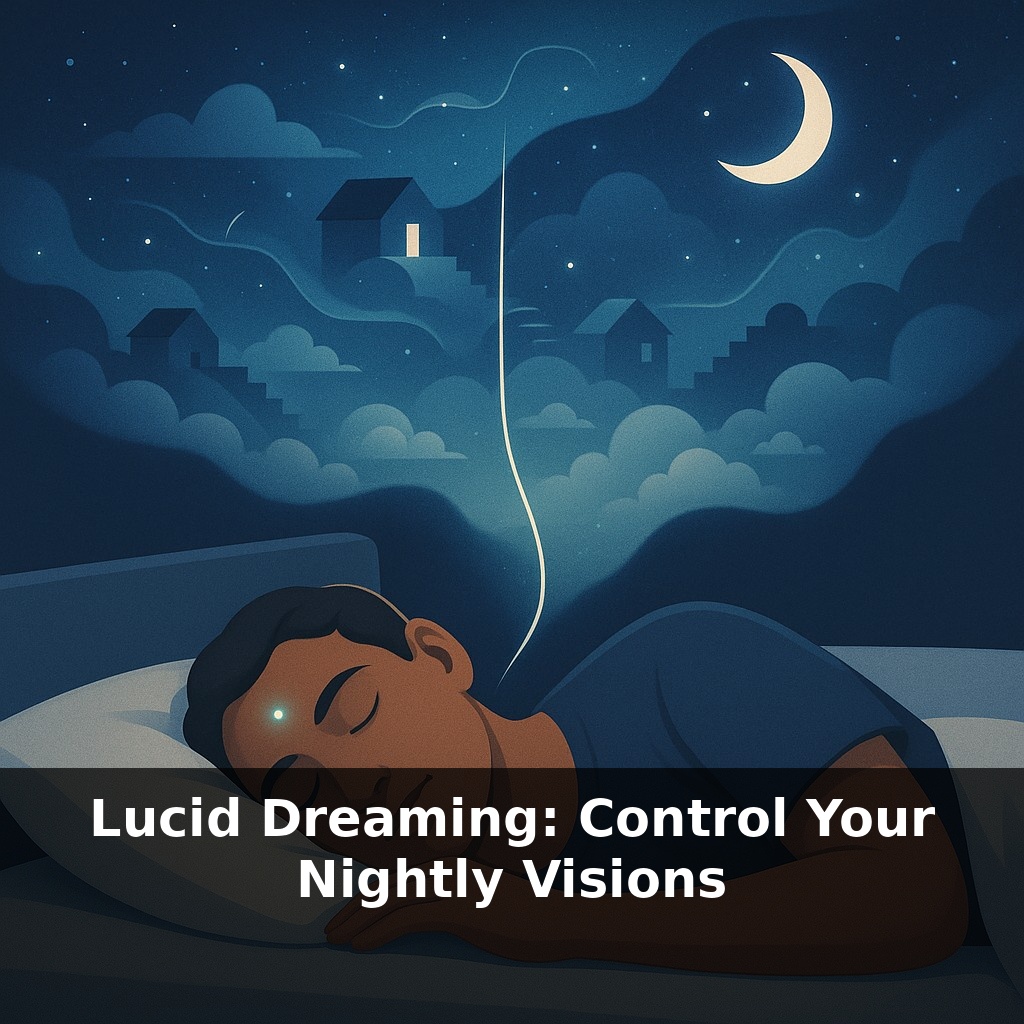
About half of all people have, at least once, woken up thinking, “I knew I was dreaming… and I kept dreaming anyway.” You’re racing across rooftops, or calmly chatting with someone who’s gone—and a quiet voice in your mind says: this isn’t real… but it feels real.
Most people treat those rare “I knew I was dreaming” nights as glitches—oddities you wake from, laugh about, and forget by breakfast. But what if they’re closer to an unused mental skill than a one‑off accident? In the lab, researchers see lucidity not as a mystical event, but as a repeatable state: your brain briefly switches from autopilot to manual control while you’re still deep in the story. Think of it like noticing the “edit” menu in a piece of writing you thought was already printed; suddenly, you can cut, paste, and rewrite scenes that felt fixed a moment earlier. People use this ability in surprisingly practical ways: rehearsing a tough presentation, facing down a recurring nightmare, or practicing a sport skill in ultra‑vivid slow motion. The striking part isn’t that it happens—it’s how trainable it seems to be once you know where the entry points are.
Researchers can now watch this “unused skill” switch on in real time. In sleep labs, people who signal they’re lucid with pre‑agreed eye movements show a distinct brain signature: areas linked to planning, self‑reflection, and working memory light up, even while the rest of the brain stays in deep sleep mode. That hybrid pattern hints at why the experience feels so unusual: you’re able to question, decide, and remember goals while surrounded by vivid, dream‑generated worlds. This mix opens doors beyond thrill‑seeking—like reshaping long‑standing fears or experimenting with new habits in a consequence‑free space.
Think of this “hybrid” sleep state as a starting point, not the finish line. Once the lights are on in those higher‑order brain areas, what you can do with that awareness depends on preparation, timing, and a bit of strategy.
First, lucidity isn’t all‑or‑nothing. Some nights you might only manage a fleeting recognition—“this is a dream”—before the plot yanks you back in. Other times, you can hold that awareness long enough to make choices: stabilizing the scene, changing how you respond, or setting an experiment (“What happens if I…?”). Studies suggest this spectrum matters. People who report more frequent, stable lucid dreams often show better metacognition when awake: they’re more used to questioning “Is this really what it seems?” instead of drifting on habit.
Training leans heavily on that questioning reflex. Reality checks—like counting your fingers, trying to push a finger through your palm, or rereading text—aren’t magic tricks. Done consistently while awake, they install a mental habit that occasionally fires during dreams, where the same tests behave strangely. That mismatch can tip you into lucidity. In a sense, you’re teaching your brain to “audit” experiences instead of taking them at face value.
Timing is the other major lever. Because late‑night REM periods are longer and more intense, methods such as “wake‑back‑to‑bed” deliberately exploit the half‑drowsy window after 4–6 hours of sleep. You wake briefly, prime your mind with a clear intention (“Next time I’m dreaming, I’ll remember”), then return to bed as REM is about to ramp up. When this is paired with focused recollection of recent dreams, lucidity rates jump sharply in experiments.
Once awareness arrives, influence is more like steering a kayak than piloting a rigid machine. You can nudge direction—choosing to face a nightmare figure instead of fleeing, asking a question, or shifting to a calmer scene—but pushing too hard often wakes you. Many experienced lucid dreamers use gentle prompts instead of commands, setting a theme (“Show me confidence”) and letting the dream’s creativity fill in details.
Athletes sometimes use this state as a rehearsal studio: a sprinter might replay the feel of driving out of the blocks, tweaking posture or breathing until it clicks, then wake with a clearer body sense to carry into training. Therapists have guided clients with chronic nightmares to do something as simple as turning toward the threat and asking, “What do you want?”—often transforming a chase scene into a dialogue that reduces fear the next night. Creative workers report treating it like a sketchpad for risky ideas: testing a bold conversation, exploring stage fright, or experimenting with a melody they’re too shy to play aloud. One programmer used recurring tech‑glitch dreams as a sandbox, deliberately “breaking” impossible devices to loosen rigid thinking about problems at work. In that way, it can resemble beta‑testing new mental software in a closed environment before rolling it out to waking life. The value isn’t just the spectacle; it’s the carry‑over in confidence and flexibility afterward.
55% of people will have at least one lucid dream, but we’re only beginning to treat that as a resource instead of a curiosity. Early trials hint that guided lucidity might help rewrite stubborn habits—like a mental “sandbox” where you stress‑test new reactions before bringing them into daylight. As labs learn to read and send signals during dreams, we may see overnight “coaching sessions” that refine skills, soothe threat responses, and surface ideas that are hard to access when fully awake.
Here’s the quiet twist: the goal isn’t to script perfect nights, but to notice how your mind behaves when the rules loosen. Treat each lucid moment like tasting a new spice in your cooking—subtle, but it changes the whole dish. Your challenge this week: map one small fear or habit you’d be curious to nudge, if you met it on that dream stage.