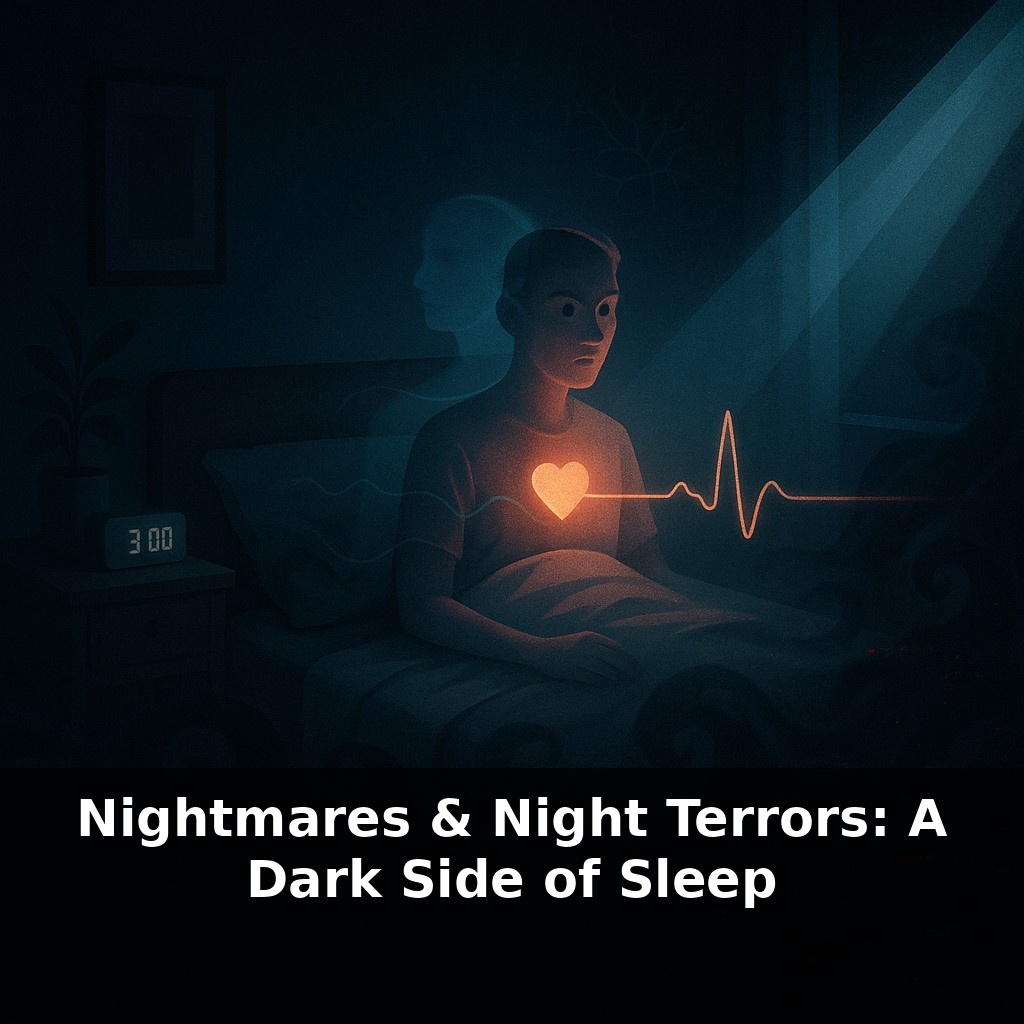
You’re asleep, your body is still, but your heart is racing like you’re sprinting for your life. The room is safe; your brain disagrees. Tonight, we’re heading into that unsettling gap between a harmless bad dream and sleep so frightening it bleeds into your waking life.
Most of us treat rough nights like glitchy software: close the tab, hope it runs better tomorrow. But when the same disturbing scenes keep “rebooting” at 3 a.m., they stop feeling random and start looking like a pattern. Those recurring images, sounds, and storylines aren’t just horror-movie leftovers; they’re often tightly wired to what’s happening in your daylight hours—stress spikes, unresolved conflict, past trauma, even certain medications or an extra-late scrolling session.
Some people find that as their anxiety climbs, their sleep turns into a kind of nightly feedback loop: more fear, less rest, sharper emotions the next day… and then even more trouble at night. In this episode, we’ll unpack how that loop forms, why some brains are more vulnerable than others, and—crucially—what science says you can do to interrupt it before it shapes your mood, your focus, or your sense of safety.
So where do night terrors fit into this picture? They don’t just sit on the “more intense” end of the nightmare spectrum; they run on different rails entirely. Nightmares tend to unfold during REM, when dreams are story-like and easier to recall. Night terrors erupt out of deep, non-REM sleep, often in the first few hours of the night, with screaming, thrashing, and a body acting as if danger is right there—even while the person stays mostly unreachable and confused. For families, it can look dramatic and alarming, but the sleeper often has little or no memory once morning comes.
If you zoom in on what the brain is doing during these intense nights, a pattern starts to emerge that’s less “mystical” and more mechanical. In REM-heavy stretches, emotional circuits linked to fear and threat stay highly responsive, while areas that usually keep context, timing, and logic in check are dialed down. That mismatch doesn’t just color the content of a nightmare; it helps explain why an old embarrassment can feel as catastrophic as a life‑or‑death chase, or why a single stressful event can replay in exaggerated, shifting forms for weeks.
Night terrors, by contrast, ride on a different kind of instability. Deep NREM sleep is supposed to be steady and synchronized. In some people—especially kids—that stability is fragile. Anything that jostles the system (a fever, an irregular bedtime, an unfamiliar sleeping environment, even a full bladder) can make the brain “misfire” during the transition between stages. Motor and autonomic systems surge into high gear while awareness lags behind, so the body bolts upright, the heart pounds, the person may shout or run, yet there’s no coherent storyline to remember later.
Genetics adds another layer. Twin studies suggest that some of us inherit a lower threshold for this kind of nighttime overreaction: the same dose of daytime stress or sleep loss that gives one person a mildly restless night might push another into weeks of intense dreams or repeated terrors. That doesn’t mean destiny; it means your sleep system is more sensitive to what you feed it—caffeine, alcohol, schedule shifts, late‑night work, and unresolved conflict all act like volatility on a financial chart, amplifying swings in both directions.
Psychiatric conditions can plug directly into this sensitivity. In depression, threat‑related imagery tends to skew more hopeless than fearful. In PTSD, dreams can hover close to the original trauma or drift into symbolic territory while preserving the same core emotions. Certain blood‑pressure and antidepressant medications nudge brain chemistry in ways that can temporarily intensify dream vividness or fragment deep sleep, especially when doses change quickly.
Over time, these patterns matter. Frequent nightmares are linked with higher rates of panic symptoms, substance use, and yes, suicidal thinking, even when you account for other mental health issues. Persistent night terrors in adults often travel with sleep apnea or heavy alcohol use. The common thread isn’t just that nights are bad; it’s that the boundary between night and day starts to erode, with each side quietly shaping the other.
A useful way to test how “touchy” your sleep system is: notice what happens when small variables change, like toggling a single setting in an app and watching the whole interface shift. Some people can pull a near‑all‑nighter, drink late coffee, or power through an argument with barely a ripple in their dreams. Others see their night immediately “recode” itself after a single stressful email or two glasses of wine. A child who has night terrors only on travel nights, or an adult whose worst episodes cluster after switching medications, are both showing you their system’s weak points in real time. Pay attention to timing: do episodes cluster early in the night or toward morning, on weekdays or weekends, after workouts or after binge‑watching? These patterns can quietly reveal triggers you’d never list on a medical form—like that weekly late‑shift, standing family fight, or Sunday dread that doesn’t feel dramatic in daylight but shows up loudly once the lights are off.
Nightmares and night terrors are starting to look less like isolated “bad nights” and more like an early‑warning system for mental health. As tools get better—wearables, smart beds, even apps that can flag subtle changes in movement and heart rate—your sleep could become a kind of emotional bank statement, revealing hidden “debts” long before you crash. That’s promising, but it also raises awkward questions: who owns this data, and who gets to decide when a dream is “disordered” enough to treat?
So the goal isn’t to banish every strange scene your mind produces; it’s to notice when the tone shifts from quirky to corrosive. Think of tracking these nights like checking a smoke alarm, not hunting for ghosts. Your challenge this week: log only the basics—time, intensity, and what changed that day—and see which tiny shifts seem to quiet the storm.