About a quarter of your night is spent in a brain state where your muscles are paralyzed, your eyes dart around, and your emotional circuits light up like a festival. You’re unconscious, yet your mind is busy directing a private movie you won’t fully remember by breakfast.
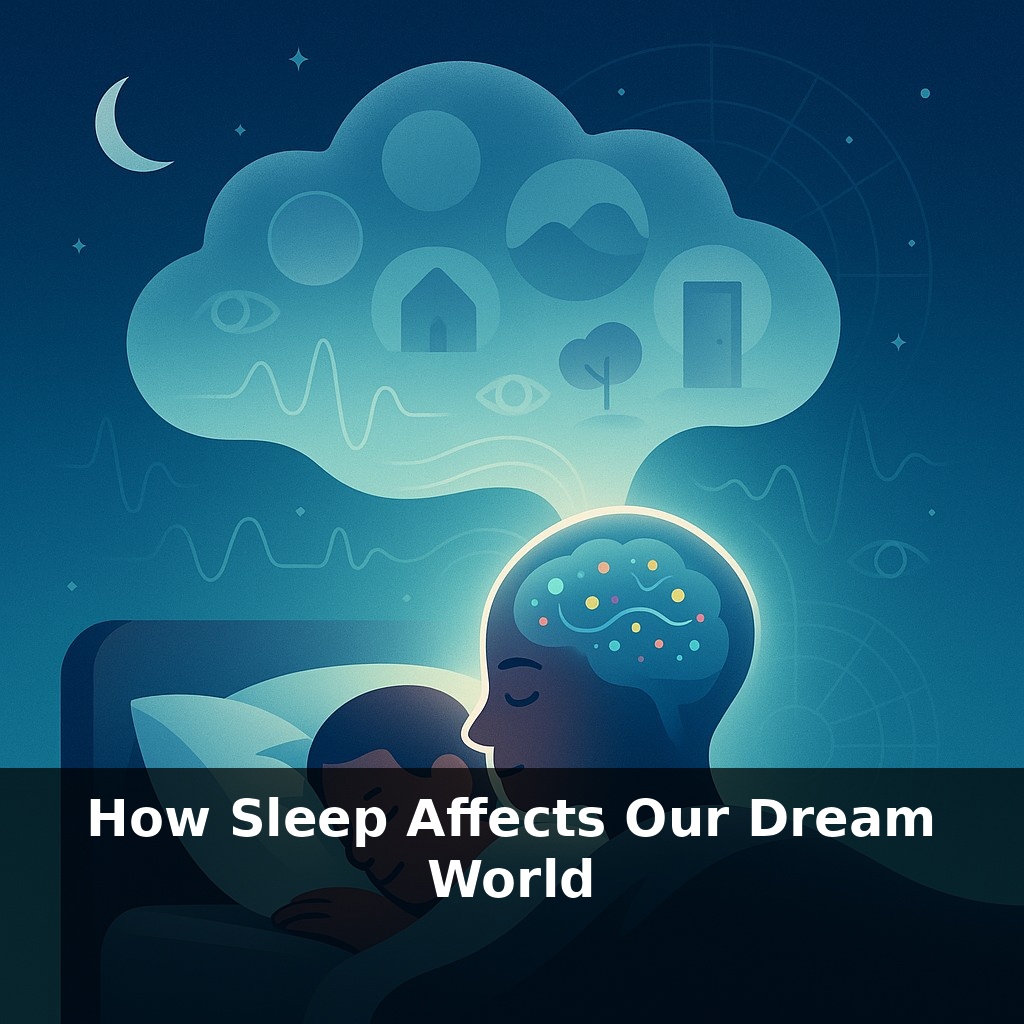
That strange “private movie” you run at night isn’t random; it’s heavily edited by how well you sleep in the first place. When your sleep is solid and long enough, your brain gets to cycle through its full repertoire: lighter dozing, deep restorative phases, then those vivid, story-filled stretches later in the night. Trim your sleep short or chop it into pieces, and the schedule falls apart. The brain still tries to squeeze in the big emotional scenes, but now they’re rushed, more intense, and more likely to veer into nightmare territory. Over time, that shift in your dream world can echo into the daytime: people with chronically disrupted sleep often report dreams that feel heavier, darker, and harder to shake, like waking up each morning with an emotional “hangover” that colors their mood and energy long after the images have faded.
Scientists can actually track how your dream life shifts as your sleep changes. In lab studies, people kept on a healthy, consistent schedule tend to report dreams that feel more coherent, less like scrambled highlights. When sleep gets cut short or broken up, reports tilt toward chaotic scenes, sudden awakenings, and sharper emotions. It’s similar to skimming headlines versus reading full articles: your mind still “gets” pieces of experience, but context goes missing. Over weeks or months, this skewed night-time processing can subtly train your brain to expect more threat, conflict, or loss before you even open your eyes.
Here’s a quiet twist most people miss: the *structure* of your night—not just the total hours—nudges your dreams toward very different roles. Early in the night, when deep non-REM tends to dominate, reports often sound stripped-down and practical: problem-solving fragments, to-do list rehearsals, flashes of places you were earlier in the day. Later, as REM stretches lengthen and alternate with lighter non-REM, the narrative usually turns richer, more emotional, and more symbolic, stitching remote memories together in ways that don’t show up when you’re awake.
When that orderly drift from simple to elaborate is disrupted, the balance of what gets processed shifts. Fragmented nights are full of forced “micro-exits” from ongoing dream sequences. Those repeated abrupt cutoffs increase the odds you’ll pop awake right at the emotional peak of a scene. You remember more—but what you remember is skewed toward the intense, unfinished parts, like only ever seeing the most dramatic clips from a film and assuming that’s the whole story.
Duration adds another layer. Because the later part of the night carries more complex, emotionally tinged content, consistently cutting sleep short filters out much of that late-stage work. People who chronically rise very early often report blander or more utilitarian dreams—not necessarily fewer, but narrower in emotional range. On the flip side, when someone finally “catches up” after deprivation, the rebound isn’t just about extra REM; the dreams themselves often become unusually vivid, densely packed, and sometimes bizarre, as if the brain is trying to clear a backlog of emotional drafts.
Sleep disorders plug into this system in specific ways. In insomnia, longer stretches spent in lighter stages mean more opportunities for half-wake, half-dream intrusions: hypnagogic flashes as you’re drifting off, jolting awakenings from half-formed scenarios, and a sense that your nights are busy but unrefreshing. In breathing-related disorders, brief suffocation alarms trigger frequent partial arousals. Over time, that pattern is associated with more threat-themed imagery—being chased, trapped, or unable to move or call for help—mirroring the body’s repeated “danger” signals even though you may not consciously notice them.
Think of your night like managing different “accounts” rather than one big sleep bank. A tightly packed, late-night work session where you crash at 2 a.m. and wake at 6 might still register as “4 hours,” but it tends to overdraw your emotional account. People in lab protocols who push sleep later often report more jarring, high-intensity scenes, while early-to-bed, early-to-rise patterns tilt toward briefer, less embellished snapshots. Shift workers give an extreme real-world example: rotating schedules don’t just make them tired; studies find their recall of night imagery becomes patchier and more stress-tinged across weeks on unstable shifts. On the other side, people who extend sleep on vacation frequently notice a peculiar effect: the last hour before waking fills with oddly creative, mash‑up storylines, as if extra runtime lets the brain “invest” in bolder narrative experiments it won’t risk when time is tight and the alarm clock looms.
Your brain might soon treat night like a creative workshop you can schedule. As labs learn to nudge specific dream themes, we edge toward “programming” sleep the way we curate playlists—queuing calm scenes before a hard week, or rehearsing feared situations in safer, guided form. Massive datasets from trackers could flag when your inner stories turn unusually dark, like an early-warning light on a dashboard, prompting tweaks to habits or therapy before mood fully unravels.
Your nights, then, become less like a random highlight reel and more like a draft folder your mind keeps revising. Subtle shifts—earlier wind‑downs, dimmer screens, gentler wake‑ups—can change which “files” get opened. Over months, that can tilt your inner stories toward curiosity over crisis, closer to a late‑night brainstorming session than a backlog of overdue tasks.
Here’s your challenge this week: For the next 5 nights, lock in a strict “dream-friendly” sleep window—go to bed and wake up at the same time to protect your longest REM bout in the early morning hours. At least 3 of those nights, avoid screens and bright overhead lights for 60 minutes before bed and replace them with a single calming cue that showed up in the episode (like a warm shower, gentle stretching, or a wind-down playlist). Each morning, before you even get out of bed, replay the last dream you remember in your mind from start to finish and give it a quick title based on its strongest emotion or weirdest detail.