About half of working artists say a dream shaped at least one major piece of their work. Now jump to a Monday morning: you wake with a strange, vivid fragment stuck in your mind. By lunch, that odd detail has quietly turned into a solution you’d been chasing for weeks.
Roughly 90 minutes of your night are spent in REM sleep, yet most people treat that time as useless blackout. It isn’t. Those cycles quietly reshape how flexible your thinking will be tomorrow. Neuroscientists see a striking pattern: when people enter REM, they become better at handling problems that don’t have obvious answers—like naming a startup, debugging a vague team conflict, or reimagining a stalled project. The gains aren’t just for painters and poets; they show up in coders, marketers, engineers and students too. A one-hour nap that dips into REM can boost performance on tricky word-association tasks by up to 40 %, hinting at why a short midday sleep sometimes unlocks that “out of nowhere” solution. Yet chronic sleep loss—now widespread—silently drains this resource, blunting our inventive edge at work, in relationships, and in how we plan our own futures.
Some of history’s strangest creative leaps trace back to a pillow, not a whiteboard: Paul McCartney reportedly “heard” the melody of *Yesterday* in a dream; chemist August Kekulé saw a snake biting its tail before realizing benzene’s ring structure; filmmaker Christopher Nolan shaped *Inception* from his own recurring dream imagery. These aren’t just lucky accidents. When we’re stuck, our waking mind tends to circle the same safe options. Dreaming loosens that grip, letting quiet background worries, half-finished ideas, and dismissed hunches collide in ways our daytime habits rarely allow.
Neuroscientists sometimes call what happens at night “memory reorganization,” but that label barely hints at how radical it can be for original thinking. During certain phases of the night, your brain replays recent experiences in compressed, rearranged form. A stray comment from a colleague, a half-read article, and a nagging worry about your budget can be reactivated together—even if they never touched in real life. That reactivation isn’t neat or linear; pieces are exaggerated, mashed up, or emotionally intensified. The result is a series of rough drafts for new ideas that only occasionally break the surface as a dream you actually remember.
What’s striking is how selectively this system works. Studies using brain imaging show that regions tied to evaluation and self-criticism dial down, while areas involved in emotional meaning and broad association stay active. The brain is still working, but it’s far less interested in whether something sounds silly or impractical. For creativity, that temporary suspension of inner commentary matters as much as the novel content itself. An absurd scene in a dream can nudge you toward a risky proposal or unconventional design you’d normally censor before it even reached your notebook.
This night-time remixing also seems tuned to your current priorities. If you spend the day wrestling with a design constraint, early-night sleep tends to replay and stabilize the core information you’ll need. Later episodes are more likely to spin off unusual variations and alternative angles. People asked to incubate a specific challenge before bed—by briefly reviewing it, then letting it go—are more likely to report dream fragments that relate to that challenge and, crucially, to show measurable improvement the next day.
The effect extends beyond obvious “aha” moments. Musicians tested after sleep, for instance, don’t just remember melodies better; they improvise more flexibly. Programmers show a greater willingness to refactor or abandon clunky solutions they were oddly attached to the night before. In both cases, the night acts less like a passive archive and more like an editor that cuts, rearranges, and occasionally rewrites entire sections of your mental draft, often with a bolder style than you’d dare while fully awake.
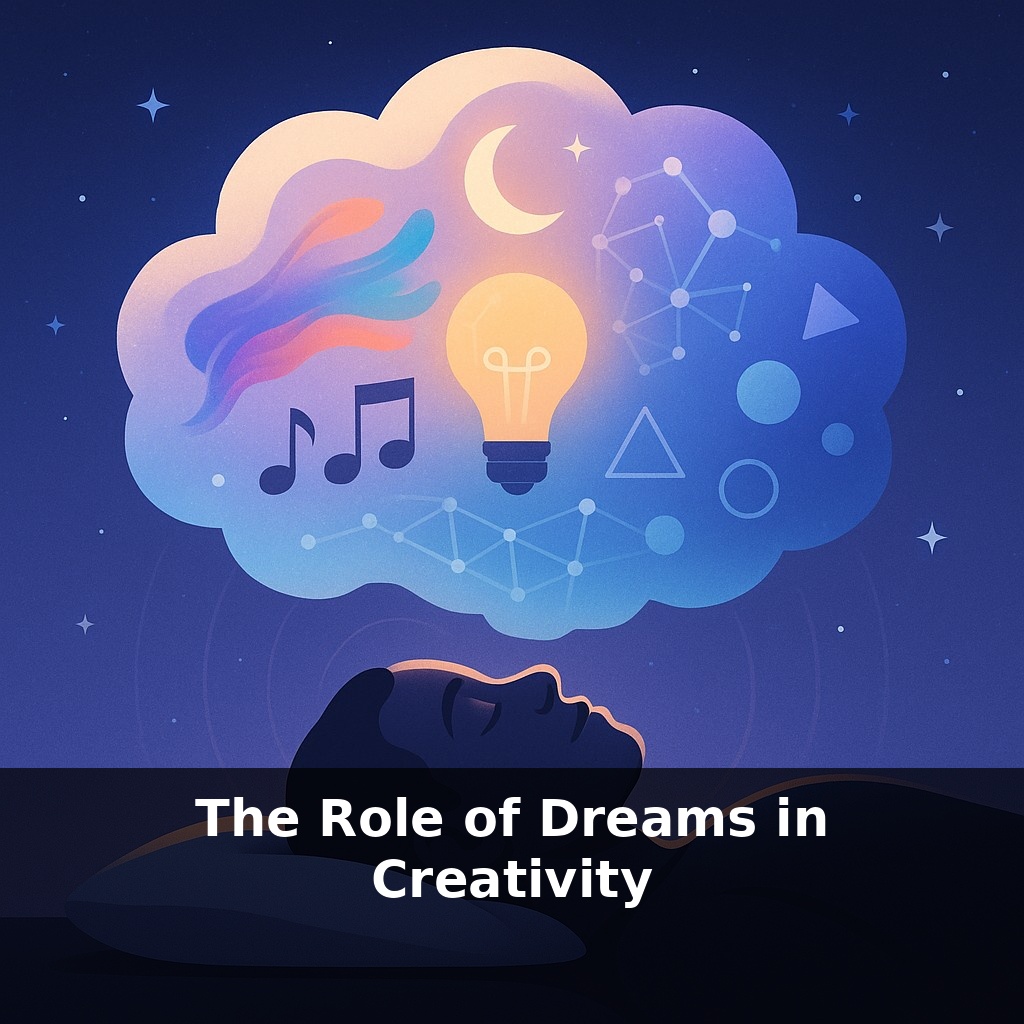
A designer wakes with a half-remembered image of overlapping circles framed by subway maps. By mid-morning, that foggy snapshot has morphed into a clean new interface layout that finally makes sense of a cluttered dashboard. A jazz pianist, after a late rehearsal, dreams only a vague sense of tension resolving into warmth; the next day, she finds her hands drifting to an unexpected key change that gives an old standard a fresh emotional arc. A startup founder, stuck between three mediocre pitch angles, notes a dream about a customer angrily returning a product and, in response, restructures the whole deck around brutal honesty and failure stories—an angle investors later call “disarmingly original.” Across fields, people who deliberately “park” a tricky brief or prototype before bed often discover that the details that surface the next day are not random: it’s usually the odd pairing, the small twist, or the background character from the dream that ends up shaping the most daring version of their idea.
A future where creative teams schedule “dream sprints” alongside hackathons isn’t far-fetched. Lab studies already show that when people nap with a loose question in mind, their post-sleep ideas are bolder and less constrained by groupthink. As wearable trackers gain precision, companies might quietly favor employees whose sleep profiles predict more inventive output, raising thorny questions: Is “dream capital” a new kind of workplace advantage, or a boundary we’ll need to fiercely defend?
Treat tonight’s sleep as part of your studio time, not a break from it. Some people set a one-line “prompt” before bed—like a search query—and treat whatever surfaces by morning as raw material, not prophecy. Your challenge this week: choose one sticky project and give it seven nights of quiet, curious attention, then see what new angles drift in.